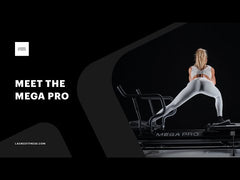
MegaPro Lagree Exercises: Master Your Mega Pro Workout

Key Takeaways
- The Lagree Mega Pro uses spring resistance and a gliding carriage to create constant muscle tension — the foundation of every exercise on the machine
- Core Lagree move names include the Elevator Lunge, Runner's Lunge, Elevator Skater, Catfish, Tailbone Pulldowns, Bear, and Mermaid
- Tilting platforms on the Mega Pro unlock exercise variations not possible on older megaformers — but require mastering flat-platform form first
- Speed controls intensity: the slower the movement, the more time under tension, and the harder the exercise
- The Mega Pro is available at RecovAthlete for home studios and commercial use — view pricing and specs
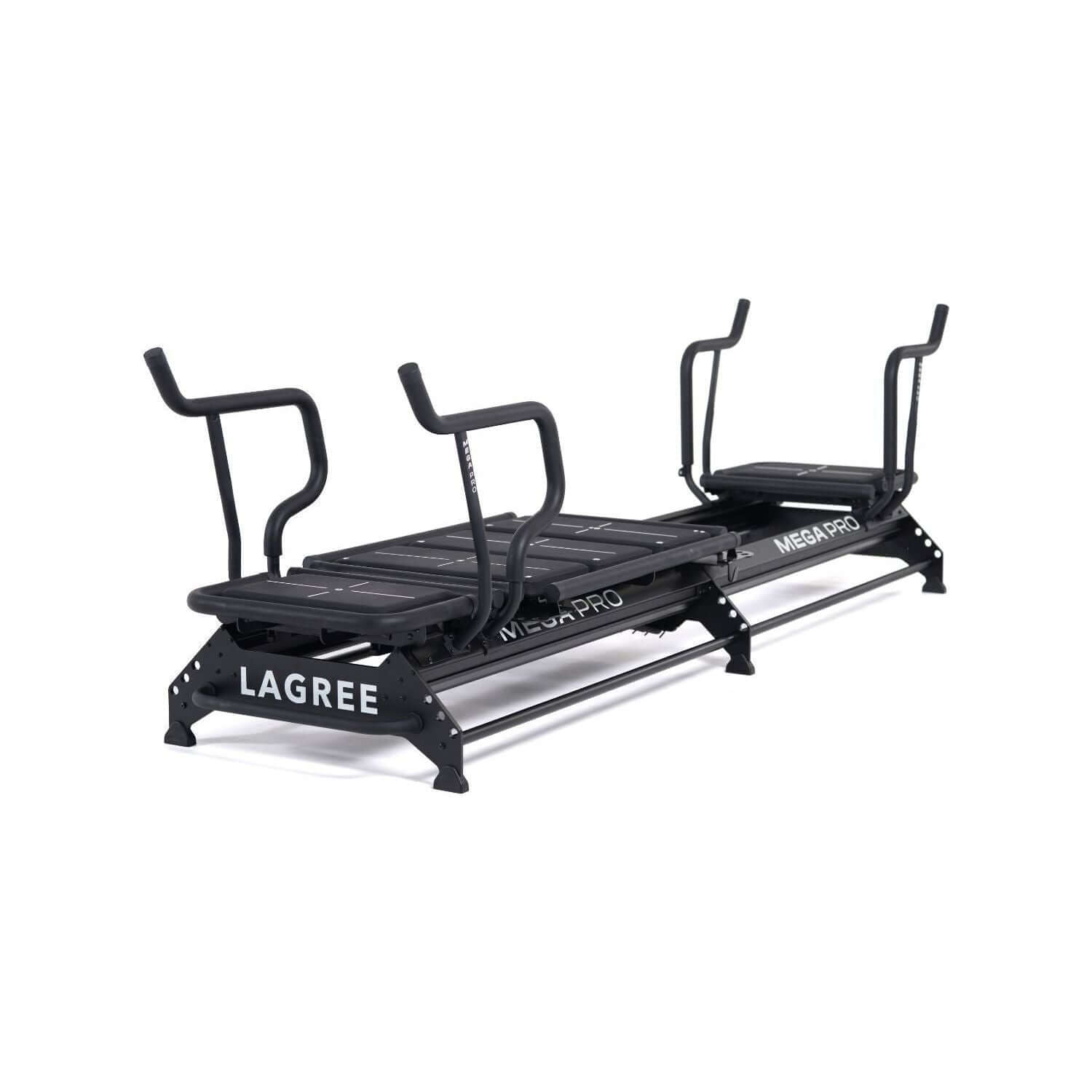
Lagree Mega Pro: The Machine Behind the Moves
In This Guide
- How the Mega Pro creates its training effect
- Lagree exercise names: the complete glossary
- Legs and glutes exercises
- Core and oblique exercises
- Back and shoulder exercises
- Cardio Lagree exercises
- 20-minute beginner workout
- Mega Pro features and tilting platforms
- Own a Mega Pro: pricing and setup
- Frequently asked questions
If you've taken a Lagree class, you've heard move names called out mid-set — Catfish, Runner's Lunge, Bear, Mermaid — and maybe wondered what each is actually doing to your body. This guide covers every major Lagree Mega Pro exercise by name, how to set up and execute each one correctly, which muscles it targets, and what to watch out for.
This is also the resource for anyone considering owning a Lagree Mega Pro for a home studio or commercial facility — you'll see exactly what the machine enables and how programming on the Mega Pro differs from older megaformer models.
How the Mega Pro Creates Its Training Effect
The Mega Pro's training principle is simple: constant muscle tension through controlled resistance. Unlike free weights, which have loading gaps at the top and bottom of a movement, the spring system maintains resistance throughout the full range of motion. Combined with intentionally slow movement (typically 4 seconds out, 4 seconds back), each exercise generates significantly more time under tension per repetition than conventional training.
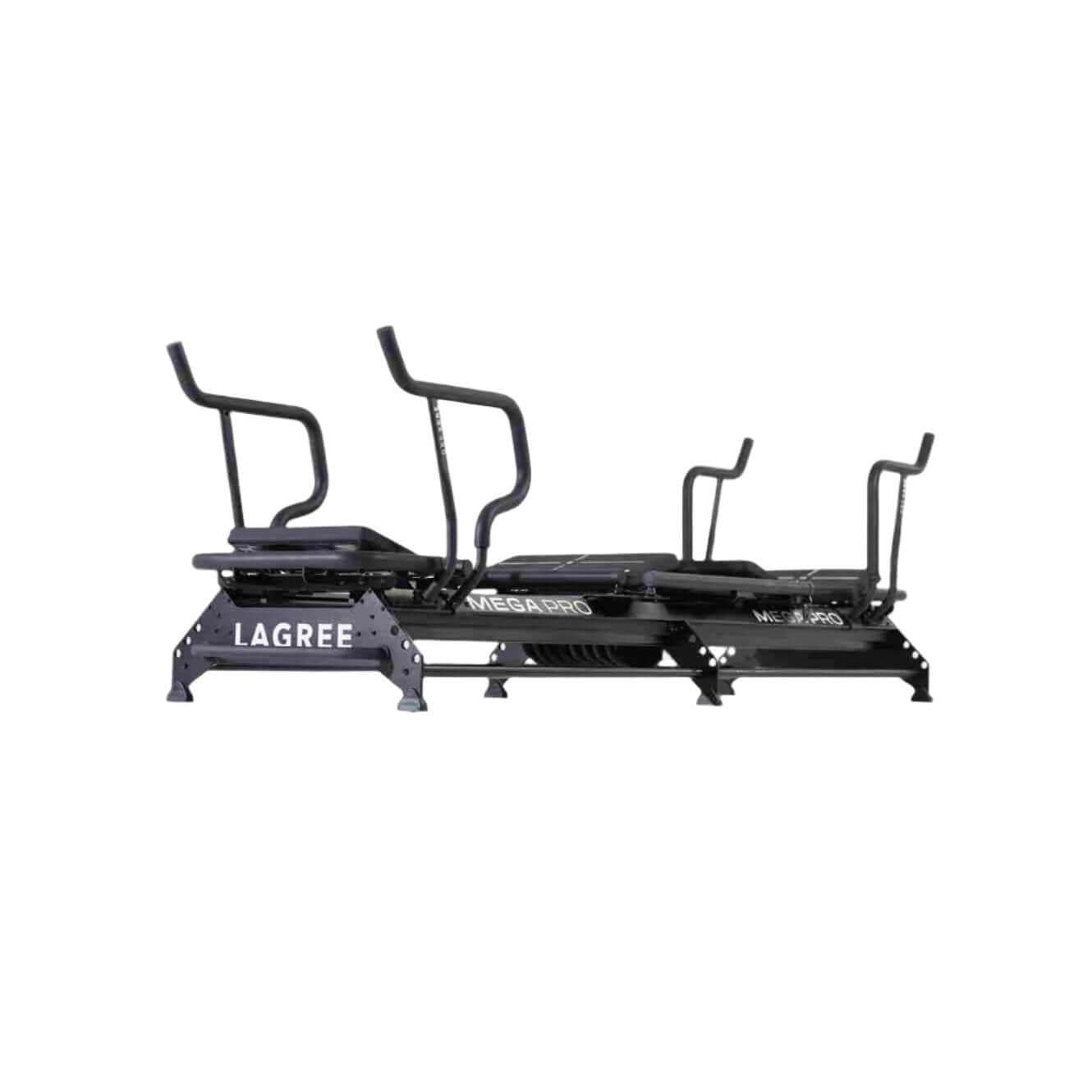
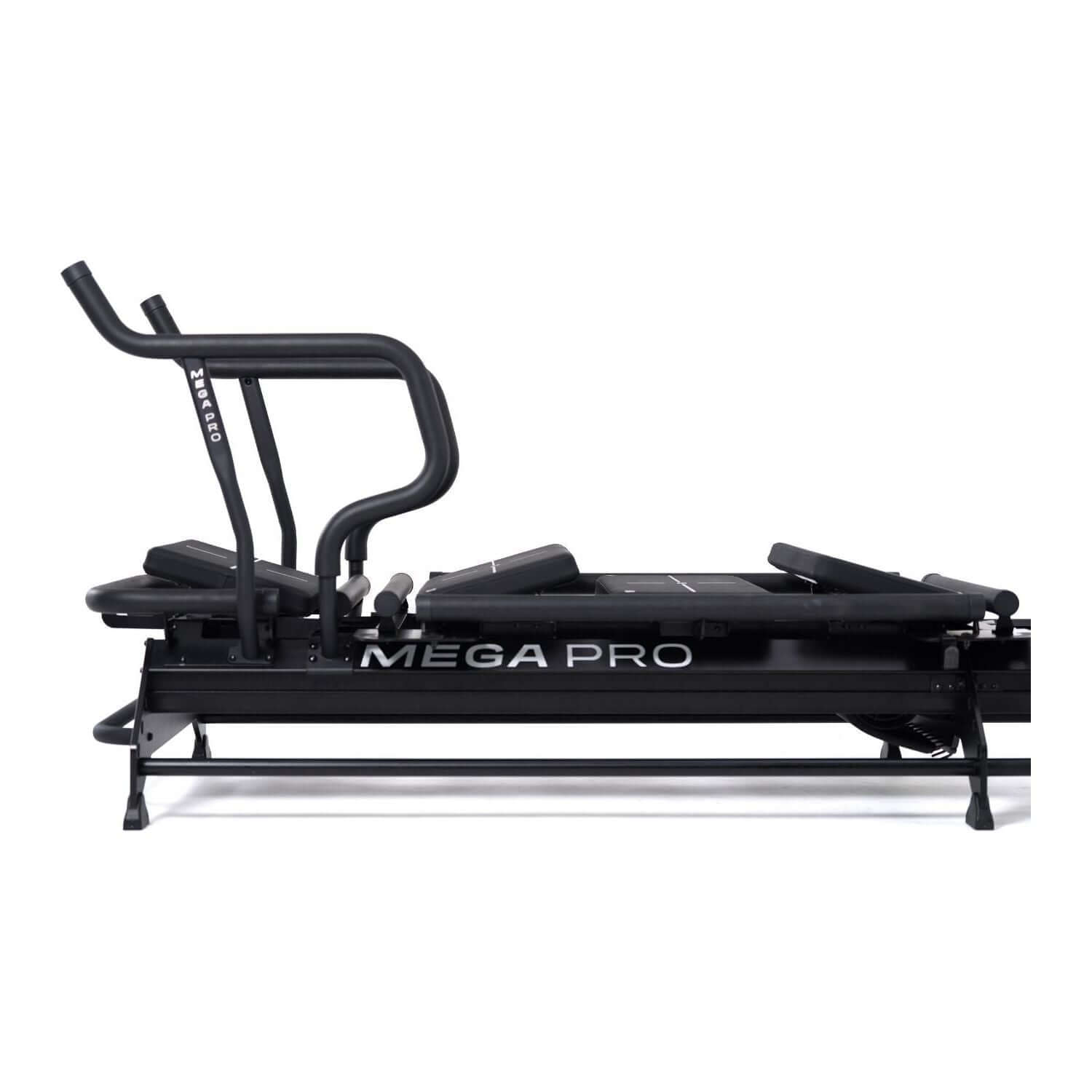
The machine has four key components that define how exercises work:
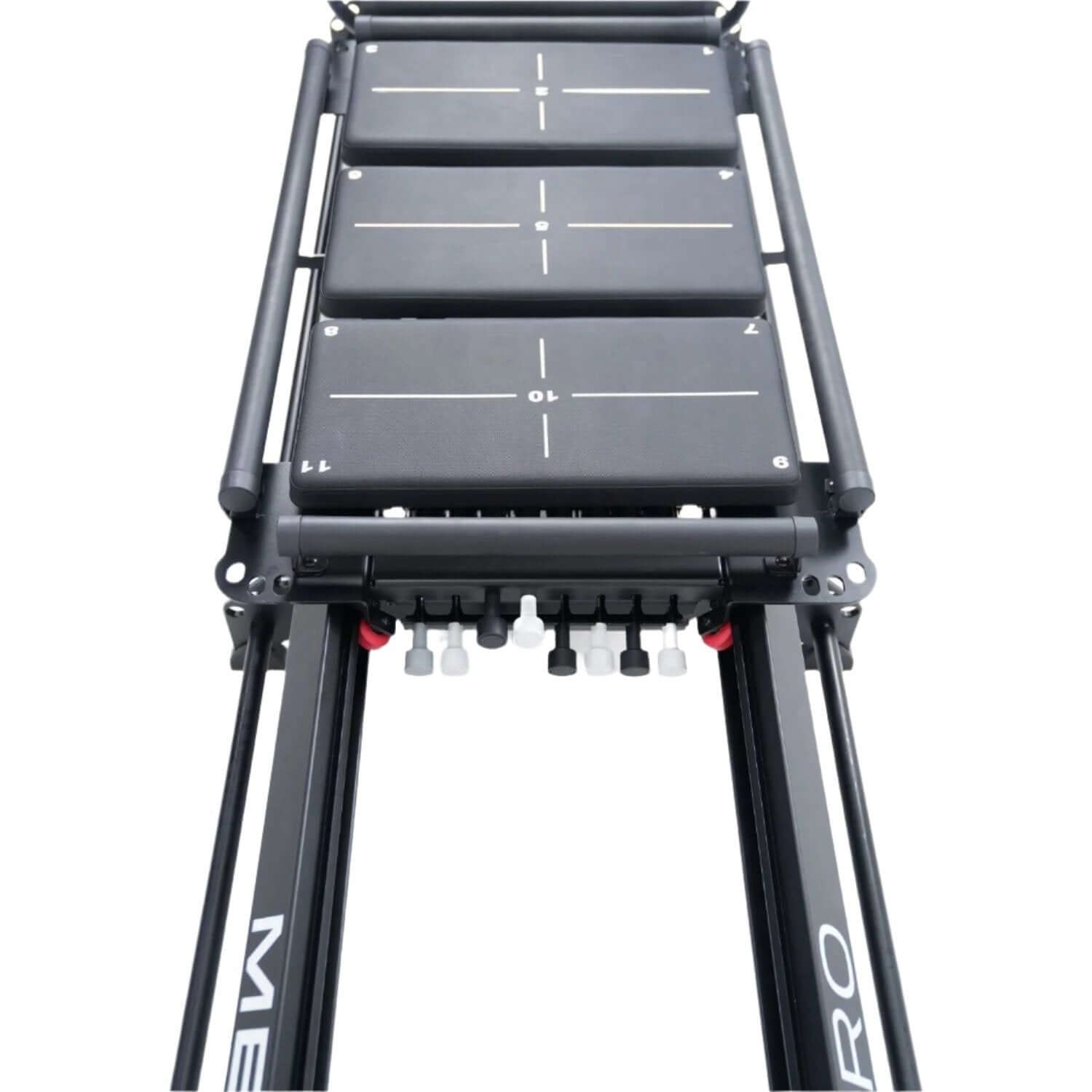
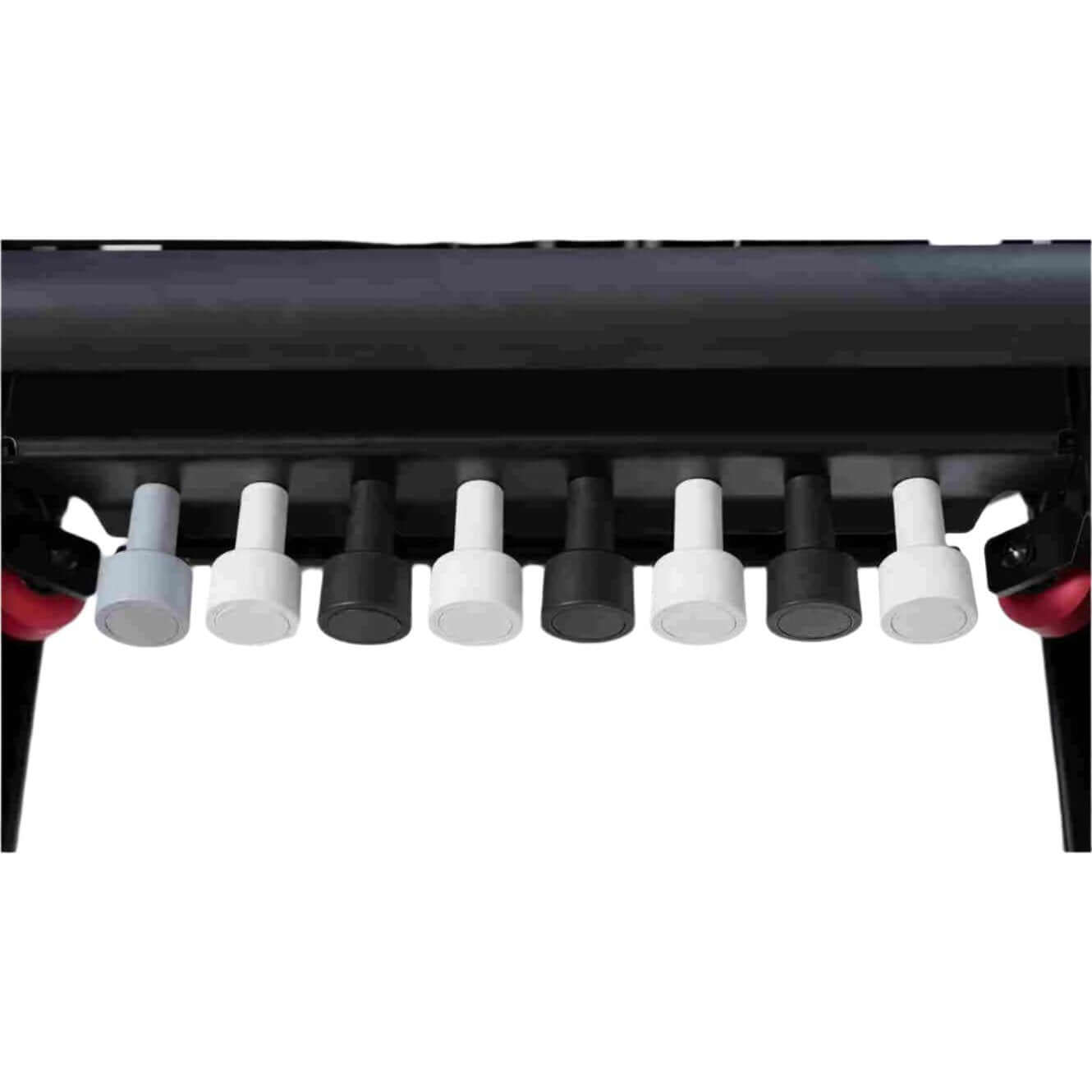
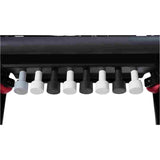
- Spring resistance: Four spring types (ultra-light, light, medium, heavy) allow resistance to be dialled precisely for each exercise and client. Black = heavy, white = light, with ultra-light available for fine adjustments or rehabilitation-style movements.
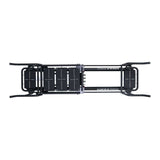
- Gliding carriage: Sealed bearing wheels on precision rails produce a smooth, quiet glide. The carriage moves on a fixed path — your muscles control both the push and the pull, making the return phase as demanding as the drive.
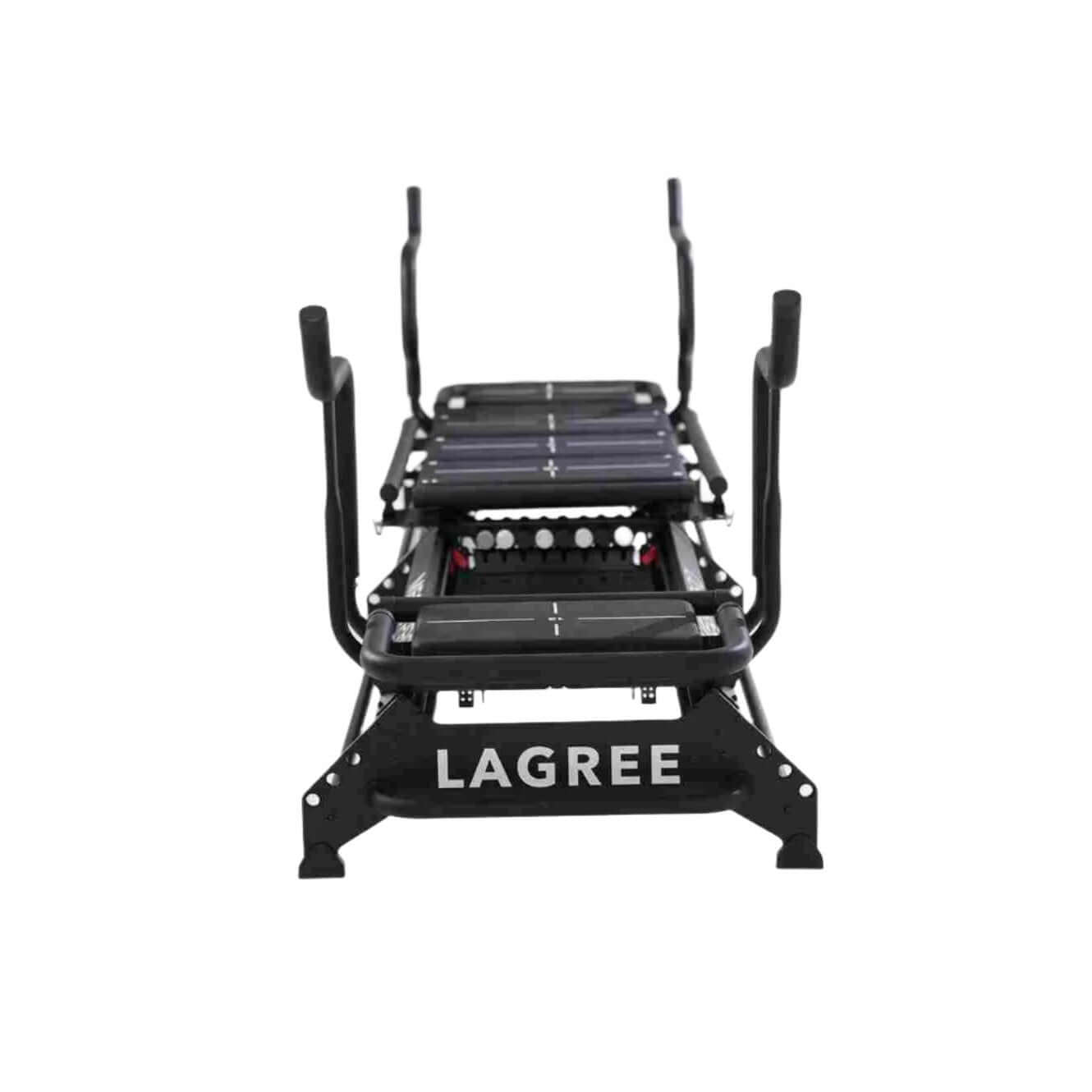
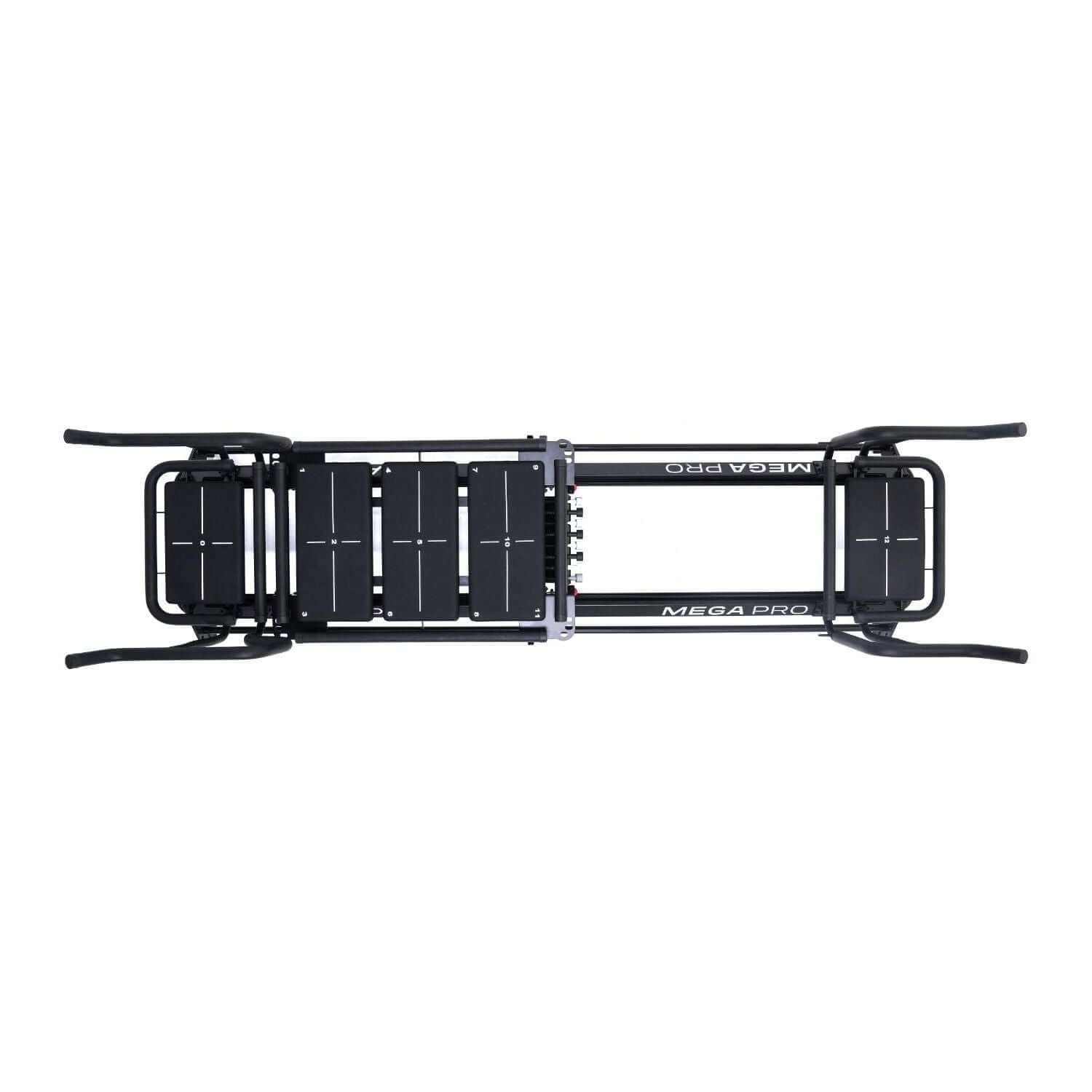
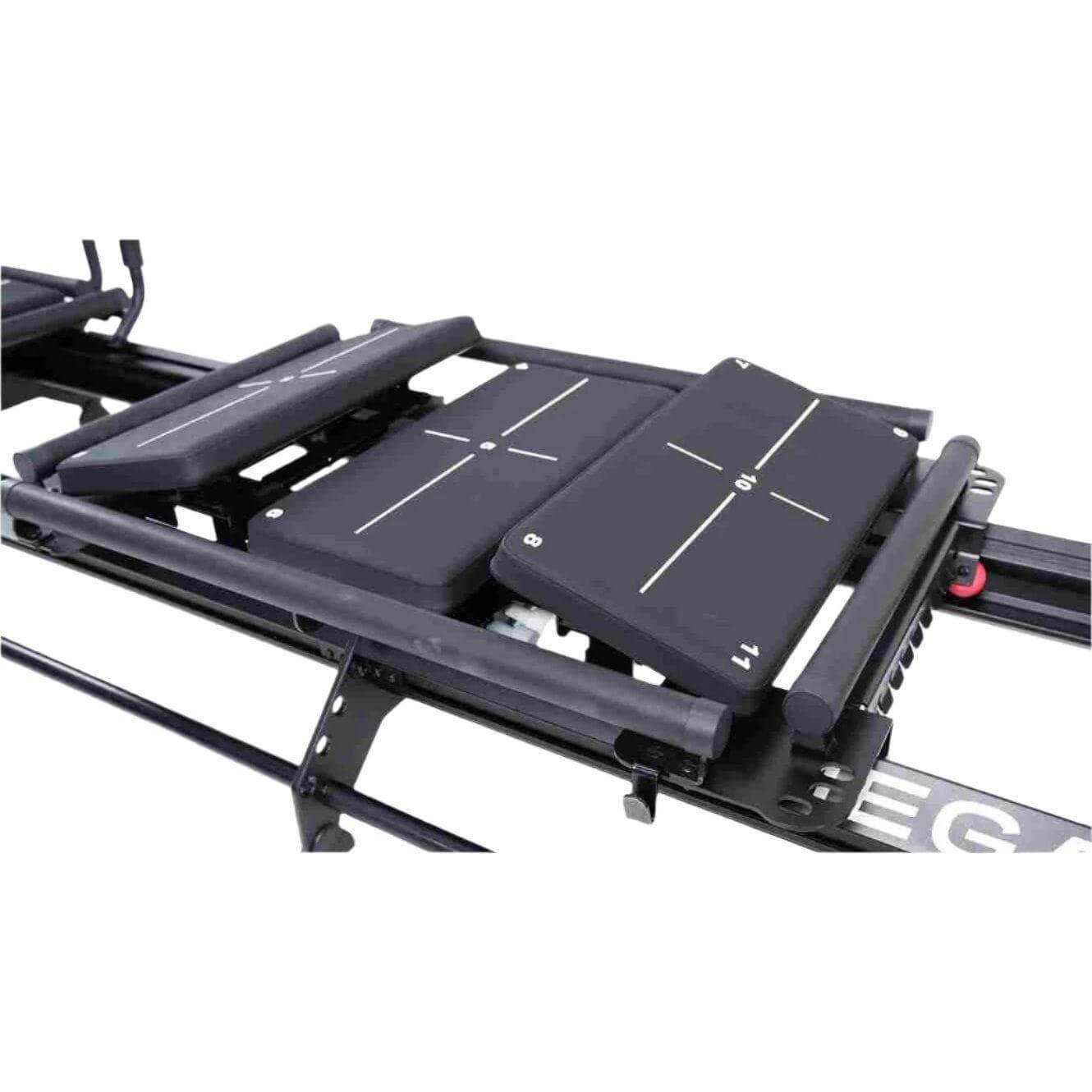
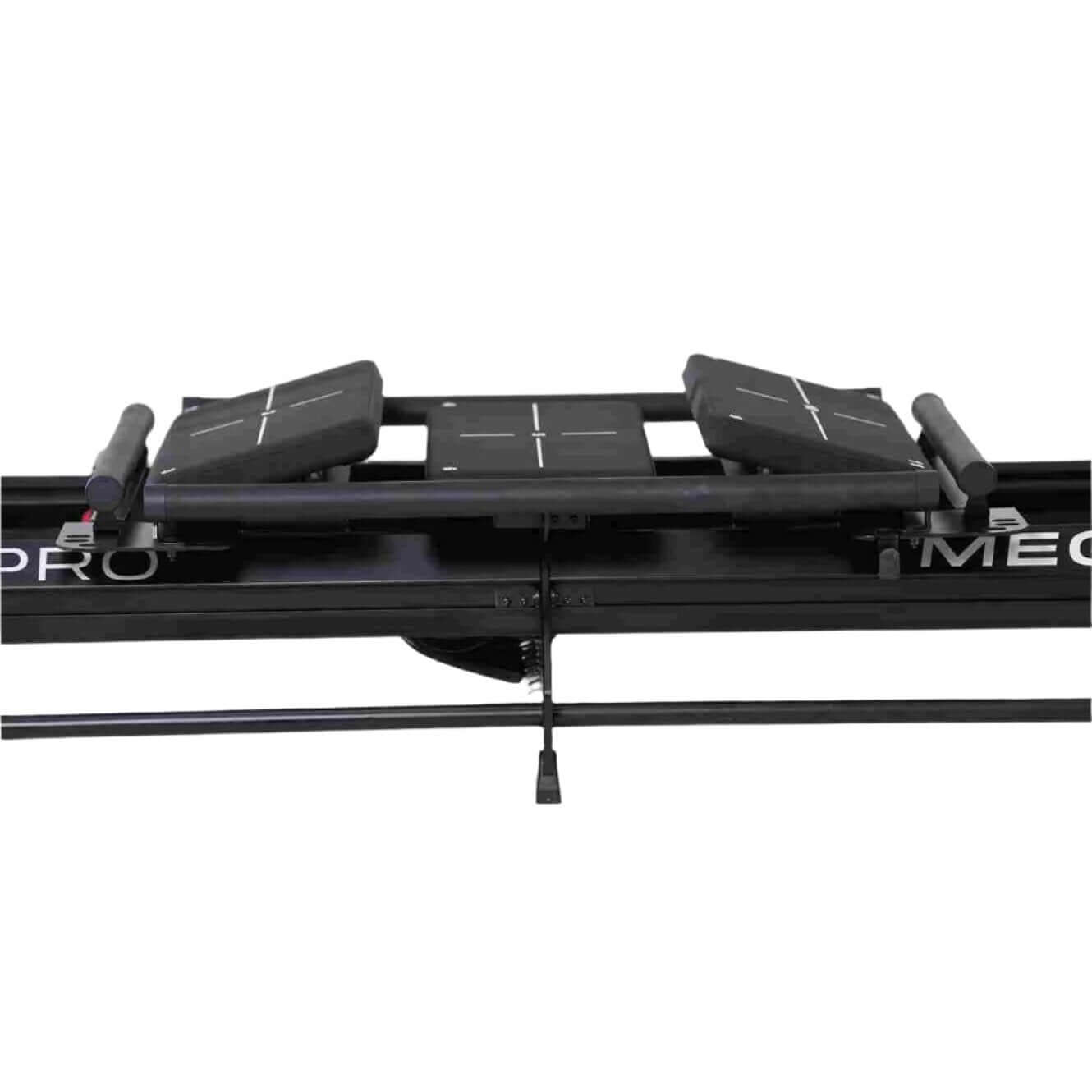
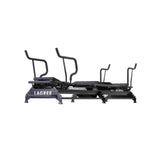
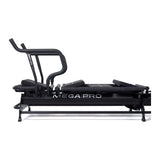
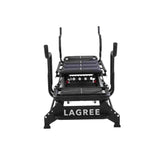
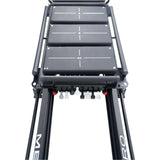
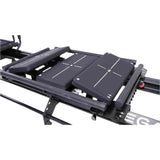
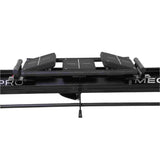
- Tilting platforms (Mega Pro specific): The front and back platforms can tilt, changing the joint angle and muscle recruitment pattern of standard exercises. Tilted lunges, for example, increase glute activation and challenge ankle stability simultaneously.
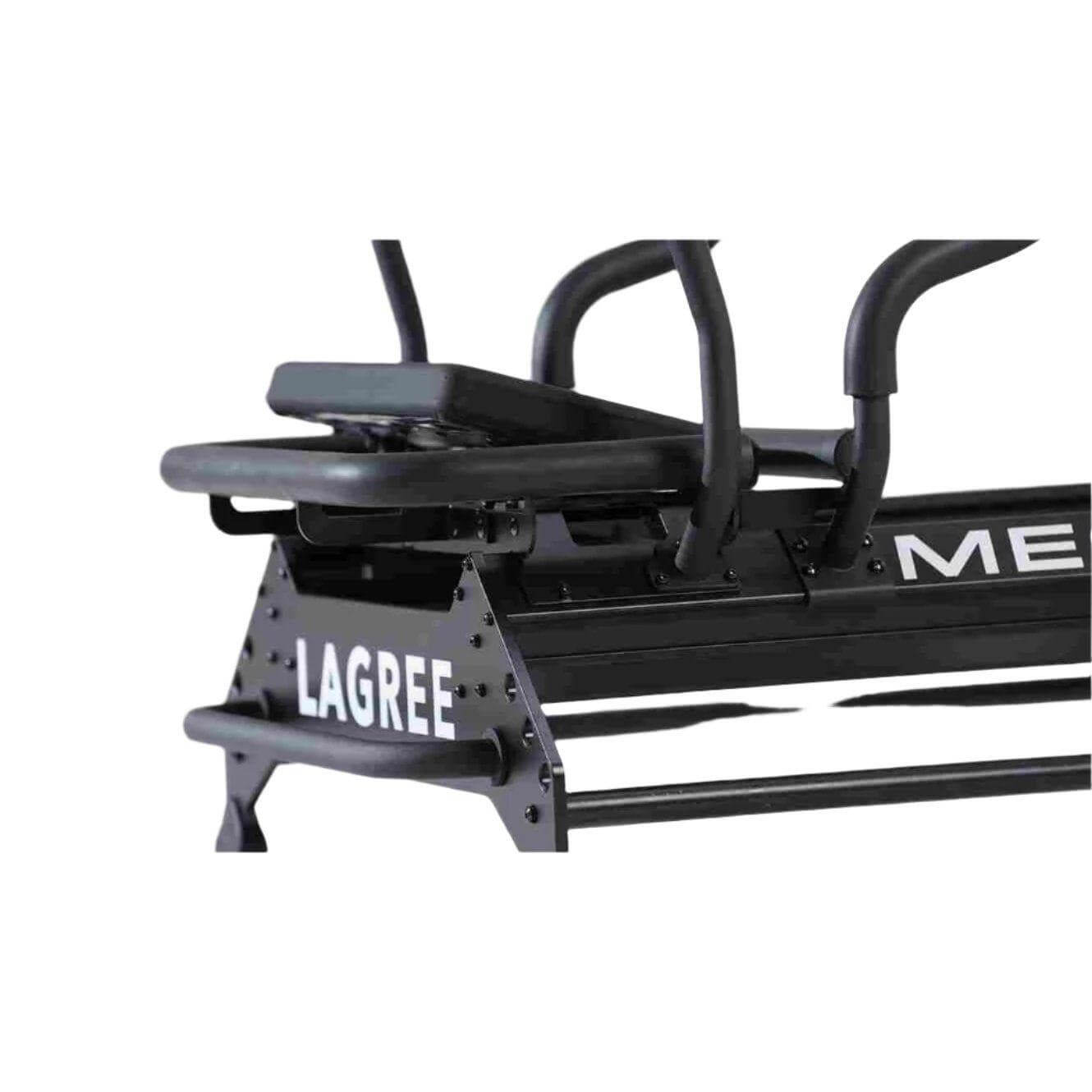
- Elevated front platform: Positions you above the carriage for standing exercises, enabling a longer range of motion and more complete muscle engagement in lunge and skater variations.
Lagree Exercise Names: The Complete Glossary
These are the named exercises you'll encounter most frequently in Lagree classes and workouts. Each name corresponds to a specific movement pattern on the megaformer.
Legs and Glutes Exercises
The foundational Lagree lower body exercise. The elevated front platform creates a deeper range of motion than a floor lunge, with the carriage adding resistance in both directions — push and pull.
Setup
- Stand on the elevated front platform, facing the back of the machine
- Front foot firmly planted on the stationary platform
- Ball of back foot on the carriage, heel lifted
- Start: 1–2 light springs
Key cues
- Lower both knees toward 90° — carriage slides back
- Front knee stacked over ankle, not past toes
- Neutral spine, core engaged throughout
- Press through front heel to return — control the carriage in both directions
Common mistakes: Leaning forward, front knee caving inward, letting the carriage snap back instead of controlling the return.
Elevator Lunge technique — setup, cues, and common mistakes
Lateral carriage drive targeting the inner and outer thighs with significant single-leg stability demand on the standing leg. Mimics the movement pattern of skating or speed skating.
Setup
- Stand on the elevated platform, facing sideways to the machine
- One foot on stationary platform, facing forward
- Outside edge of other foot on carriage
- Start: light to medium spring
Key cues
- Standing leg slightly bent — never locked out
- Drive carriage out laterally, extending the moving leg
- Engage inner thigh of standing leg to pull carriage back
- Hips level throughout — avoid side-to-side rocking
Common mistakes: Locking the standing knee, letting the carriage slam at full extension, shifting weight side to side.
Elevator Skater — lateral carriage drive technique
A posterior chain-focused lunge variation where the carriage drives backward, loading the glutes and hamstrings in the drive phase and demanding eccentric control on the return.
Setup
- Stand on elevated front platform, facing the front of the machine
- Front foot on stationary platform, back foot (ball) on carriage
- Start: 2–3 medium springs
Key cues
- Bend front knee and push carriage back with glute and hamstring power
- Torso upright, core engaged — no leaning
- Pull carriage back by driving through front leg
- Control both phases — never let carriage slam
Common mistakes: Using momentum, arching the lower back, rushing the movement.
Runner's Lunge — posterior chain drive and control
Core and Oblique Exercises
One of the signature Lagree core exercises. The carriage pull from plank generates deep transverse abdominis engagement that crunch-based movements cannot replicate.
Setup
- High plank — hands on stationary front platform, shoulders over wrists
- Both feet on moving carriage
- Start: 1–2 light springs
Key cues
- Core tight, back flat — hold the plank as a base
- Pull carriage toward hands by engaging lower abs and hips
- Knees bend and hips rise — inverted V shape at peak
- Push back to plank — resist the springs, don't collapse
Common mistakes: Hips sagging in plank, using momentum to pull the carriage, weight too far forward on the hands.
Catfish — deep core carriage pull from plank
A Runner's Lunge variation adding rotational core engagement. The twist introduces oblique demand without losing lower body loading — a full-body combination move.
Setup
- Start in Runner's Lunge position
- Slightly lighter spring than standard Runner's Lunge to allow rotation
Key cues
- As carriage drives back, gently twist torso toward front leg side
- Rotation originates from obliques — not shoulders
- Hips and lower body remain stable throughout
- Untwist as carriage returns to start
Common mistakes: Twisting from the lower back, losing stability on the front leg, rushing the rotation.
Reverse Runner with Twist — oblique and rotational core engagement
Lateral core engagement combining a static side plank hold with a dynamic carriage pull. One of the more demanding oblique exercises in the Lagree vocabulary.
Setup
- Side plank — forearm on stationary front platform
- Both feet (stacked or staggered) on carriage
- 1 light spring
Key cues
- Hips lifted in side plank — maintain throughout
- Pull carriage by bending knees toward chest
- Obliques drive the pull — not the hip flexors
- Extend legs fully back to side plank before next rep
Common mistakes: Hips dropping or rotating, neck strain from head position, using momentum rather than controlled oblique engagement.
Side Plank Crunch — lateral core carriage pull
Back and Shoulder Exercises
A seated pulling exercise targeting the posterior chain of the upper body. The spring tension provides resistance in both directions, with the return phase being as demanding as the pull.
Setup
- Sit on carriage facing the back of the machine, holding straps
- Feet on back platform
- Start: 2–3 medium or heavy springs
Key cues
- Arms extended forward, slight elbow bend
- Engage lats and pull straps toward chest, elbows driving back
- Lean back slightly as you pull — core active, back straight
- Control the return — resist the springs on the way out
Common mistakes: Shoulder shrug, using momentum, back arching excessively, rushing the return phase.
Tailbone Pulldowns — lat and upper back engagement
Cardio Lagree Exercises
Lagree is inherently cardiovascular when executed correctly — the combination of slow, constant-tension movement with short transitions keeps heart rate elevated throughout a session. These exercises specifically drive cardiovascular demand alongside muscular loading.
Bear
A plank-based exercise where you continuously pull the carriage toward and away from the front platform in a crawling-style movement. Both hands and feet are on the machine simultaneously, and the continuous carriage motion with little rest creates significant cardiovascular demand. Start with 1 light spring and focus on core stability before increasing resistance or tempo.
Plank Carriage Drive (Wheelbarrow variation)
High plank position with feet on the carriage. Drive knees toward chest rhythmically — not with maximum range, but with controlled speed and continuous movement. This variation sustains elevated heart rate while maintaining core engagement throughout. The Mega Pro's smooth carriage makes continuous-tempo versions significantly more accessible than on older machines.
Lunge Circuits
Keeping transitions under 15 seconds between Elevator Lunge, Runner's Lunge, and Elevator Skater on the same leg before switching maintains cardiovascular demand without sacrificing form. This approach — sequential lower body moves with minimal rest — is the standard cardio programming structure in Lagree classes.
20-Minute Beginner Mega Pro Workout
This circuit covers the foundational Lagree exercise categories: lower body, core, and upper body. Aim for 45–60 seconds per exercise with 15-second transitions. Use light resistance throughout — control and form matter more than spring weight at this stage.
| # | Exercise | Spring Setup | Duration | Focus |
|---|---|---|---|---|
| 1 | Elevator Lunge — Right leg lead | 1 light spring (front) | 45 sec | Quad, glute drive |
| 2 | Elevator Lunge — Left leg lead | 1 light spring (front) | 45 sec | Balance and symmetry |
| 3 | Runner's Lunge — Right leg | 2 light springs (back) | 45 sec | Glute and hamstring load |
| 4 | Runner's Lunge — Left leg | 2 light springs (back) | 45 sec | Glute and hamstring load |
| 5 | Catfish | 1 light spring | 45 sec | Deep core — slow and controlled |
| 6 | Tailbone Pulldowns | 2 medium springs | 45 sec | Lat engagement, back posture |
| 7 | Plank Carriage Drive | 1 light spring | 45 sec | Core endurance — forearm plank |
Repeat the circuit once if time allows. Rest 60 seconds between circuits. Stretch for 5 minutes after completion — focus on hip flexors, glutes, and thoracic spine.
Full-body Lagree workout — led by Master Teacher Trainer Sharnee Lee Scott
Mega Pro Features: What Changes Compared to Older Megaformers
If you've trained on an M3, Evo, or earlier megaformer model, the Mega Pro will feel familiar in principle but different in practice. Key differences:
- Tilting platforms: Both front and back platforms can tilt, changing joint angle and muscle recruitment in exercises like lunges, planks, and skaters. Master flat-platform form before adding tilt — tilted variations significantly increase joint stress if form isn't precise.
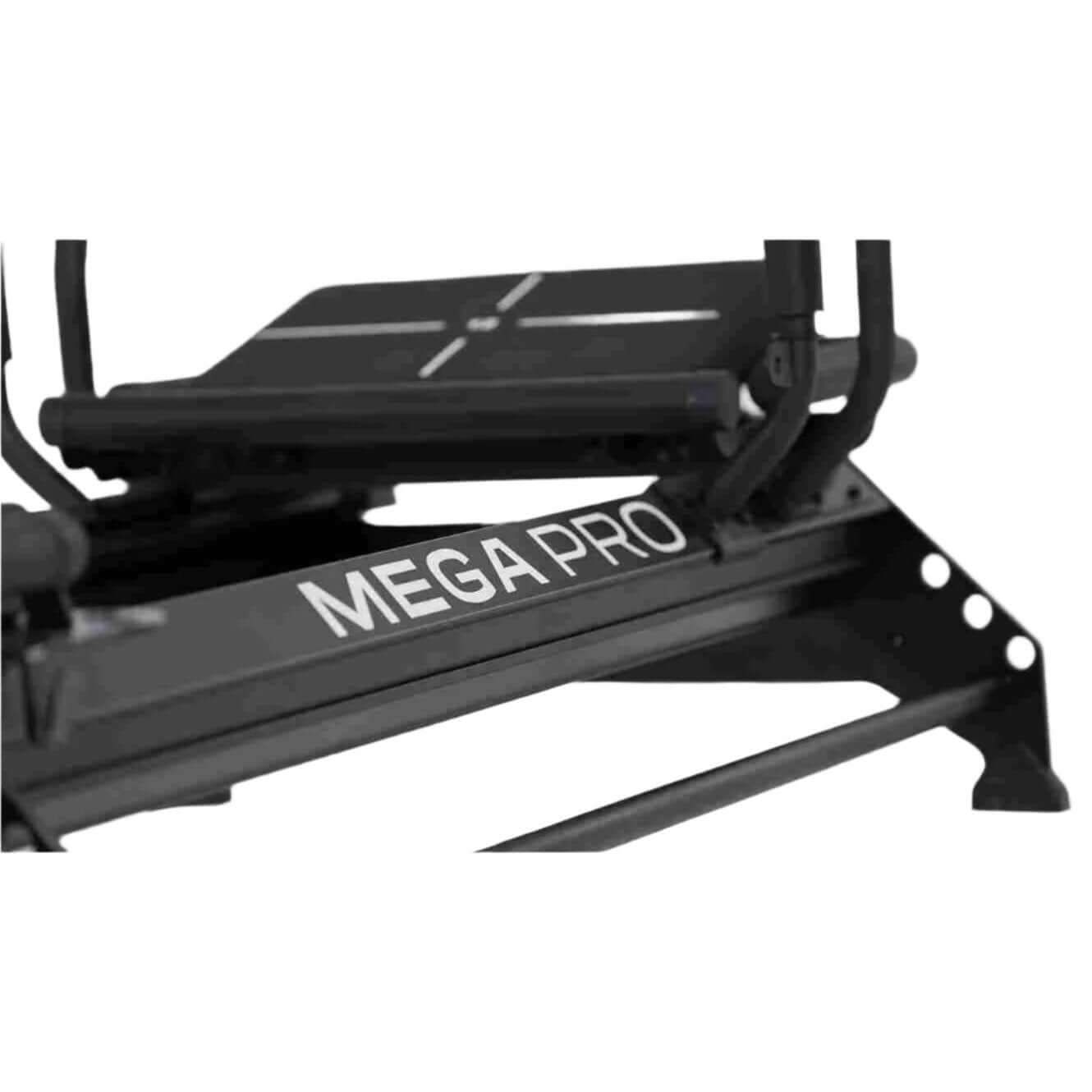
- Longer frame: The Mega Pro frame is longer than earlier models, benefiting taller users who found carriage travel restrictive on the M3 and Evo.
- Ultra-light spring: A fourth spring option below the standard light spring allows finer resistance adjustment — particularly useful for upper body work, rehabilitation-style movements, and beginners learning spring management.
- Smoother carriage: Updated bearing system produces a quieter and more consistent glide, particularly noticeable in high-tempo or cardio-focused sequences.
Own a Lagree Mega Pro: Pricing, Setup, and Home Studio Use
- Frame: Full commercial-grade megaformer
- Platforms: Front and rear tilting platforms
- Springs: Ultra-light, light, medium, heavy
- Carriage: Updated sealed bearing system
- Frame length: Longer than M3 — suits taller users
- Best for: Home studios, private Lagree instructors, commercial Lagree facilities
- Delivery: White glove delivery available
- Financing: 0% APR via Affirm on orders over $1,000
- Support: Authorised Lagree Fitness dealer
- Accessories: Compatible with Lagree R.O.M. kit and Tempo Lights
Setting Up a Mega Pro at Home
The Mega Pro is a substantial piece of equipment. Before ordering, confirm you have adequate floor space — the machine is approximately 100 inches (254 cm) long, 30 inches (76 cm) wide, and requires approximately 7 feet of clear ceiling height for standing exercises on the carriage.
The machine ships in components and requires assembly. Most buyers allow 2–3 hours for setup with two people. White glove delivery service is available for home studios where floor access or room placement requires professional coordination — discuss this with us before placing your order at 866-861-6317.
For Lagree-certified instructors setting up a teaching studio, the Mega Pro is compatible with Lagree On Demand for class programming, and many certified instructors also teach private sessions and small group classes from their home machine. See our Pilates and Lagree certification guide for instructor training pathways.
Ready to own a Mega Pro?
We carry the full Lagree Fitness line and can help you match the right machine to your space, budget, and teaching goals. Real support after delivery, not just at checkout.
View Mega Pro → Book a Free Consultation 866-861-6317 | info@recovathlete.com | Mon–Fri 9am–6pm EST