
866-861-6317

Ask an Expert

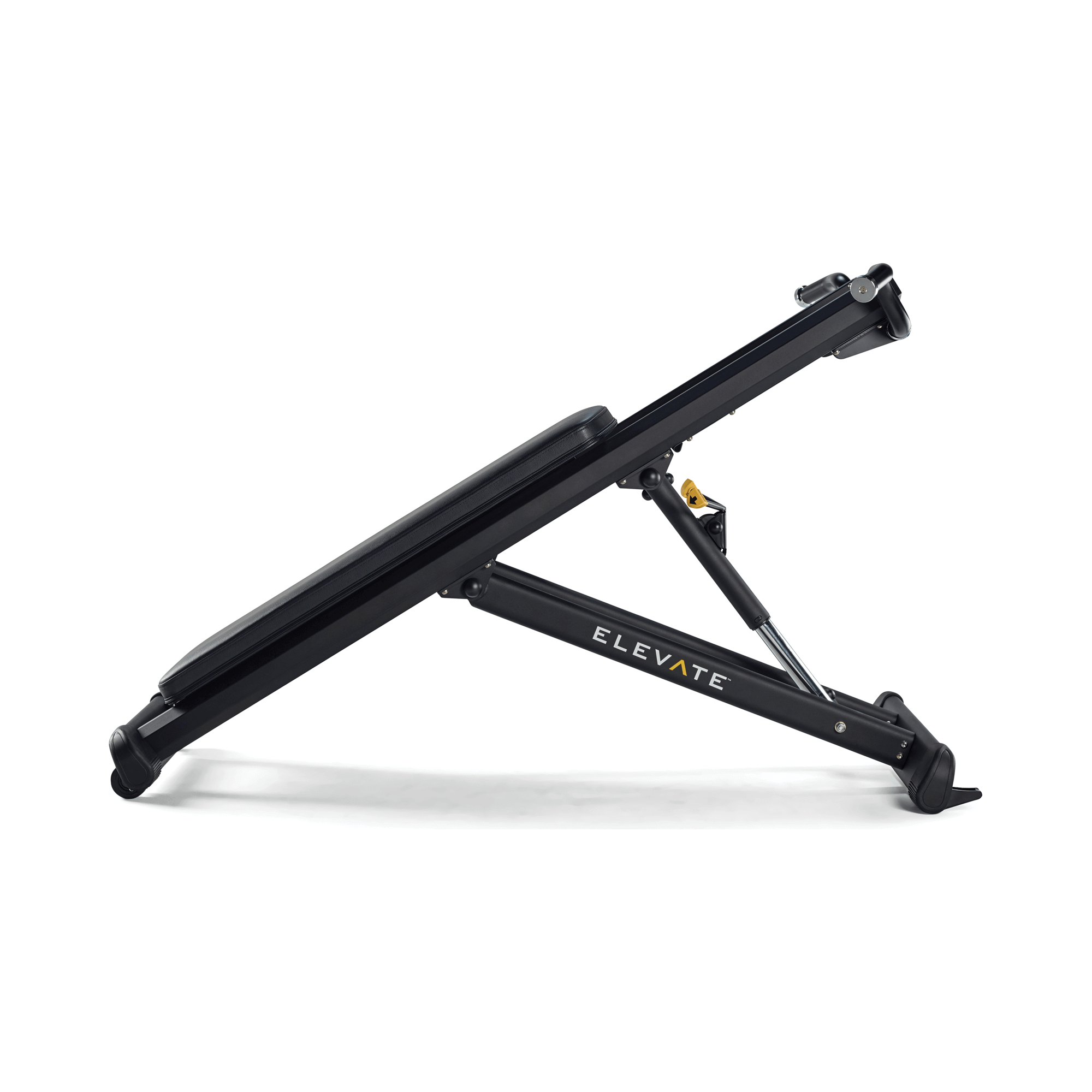
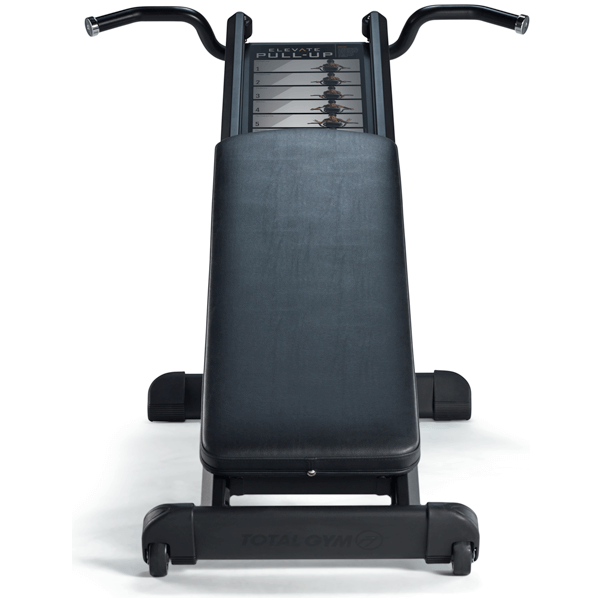
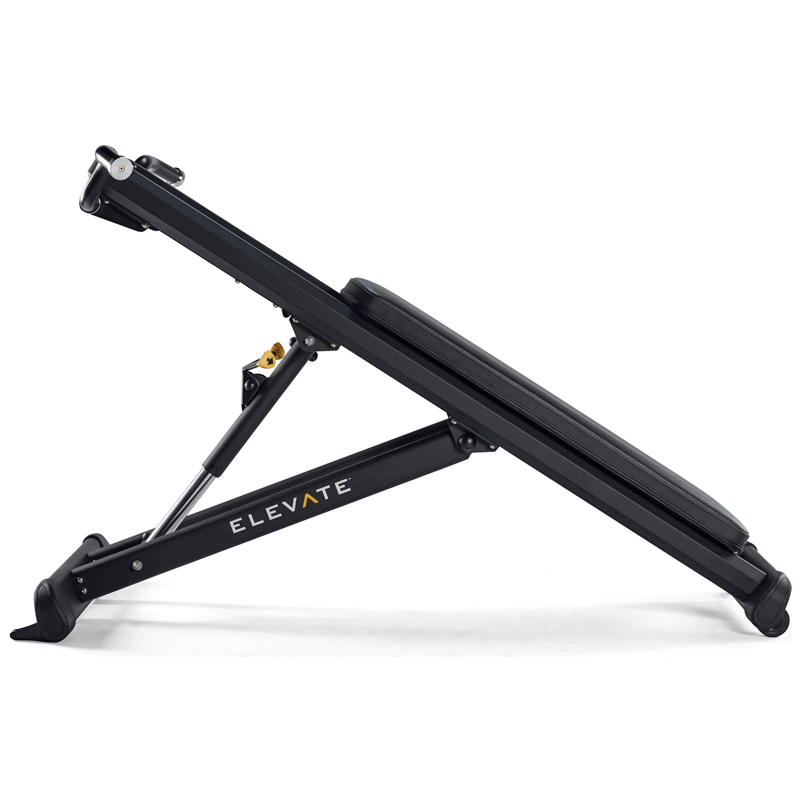
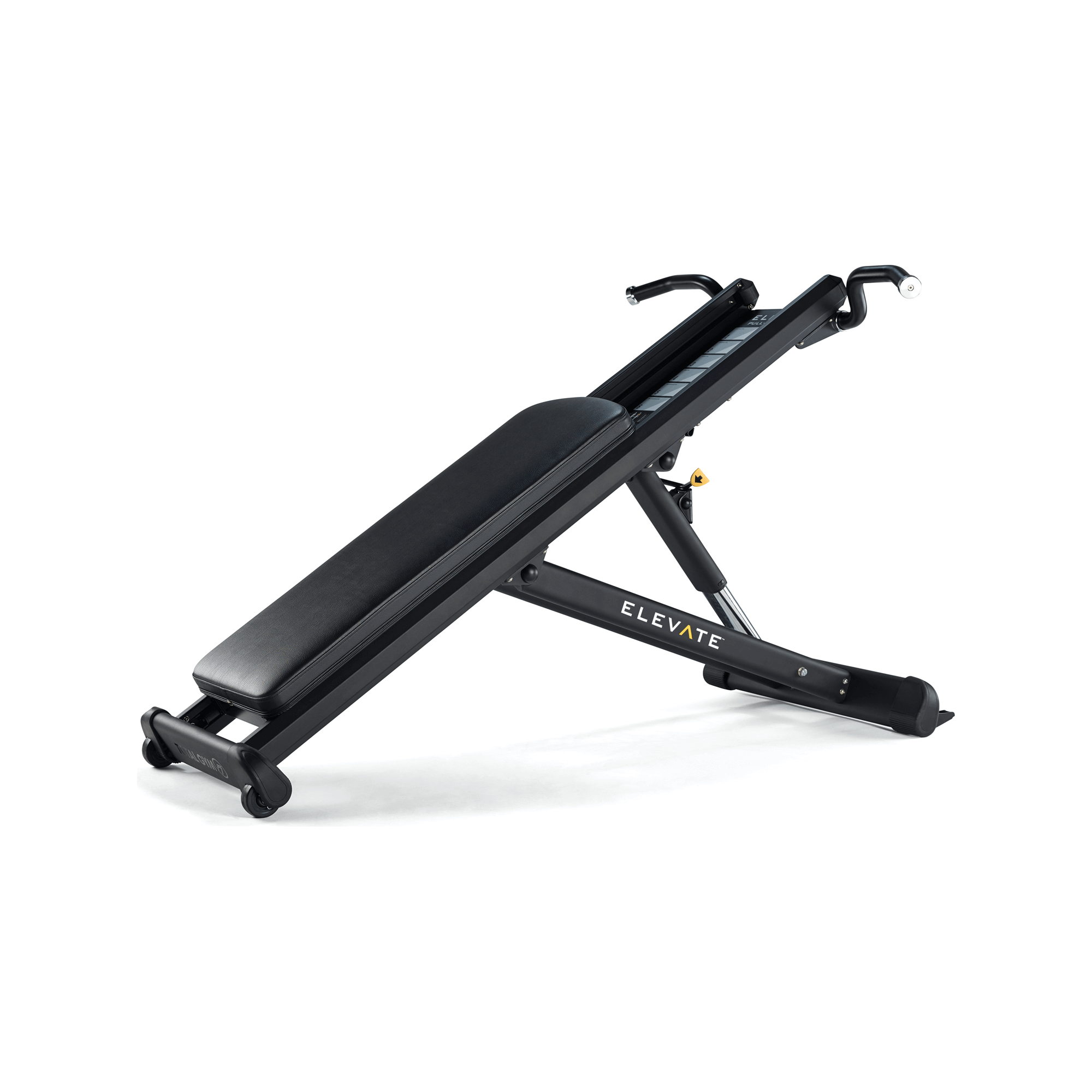
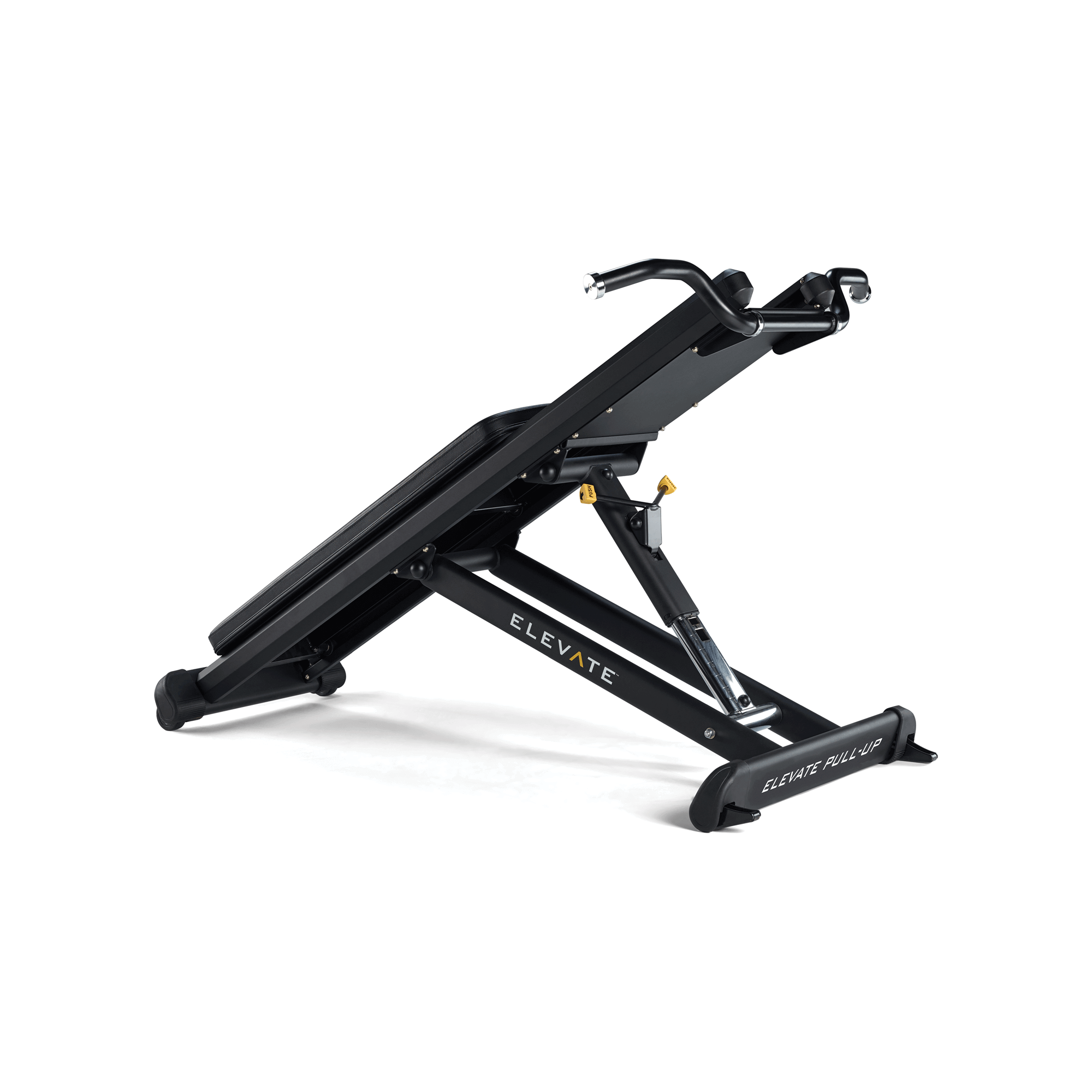
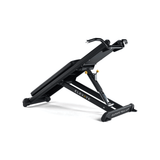
Total Gym ELEVATE Pull Up Machine

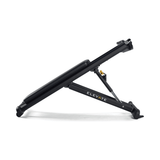
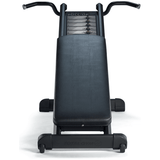
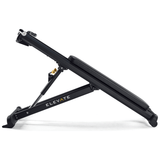
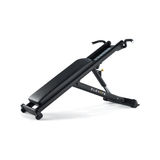
Ships within 10 business days | FREE SHIPPING
- Regular price
- $1,995.00
- Regular price
-
$2,195.00 - Sale price
- $1,995.00
- Unit price
- per
Save $200.00
Save $200.00 USD
SHIPPING FREE
10
Description
Total Gym ELEVATE Pull Up Machine: Build Pull-Up Strength With Progressive Bodyweight Assistance
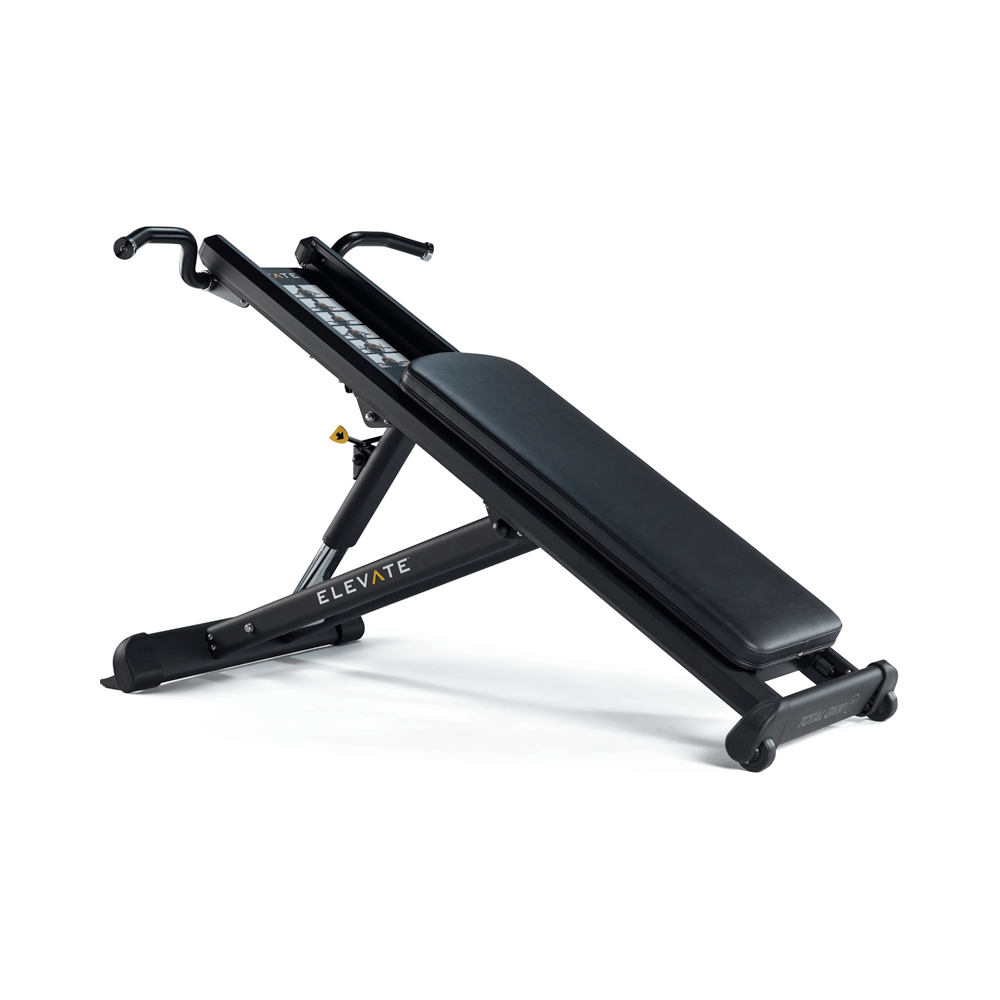
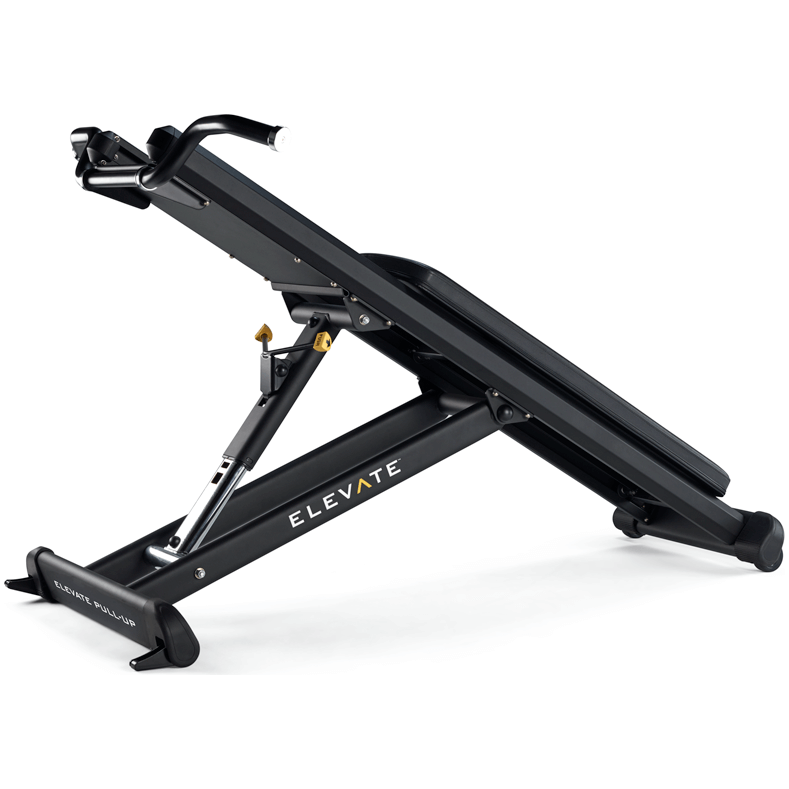
The Total Gym ELEVATE Pull Up Machine makes pull-ups trainable for everyone. The inclined glideboard reduces bodyweight loading so a client who can't do a single pull-up can start at Level 1 (roughly 35% bodyweight) and progress to full bodyweight pulling at Level 7. Seven resistance levels cover rehab patients through advanced athletes. At 16 sq ft and 114 lbs, it's a dedicated pull station for commercial circuits, PT clinics, and home gyms. No bands. No kipping. Clean, progressive pulling strength.
✓ Authorized Total Gym Dealer. Full manufacturer warranty included.
Best For
- Gyms and studios where clients struggle with standard pull-ups
- PT clinics running upper-body, shoulder, and post-surgery rehab
- CrossFit boxes adding accessible pulling stations alongside rig work
- Home gym owners who want real lat development without a cable stack
- Senior fitness centers building functional pulling strength safely
- Beginners training their first strict pull-up
Not Ideal For
- Athletes who already perform 20+ strict pull-ups (Level 7 maxes at full bodyweight)
- Buyers wanting heavy weighted pull-up training (use a belt and bar setup)
- Anyone needing full-body training (see the Encompass)
- Spaces under 16 sq ft of dedicated floor area
- Buyers wanting a cable stack lat pulldown machine
Why RecovAthlete Carries This
The Pull Up pairs naturally with the Press Trainer for balanced push and pull programming. We carry both individually and bundled in the Circuit package. Most commercial buyers start with these two stations before building toward the full ELEVATE lineup. Call 866-861-6317 to compare configurations.
Who Buys the ELEVATE Pull Up
- Gym owners whose clients can't use a standard pull-up bar or refuse to try one
- Physical therapists rebuilding pulling strength after shoulder surgery or rotator cuff injury
- Personal trainers programming progressive pull-up training without bands or jump-assists
- Home gym builders adding a dedicated back and lat station with measurable progression
- CrossFit coaches giving beginners a safer pulling entry point before rig work
- Senior fitness instructors building functional upper-body strength without overhead joint stress
What the ELEVATE Pull Up Does
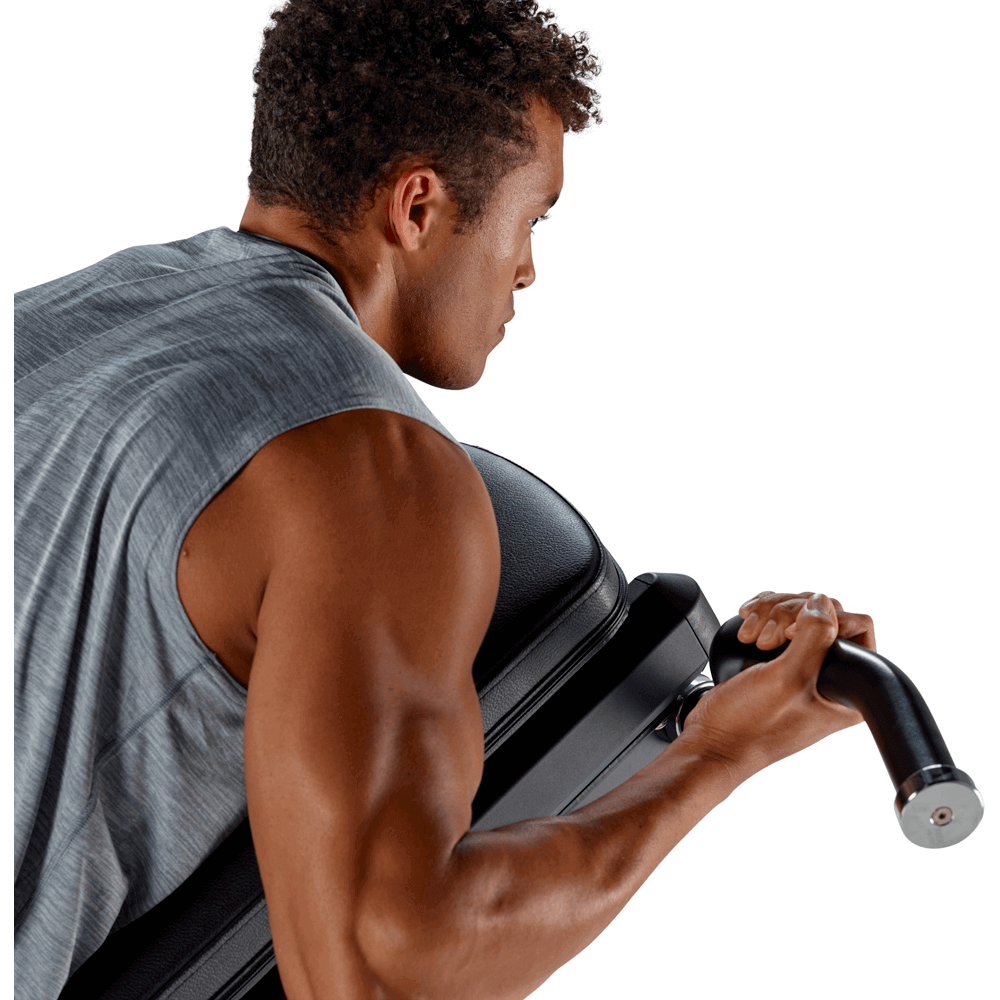
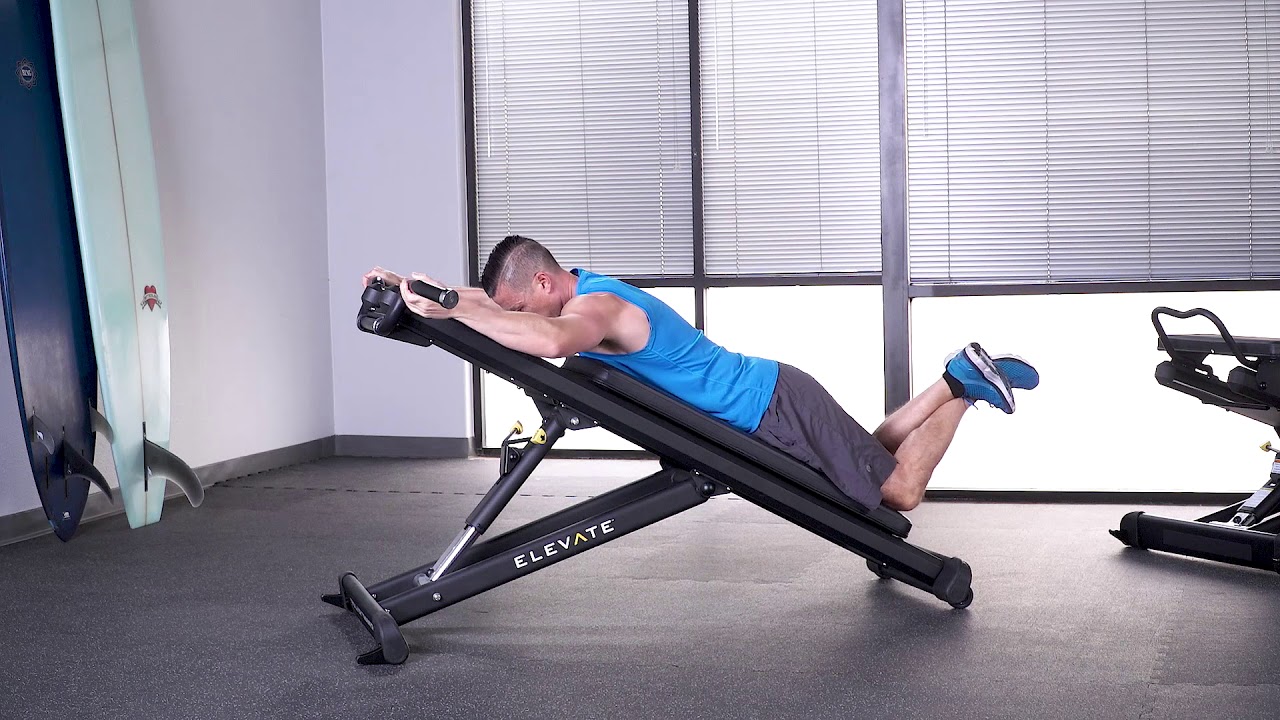
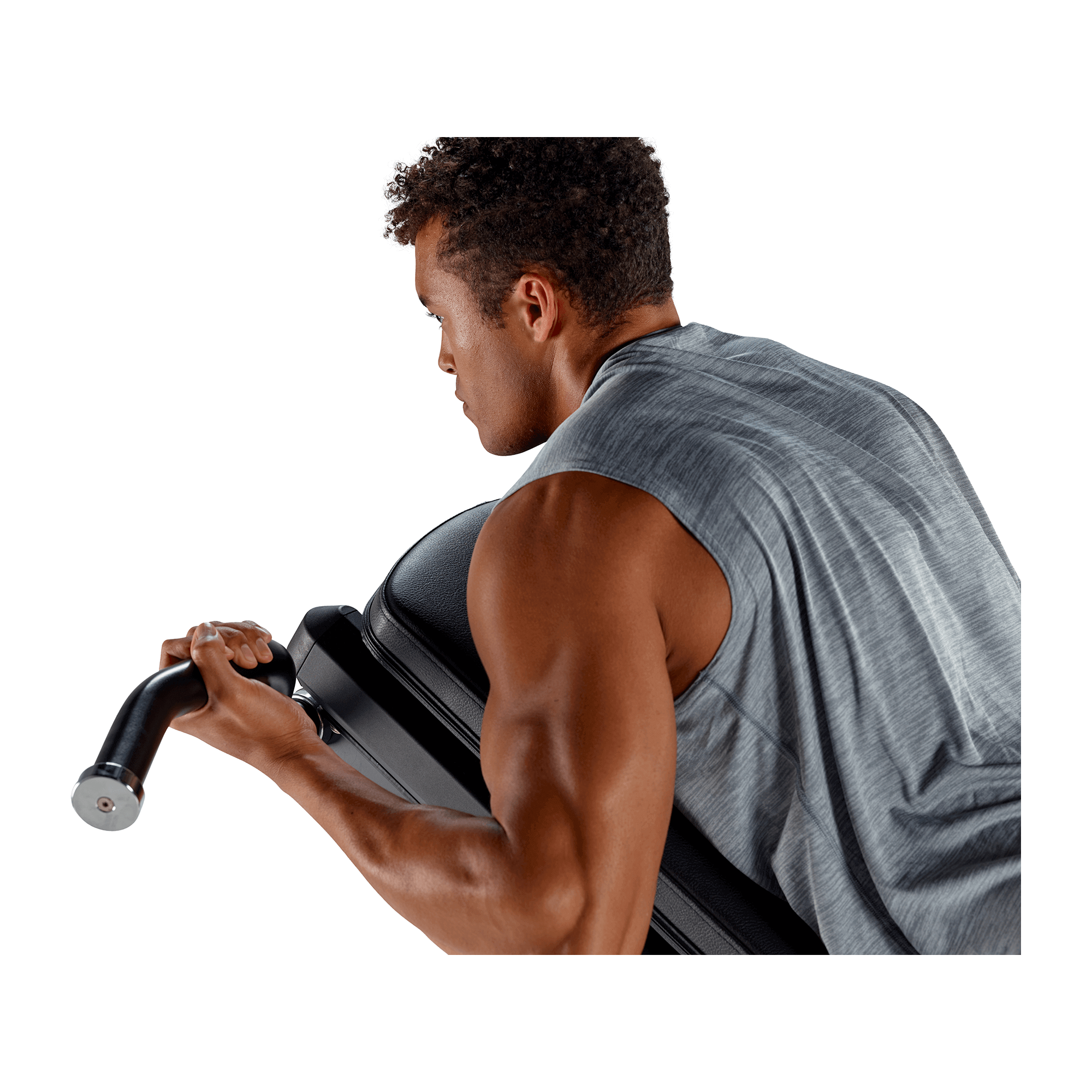
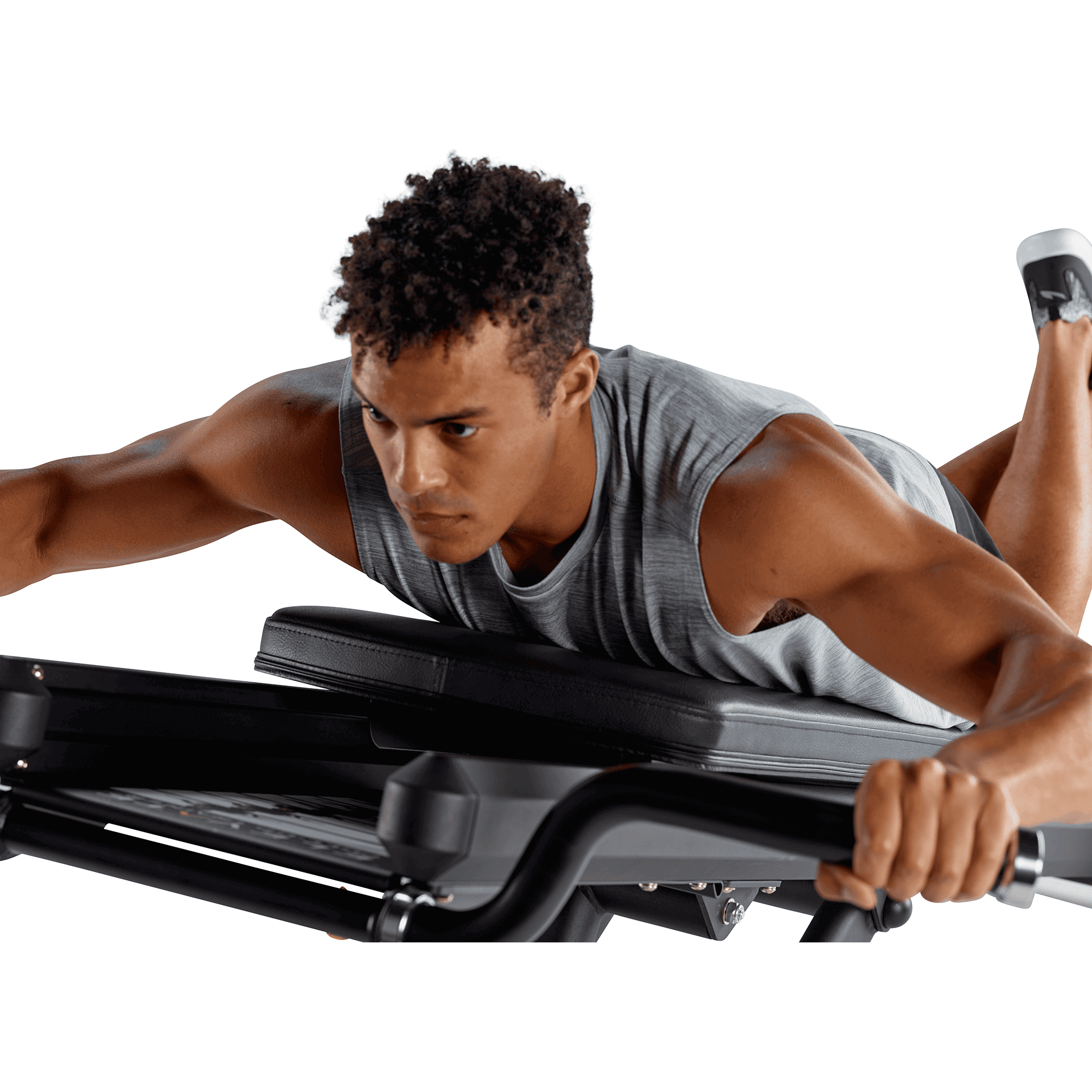
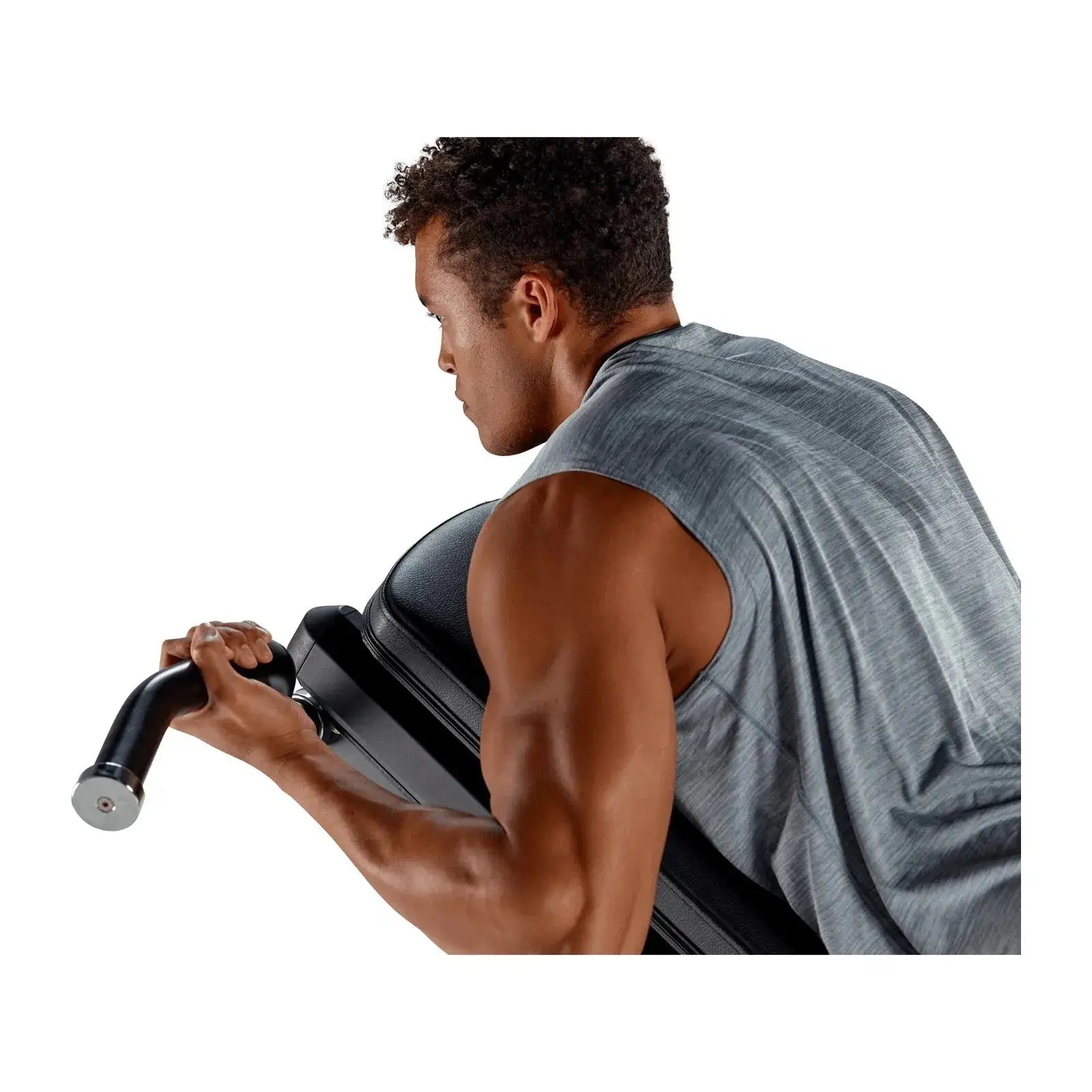
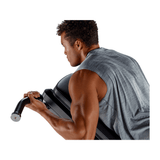
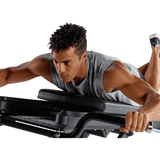
You lie on the glideboard, grip the overhead handles, and pull your body upward along the inclined track. The incline determines what percentage of your bodyweight you're pulling. Lower incline equals less resistance equals assisted pull-up. Higher incline equals more resistance equals closer to full bodyweight. The 33-inch glideboard range gives you a full pulling arc. Works lats, rhomboids, rear delts, biceps, and grip. Seven levels let you progress a deconditioned patient from assisted pulling to full bodyweight reps on the same machine.
Exercise and Demo Videos
Pull Up Overview
Exercise Demo
Progression Guide
Pull-Up Progression Guide
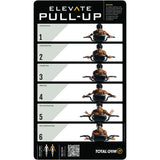
The seven resistance levels map directly to a structured pull-up progression. Most users move up one level every 2 to 3 weeks of consistent training.
| Level | Approx. Bodyweight Load | Best For |
|---|---|---|
| Level 1 | ~35% | Beginners, rehab patients, first-pull-up training |
| Level 2 | Light | Early strength building, post-injury return |
| Level 3 | Light to moderate | Conditioning, multi-set work capacity |
| Level 4 | Moderate | Intermediate users, hypertrophy programming |
| Level 5 | Moderate to heavy | Strength building, near-bodyweight reps |
| Level 6 | Heavy | Advanced pull-up progression |
| Level 7 | Near full bodyweight | Strict pull-up training, eccentric overload prep |
Programming starting point: 3 sets of 6 to 10 reps at the highest level where form stays clean. Progress to the next level only when you can complete all sets with controlled tempo and full range. Stuck at one level for 3+ weeks usually means a programming change (volume, frequency, or accessory work) rather than progressing too soon.
Muscles Worked
The ELEVATE Pull Up trains the full pulling chain:
- Latissimus dorsi (lats). Primary mover in vertical pulling. The driver of pull-up performance.
- Rhomboids. Mid-back scapular retractors, engaged through the full pulling arc.
- Trapezius (mid and lower). Scapular stabilization during the pull.
- Rear deltoids. Shoulder extension and posterior chain support.
- Biceps brachii. Elbow flexion during the pulling phase.
- Brachialis and brachioradialis. Forearm flexors engaged during sustained grip.
- Grip and forearms. Trained through every rep, especially at higher levels.
- Core stabilizers. Anti-extension work during the pull keeps the trunk rigid.
Exercises You Can Do on the ELEVATE Pull Up
The pull-up is the primary movement, but the station supports the full vertical and horizontal pulling vocabulary:
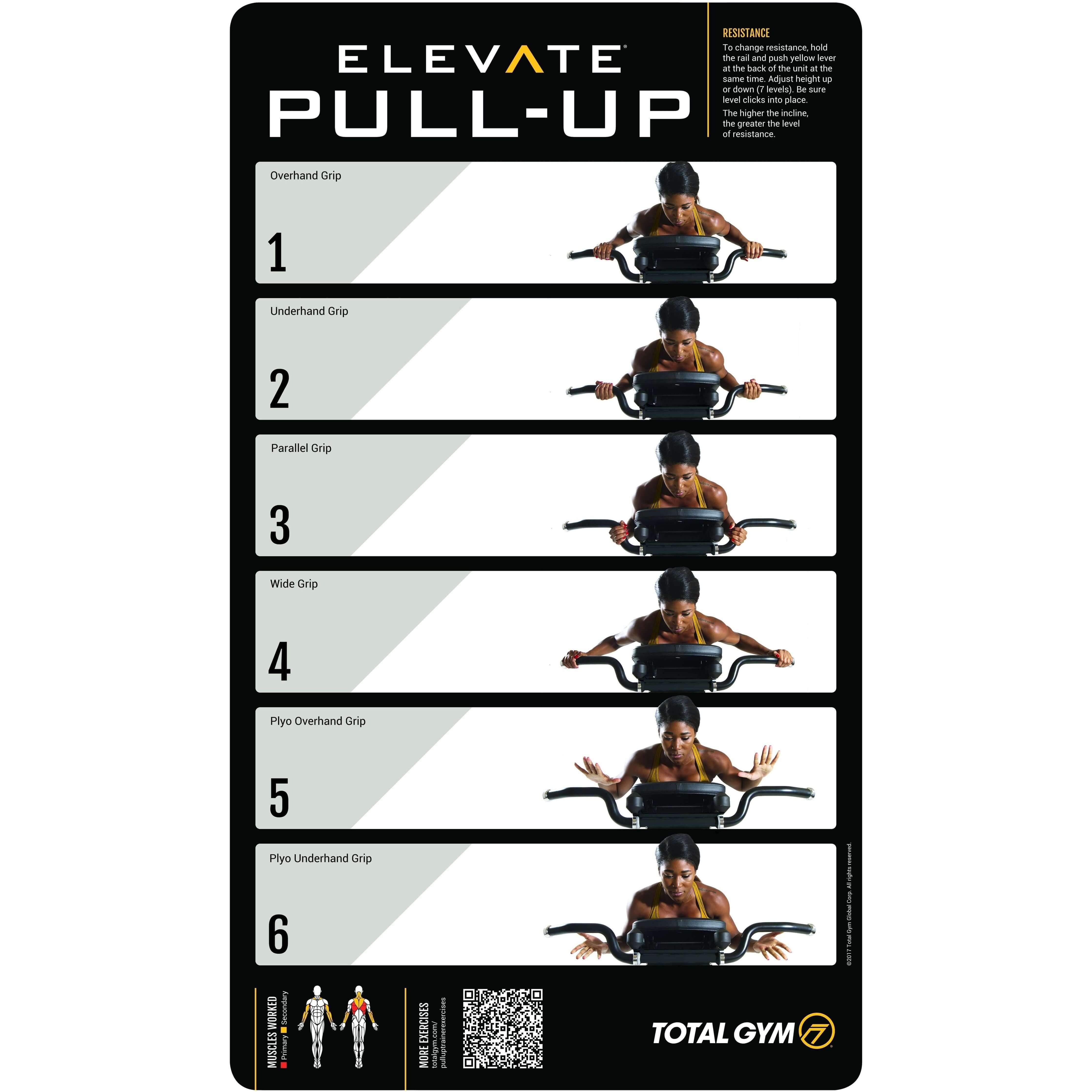
- Assisted pull-ups. The foundation movement, scaled to the user's strength.
- Neutral-grip pull-ups. Hands facing each other for shoulder-friendly pulling.
- Chin-ups. Underhand grip for biceps-dominant pulling.
- Wide-grip lat pulls. Emphasizes outer lat engagement.
- Incline rows. Horizontal pulling variation at lower inclines.
- Eccentric pull-up training. Higher levels with slow controlled lowering. Excellent for building strict pull-up strength.
- Scapular pulls. Pure scapular retraction without elbow bend. Useful for shoulder health and pull-up prep.
- Single-arm progressions. Unilateral pulling for advanced users targeting strength asymmetries.
- Tempo work. Slow concentric and eccentric for hypertrophy programming.
ELEVATE Pull Up vs Traditional Assisted Pull-Up Machine
Most commercial gyms have a counterweight-stack assisted pull-up machine. They work, but the mechanics are different from a real pull-up. Here's the trade-off:
| Feature | ELEVATE Pull Up | Traditional Assisted Pull-Up Machine |
|---|---|---|
| Resistance method | Incline-based bodyweight assistance | Counterweight stack with knee or foot platform |
| Body position during pull | Body moves along glideboard | Body stays vertical, machine assists upward |
| Floor space | 16 sq ft | Often 25+ sq ft |
| Best for | Pull-up-specific progression, rehab, mixed populations | General assisted pull-ups in commercial gym settings |
| Setup | No weight stack, simpler maintenance | Cable, pulley, and weight stack service required |
| Transfer to real pull-ups | Higher (closed-chain bodyweight pattern) | Lower (counterweight changes movement mechanics) |
| Progression measurement | 7 discrete levels, easy to track | Pin-loaded weight stack, finer increments |
For pure progression-toward-pull-up training, the ELEVATE Pull Up delivers a closer match to the actual movement pattern. For general gym programming where members already do unassisted pull-ups occasionally, a counterweight machine is simpler.
ELEVATE Pull Up vs Lat Pulldown
Lat pulldowns and pull-ups train the same muscle groups but they're not the same movement. Here's how the two compare:
| Feature | ELEVATE Pull Up | Lat Pulldown |
|---|---|---|
| Movement type | Closed-chain (body moves, anchor stays) | Open-chain (anchor moves, body stays) |
| Stabilizer recruitment | High. Core and shoulder stabilizers engaged throughout | Lower. Seated position reduces stabilizer demand |
| Transfer to pull-up performance | High. Trains the actual pull-up pattern | Moderate. Trains the muscles but not the pattern |
| Best for | Building real pull-up strength, rehab, functional pulling | Isolated lat hypertrophy, finishing sets, beginner-friendly |
| Beginner accessibility | High. Seven assist levels | High. Light weights available |
| Range of motion | Full pulling arc | Cable-driven, depends on setup |
Both have a place. For lat hypertrophy and accessory back work, a lat pulldown is hard to beat. For training the pull-up itself, the ELEVATE Pull Up is the better match because it preserves the closed-chain mechanics that floor pull-ups demand.
ELEVATE Pull Up vs Resistance Bands
Band-assisted pull-ups are the most common alternative when a gym doesn't have an assisted machine. Bands work, but they have real limitations.
| Feature | ELEVATE Pull Up | Resistance Bands |
|---|---|---|
| Assistance pattern | Controlled through fixed incline levels | Variable. More assistance at the bottom, less at the top |
| Stability | Guided glideboard track | Free-hanging, requires more coordination |
| Progression tracking | 7 measurable levels | Multiple band thicknesses, less precise increments |
| Best for | Clinics, gyms, structured progression programs | Low-cost home option, occasional users |
| Safety | Controlled track, no snap risk | Snap risk if band fails under load |
| Cost | Higher upfront, no consumables | Lower upfront, bands wear and need replacement |
| Coaching difficulty | Easier. Level is set, form is the focus. | Harder. Band tension shifts during the rep. |
For one-off home users, bands are a reasonable starting point. For commercial settings, PT clinics, or anyone running structured pull-up programs across multiple clients, the ELEVATE Pull Up delivers cleaner coaching, safer progression, and more measurable results.
ELEVATE Pull Up Machine for Home Gyms
For home gym builders who want real back and lat development, the ELEVATE Pull Up is a stronger pick than a doorway pull-up bar plus bands. Three reasons:
- Measurable progression. Seven discrete levels mean you can track exactly where you are and target the next benchmark.
- Real pull-up mechanics. Doorway bars limit grip width and stop range. The ELEVATE preserves the full pulling arc.
- Consistent assistance. Unlike bands that lose tension as you pull, the incline-based assistance stays predictable through every rep.
Footprint: 16 sq ft. Roughly a 4 ft x 4 ft floor area. Fits in most garage gyms and finished basement setups without requiring overhead rig installation. Best for home buyers serious enough to invest in a dedicated pulling station, not a casual all-in-one trainer.
ELEVATE Pull Up for Gyms, Studios, and PT Clinics
Commercial settings buy the ELEVATE Pull Up for one main reason: it removes the intimidation factor. Standard pull-up bars and overhead rigs send a clear "advanced equipment" message that many gym members avoid. The ELEVATE Pull Up is approachable.
What this means in practice:
- Beginner-friendly first-pull-up training. Members who would never touch a pull-up bar will use this station.
- Rehab progression. Post-shoulder-surgery and post-rotator-cuff patients can train pulling strength at sub-bodyweight loads with clinically appropriate assistance.
- Easier coaching than bands. One trainer can program 5 clients across 5 levels without managing band swaps.
- Lower attrition on pull-up programs. Clients who can't do a pull-up on day one quit faster on bar-only programs.
- Natural circuit pairing. Stacks with Press Trainer for push-pull programming and with Core ADJ for full upper-body and core circuits.
How to Use the ELEVATE Pull Up Machine
- Select your incline level. Beginners start at Level 1 to 2. Advanced users start at Level 5 to 6.
- Lie on the glideboard. Position head toward the handles, feet toward the base.
- Grip the overhead handles. Choose grip width and orientation based on the variation you're training.
- Pull your chest toward the handles. Drive elbows down and back, keeping ribs pulled toward your hips.
- Lower with control. Eccentric phase builds as much strength as the concentric. Take 2 to 3 seconds on the way down.
- Keep core engaged throughout. Avoid kicking, swinging, or hip-driven momentum. The whole point is clean strict pulling.
- Progress one level at a time. Only move up when current level reps stay clean and controlled.
Sample Workouts
| Goal | Workout |
|---|---|
| First pull-up training | 3 sets of 8 reps at Level 1 or 2, 3 times per week |
| Back strength and hypertrophy | 4 sets of 6 to 10 reps at Level 3 to 5, 2 to 3 times per week |
| Rehab progression | 2 to 3 sets of controlled reps at the highest pain-free level, daily as tolerated |
| Circuit conditioning | 30 seconds pull, 30 seconds rest, 6 to 10 rounds at Level 2 to 3 |
| Eccentric strength | 3 sets of 5 reps at Level 6 to 7, 4 to 5 second lowers |
| Pre-pull-up bar transition | 4 sets of 5 at Level 7 before attempting bar pull-ups |
| Single-arm progression | 3 sets of 5 reps per arm at Level 2 to 3, alternating arms |
Specs Translated Into What They Mean
| Spec | What it means for you |
|---|---|
| Level 1 starts at ~35% bodyweight | A client who can't do an unassisted pull-up can train the movement from day one. Standard assisted pull-up machines start at higher loading and force compensatory mechanics. |
| Progresses to full bodyweight at Level 7 | Same station scales from "can't do one pull-up" to "working on weighted pull-ups." No machine swap, no programming break. |
| 33" glideboard range | Full pulling range. Trains the dead-hang to chin-over-bar arc, not a shortened cable pulldown. |
| 16 sq ft floor space | Footprint of a single power tower. Replaces assisted pull-up machines that take 25+ sq ft. |
| 400 lb max user weight | Same capacity as the rest of the ELEVATE line. No weight exclusions for heavier members. |
| 5-year commercial frame warranty | Pull-up bars and machines see high failure rates in commercial use. Total Gym backs this at the commercial tier. |
What Ships With It
- ELEVATE Pull Up Machine station (114 lbs)
- Integrated pull-up handles and grip positions
- Glideboard with self-skinning foam upholstery
- Anodized aluminum rails with precision ball bearings
- Owner's guide and pull-up progression reference
- Manufacturer warranty registration
Full Specifications
| Specification | Detail |
|---|---|
| Primary Movement | Assisted pull-ups, lat pulls, rowing variations |
| Resistance Levels | 7 (adjustable incline) |
| Glideboard Range | 33 inches (838 mm) |
| Max User Weight | 400 lbs (181 kg) |
| Floor Space | 16 sq ft (1.5 m²) |
| Unit Weight | 114 lbs (52 kg) |
| Frame | Anodized aluminum rails, reinforced steel |
| Rollers | Sealed precision ball bearings |
| Power Required | None. No electricity, no batteries. |
| Shipping Weight | 134 lbs |
| Shipping Dimensions | 74" x 26" x 12" |
| Warranty: Frame | 5 years (commercial) |
| Warranty: Moving Parts | 1 year |
| Warranty: Upholstery | 90 days |
| Commercial Rated | Yes. Built for daily multi-user facility use. |
ELEVATE Pull Up vs Other ELEVATE Stations
Each ELEVATE station targets a different movement pattern. Most commercial facilities start with 2 to 3 stations and build toward the full circuit.
| Station | Focus | Floor Space | Unit Weight |
|---|---|---|---|
| Core ADJ | Core stability, plank, scrunch | 12 sq ft | 80 lbs |
| Press Trainer | Chest press, shoulder press, push-up | 14 sq ft | 116 lbs |
| Pull Up | Assisted pull-ups, rows, lat pulls | 16 sq ft | 114 lbs |
| Row | Rowing, back strengthening | 12 sq ft | 98 lbs |
| Row ADJ | Rowing, adjustable arm positions | 12 sq ft | 106 lbs |
| Jump Trainer | Plyometrics, lower-body power | 22 sq ft | 230 lbs |
Choose Pull Up if your main goal is back strength, assisted pull-up progression, and upper-body pulling. Choose Press Trainer for pushing strength, Core ADJ for trunk stability, Row for conditioning, and Jump Trainer for lower-body power. For the full setup, the Circuit package bundles multiple stations at facility pricing. Call 866-861-6317 for current pricing on any individual station or bundle.
Shipping & Delivery
- Freight only. Ships LTL freight in one box. 134 lb shipping weight, 74" x 26" x 12" crated.
- Liftgate recommended. Confirm liftgate service when scheduling delivery.
- Delivery options: Curbside (standard), threshold, or room-of-choice (available in many areas, additional cost).
- Doorway planning: Confirm doorway clearance for the 74" long crate before delivery.
- Assembly: Minimal assembly. Plan for one to two people and basic tools. Setup typically takes 20 to 30 minutes.
- Minimum floor space: 16 sq ft for the unit itself, plus access on both sides for user entry and trainer coaching position
- Ceiling clearance: Standard 8 ft ceiling is sufficient
- Flooring: Sits on commercial gym flooring, hardwood, or concrete
- Placement tip: Position with at least 2 feet of clearance on each side for safe user access
Lead times and delivery options vary by location. Call 866-861-6317 or email info@recovathlete.com before ordering. We'll confirm what's available for your zip code, including liftgate and inside-delivery options.
Financing: Affirm available at checkout for individual buyers. Commercial financing available on facility orders and multi-unit bundles. Call 866-861-6317 to pre-qualify.
Frequently Asked Questions
About the Product
What is the Total Gym ELEVATE Pull Up Machine?
The ELEVATE Pull Up is a commercial-grade assisted pull-up trainer. The user lies on an inclined glideboard, grips overhead handles, and pulls their body up the track. Seven incline levels adjust how much bodyweight the user is pulling. Built for gyms, PT clinics, and home gyms training pull-up progression.
Is it an assisted pull-up machine?
Yes. The incline-based assistance system reduces effective bodyweight load to 35% at Level 1 and progresses to full bodyweight at Level 7. Unlike counterweight-stack assisted pull-up machines, the ELEVATE preserves the closed-chain mechanics of an actual pull-up.
Can beginners use the ELEVATE Pull Up?
Yes. The primary use case. Level 1 reduces bodyweight loading to roughly 35%, which means most people who can't do a single pull-up can start training the movement immediately. The controlled track and progressive levels make it more beginner-friendly than band-assisted pull-ups.
Can it help me get my first pull-up?
Yes. The seven-level progression is specifically designed to bridge the gap from "can't do one" to "first strict pull-up." Most users follow a 3-day-per-week protocol starting at Level 1 or 2, progressing one level every 2 to 3 weeks. Reaching Level 7 with clean form typically translates to first unassisted pull-up.
What muscles does it work?
Primary muscles: latissimus dorsi, rhomboids, traps, rear deltoids, biceps, brachialis. Secondary engagement: forearms and grip (worked through every rep), core stabilizers (anti-extension during the pull). Higher levels also engage the shoulder stabilizers heavily during the eccentric phase.
Is it better than resistance bands for pull-up training?
For structured progression, yes. Bands deliver variable assistance (more at the bottom, less at the top), which means the hardest part of the rep gets the least help. The ELEVATE provides consistent assistance through the full range. Bands are cheaper, ELEVATE is more measurable and safer.
Is it better than a lat pulldown machine?
For training the pull-up itself, yes. Lat pulldowns are open-chain (you pull a cable to your body). The ELEVATE Pull Up is closed-chain (your body moves against the track). Closed-chain movements recruit more stabilizers and transfer better to actual pull-up performance. For isolated lat hypertrophy, a lat pulldown is still useful.
How does it compare to a counterweight assisted pull-up machine?
Counterweight machines keep your body vertical and have you stand or kneel on an assist platform. The ELEVATE has you lie on a glideboard that moves along an incline. The ELEVATE preserves the closed-chain bodyweight mechanics of a real pull-up. Counterweight machines change the movement pattern and have a larger footprint.
Is it suitable for heavier users?
Yes. 400 lb max user weight. Heavier users often benefit more from the assisted loading because the percentage reduction is more impactful in absolute terms. A 250 lb user at Level 1 is pulling around 88 lbs, which is trainable from day one.
Is it good for physical therapy clinics?
Yes, and it's a common piece in PT clinics rebuilding upper-body pulling strength. Post-shoulder-surgery, post-rotator-cuff, and post-cervical patients can start pulling at sub-bodyweight loads with controlled mechanics. The seven-level progression maps naturally to clinical return-to-function protocols.
Can commercial gyms use it?
Yes. Built to commercial spec with 5-year frame warranty, 400 lb capacity, and steel and aluminum construction. Used in college and pro athletic facilities, CrossFit boxes, commercial gyms, and personal training studios. Removes the intimidation factor that keeps members away from standard pull-up bars.
Specs & Setup
What is the max user weight?
400 lbs (181 kg). Same capacity as the rest of the ELEVATE line. No weight exclusions.
How much space does it need?
Minimum 16 sq ft of floor space for the unit. Allow additional clearance on both sides (at least 2 feet each side) for user entry and trainer coaching position. Standard 8 ft ceiling clearance is sufficient.
Does it require electricity?
No. The unit is fully mechanical, powered by the user's bodyweight and gravity through the inclined glideboard. No power outlet, no batteries, no motor service.
How long does setup take?
Minimal assembly required. Plan for one to two people, basic tools, and 20 to 30 minutes. Most of the unit ships pre-assembled. The owner's guide includes step-by-step setup instructions.
Does it come fully assembled?
Largely assembled, with minimal final assembly required. Glideboard, rails, and frame ship as one unit. Final assembly involves attaching the overhead handles and confirming all hardware is fully tightened before first use.
Pricing & Purchase
Can I finance it?
Yes. Affirm financing is available at checkout for individual buyers. Commercial financing is available on facility orders, multi-station packages, and Circuit packages through our finance partners. Call 866-861-6317 to pre-qualify.
Is there a bundle discount with the Press Trainer or Circuit package?
Yes. The ELEVATE Circuit package bundles multiple stations at facility pricing. The Pull Up pairs naturally with the Press Trainer for balanced push-pull programming. Call 866-861-6317 for current bundle pricing.
Also Consider
ELEVATE Press Trainer
The push counterpart to the Pull Up. Most commercial buyers pair these two stations for balanced upper-body programming.
ELEVATE Circuit Package
Multiple ELEVATE stations bundled at facility pricing. Includes the Pull Up plus complementary stations.
ELEVATE Core ADJ
Companion station for core training. Stacks with the Pull Up and Press Trainer for full upper-body and core circuits.
120% Price Match
Financing
Shipping
Warranty
Total Gym ELEVATE Pull Up Machine: Build Pull-Up Strength With Progressive Bodyweight Assistance
The Total Gym ELEVATE Pull Up Machine makes pull-ups trainable for everyone. The inclined glideboard reduces bodyweight loading so a client who can't do a single pull-up can start at Level 1 (roughly 35% bodyweight) and progress to full bodyweight pulling at Level 7. Seven resistance levels cover rehab patients through advanced athletes. At 16 sq ft and 114 lbs, it's a dedicated pull station for commercial circuits, PT clinics, and home gyms. No bands. No kipping. Clean, progressive pulling strength.
✓ Authorized Total Gym Dealer. Full manufacturer warranty included.
Best For
- Gyms and studios where clients struggle with standard pull-ups
- PT clinics running upper-body, shoulder, and post-surgery rehab
- CrossFit boxes adding accessible pulling stations alongside rig work
- Home gym owners who want real lat development without a cable stack
- Senior fitness centers building functional pulling strength safely
- Beginners training their first strict pull-up
Not Ideal For
- Athletes who already perform 20+ strict pull-ups (Level 7 maxes at full bodyweight)
- Buyers wanting heavy weighted pull-up training (use a belt and bar setup)
- Anyone needing full-body training (see the Encompass)
- Spaces under 16 sq ft of dedicated floor area
- Buyers wanting a cable stack lat pulldown machine
Why RecovAthlete Carries This
The Pull Up pairs naturally with the Press Trainer for balanced push and pull programming. We carry both individually and bundled in the Circuit package. Most commercial buyers start with these two stations before building toward the full ELEVATE lineup. Call 866-861-6317 to compare configurations.
Who Buys the ELEVATE Pull Up
- Gym owners whose clients can't use a standard pull-up bar or refuse to try one
- Physical therapists rebuilding pulling strength after shoulder surgery or rotator cuff injury
- Personal trainers programming progressive pull-up training without bands or jump-assists
- Home gym builders adding a dedicated back and lat station with measurable progression
- CrossFit coaches giving beginners a safer pulling entry point before rig work
- Senior fitness instructors building functional upper-body strength without overhead joint stress
What the ELEVATE Pull Up Does
You lie on the glideboard, grip the overhead handles, and pull your body upward along the inclined track. The incline determines what percentage of your bodyweight you're pulling. Lower incline equals less resistance equals assisted pull-up. Higher incline equals more resistance equals closer to full bodyweight. The 33-inch glideboard range gives you a full pulling arc. Works lats, rhomboids, rear delts, biceps, and grip. Seven levels let you progress a deconditioned patient from assisted pulling to full bodyweight reps on the same machine.
Exercise and Demo Videos
Pull Up Overview
Exercise Demo
Progression Guide
Pull-Up Progression Guide
The seven resistance levels map directly to a structured pull-up progression. Most users move up one level every 2 to 3 weeks of consistent training.
| Level | Approx. Bodyweight Load | Best For |
|---|---|---|
| Level 1 | ~35% | Beginners, rehab patients, first-pull-up training |
| Level 2 | Light | Early strength building, post-injury return |
| Level 3 | Light to moderate | Conditioning, multi-set work capacity |
| Level 4 | Moderate | Intermediate users, hypertrophy programming |
| Level 5 | Moderate to heavy | Strength building, near-bodyweight reps |
| Level 6 | Heavy | Advanced pull-up progression |
| Level 7 | Near full bodyweight | Strict pull-up training, eccentric overload prep |
Programming starting point: 3 sets of 6 to 10 reps at the highest level where form stays clean. Progress to the next level only when you can complete all sets with controlled tempo and full range. Stuck at one level for 3+ weeks usually means a programming change (volume, frequency, or accessory work) rather than progressing too soon.
Muscles Worked
The ELEVATE Pull Up trains the full pulling chain:
- Latissimus dorsi (lats). Primary mover in vertical pulling. The driver of pull-up performance.
- Rhomboids. Mid-back scapular retractors, engaged through the full pulling arc.
- Trapezius (mid and lower). Scapular stabilization during the pull.
- Rear deltoids. Shoulder extension and posterior chain support.
- Biceps brachii. Elbow flexion during the pulling phase.
- Brachialis and brachioradialis. Forearm flexors engaged during sustained grip.
- Grip and forearms. Trained through every rep, especially at higher levels.
- Core stabilizers. Anti-extension work during the pull keeps the trunk rigid.
Exercises You Can Do on the ELEVATE Pull Up
The pull-up is the primary movement, but the station supports the full vertical and horizontal pulling vocabulary:
- Assisted pull-ups. The foundation movement, scaled to the user's strength.
- Neutral-grip pull-ups. Hands facing each other for shoulder-friendly pulling.
- Chin-ups. Underhand grip for biceps-dominant pulling.
- Wide-grip lat pulls. Emphasizes outer lat engagement.
- Incline rows. Horizontal pulling variation at lower inclines.
- Eccentric pull-up training. Higher levels with slow controlled lowering. Excellent for building strict pull-up strength.
- Scapular pulls. Pure scapular retraction without elbow bend. Useful for shoulder health and pull-up prep.
- Single-arm progressions. Unilateral pulling for advanced users targeting strength asymmetries.
- Tempo work. Slow concentric and eccentric for hypertrophy programming.
ELEVATE Pull Up vs Traditional Assisted Pull-Up Machine
Most commercial gyms have a counterweight-stack assisted pull-up machine. They work, but the mechanics are different from a real pull-up. Here's the trade-off:
| Feature | ELEVATE Pull Up | Traditional Assisted Pull-Up Machine |
|---|---|---|
| Resistance method | Incline-based bodyweight assistance | Counterweight stack with knee or foot platform |
| Body position during pull | Body moves along glideboard | Body stays vertical, machine assists upward |
| Floor space | 16 sq ft | Often 25+ sq ft |
| Best for | Pull-up-specific progression, rehab, mixed populations | General assisted pull-ups in commercial gym settings |
| Setup | No weight stack, simpler maintenance | Cable, pulley, and weight stack service required |
| Transfer to real pull-ups | Higher (closed-chain bodyweight pattern) | Lower (counterweight changes movement mechanics) |
| Progression measurement | 7 discrete levels, easy to track | Pin-loaded weight stack, finer increments |
For pure progression-toward-pull-up training, the ELEVATE Pull Up delivers a closer match to the actual movement pattern. For general gym programming where members already do unassisted pull-ups occasionally, a counterweight machine is simpler.
ELEVATE Pull Up vs Lat Pulldown
Lat pulldowns and pull-ups train the same muscle groups but they're not the same movement. Here's how the two compare:
| Feature | ELEVATE Pull Up | Lat Pulldown |
|---|---|---|
| Movement type | Closed-chain (body moves, anchor stays) | Open-chain (anchor moves, body stays) |
| Stabilizer recruitment | High. Core and shoulder stabilizers engaged throughout | Lower. Seated position reduces stabilizer demand |
| Transfer to pull-up performance | High. Trains the actual pull-up pattern | Moderate. Trains the muscles but not the pattern |
| Best for | Building real pull-up strength, rehab, functional pulling | Isolated lat hypertrophy, finishing sets, beginner-friendly |
| Beginner accessibility | High. Seven assist levels | High. Light weights available |
| Range of motion | Full pulling arc | Cable-driven, depends on setup |
Both have a place. For lat hypertrophy and accessory back work, a lat pulldown is hard to beat. For training the pull-up itself, the ELEVATE Pull Up is the better match because it preserves the closed-chain mechanics that floor pull-ups demand.
ELEVATE Pull Up vs Resistance Bands
Band-assisted pull-ups are the most common alternative when a gym doesn't have an assisted machine. Bands work, but they have real limitations.
| Feature | ELEVATE Pull Up | Resistance Bands |
|---|---|---|
| Assistance pattern | Controlled through fixed incline levels | Variable. More assistance at the bottom, less at the top |
| Stability | Guided glideboard track | Free-hanging, requires more coordination |
| Progression tracking | 7 measurable levels | Multiple band thicknesses, less precise increments |
| Best for | Clinics, gyms, structured progression programs | Low-cost home option, occasional users |
| Safety | Controlled track, no snap risk | Snap risk if band fails under load |
| Cost | Higher upfront, no consumables | Lower upfront, bands wear and need replacement |
| Coaching difficulty | Easier. Level is set, form is the focus. | Harder. Band tension shifts during the rep. |
For one-off home users, bands are a reasonable starting point. For commercial settings, PT clinics, or anyone running structured pull-up programs across multiple clients, the ELEVATE Pull Up delivers cleaner coaching, safer progression, and more measurable results.
ELEVATE Pull Up Machine for Home Gyms
For home gym builders who want real back and lat development, the ELEVATE Pull Up is a stronger pick than a doorway pull-up bar plus bands. Three reasons:
- Measurable progression. Seven discrete levels mean you can track exactly where you are and target the next benchmark.
- Real pull-up mechanics. Doorway bars limit grip width and stop range. The ELEVATE preserves the full pulling arc.
- Consistent assistance. Unlike bands that lose tension as you pull, the incline-based assistance stays predictable through every rep.
Footprint: 16 sq ft. Roughly a 4 ft x 4 ft floor area. Fits in most garage gyms and finished basement setups without requiring overhead rig installation. Best for home buyers serious enough to invest in a dedicated pulling station, not a casual all-in-one trainer.
ELEVATE Pull Up for Gyms, Studios, and PT Clinics
Commercial settings buy the ELEVATE Pull Up for one main reason: it removes the intimidation factor. Standard pull-up bars and overhead rigs send a clear "advanced equipment" message that many gym members avoid. The ELEVATE Pull Up is approachable.
What this means in practice:
- Beginner-friendly first-pull-up training. Members who would never touch a pull-up bar will use this station.
- Rehab progression. Post-shoulder-surgery and post-rotator-cuff patients can train pulling strength at sub-bodyweight loads with clinically appropriate assistance.
- Easier coaching than bands. One trainer can program 5 clients across 5 levels without managing band swaps.
- Lower attrition on pull-up programs. Clients who can't do a pull-up on day one quit faster on bar-only programs.
- Natural circuit pairing. Stacks with Press Trainer for push-pull programming and with Core ADJ for full upper-body and core circuits.
How to Use the ELEVATE Pull Up Machine
- Select your incline level. Beginners start at Level 1 to 2. Advanced users start at Level 5 to 6.
- Lie on the glideboard. Position head toward the handles, feet toward the base.
- Grip the overhead handles. Choose grip width and orientation based on the variation you're training.
- Pull your chest toward the handles. Drive elbows down and back, keeping ribs pulled toward your hips.
- Lower with control. Eccentric phase builds as much strength as the concentric. Take 2 to 3 seconds on the way down.
- Keep core engaged throughout. Avoid kicking, swinging, or hip-driven momentum. The whole point is clean strict pulling.
- Progress one level at a time. Only move up when current level reps stay clean and controlled.
Sample Workouts
| Goal | Workout |
|---|---|
| First pull-up training | 3 sets of 8 reps at Level 1 or 2, 3 times per week |
| Back strength and hypertrophy | 4 sets of 6 to 10 reps at Level 3 to 5, 2 to 3 times per week |
| Rehab progression | 2 to 3 sets of controlled reps at the highest pain-free level, daily as tolerated |
| Circuit conditioning | 30 seconds pull, 30 seconds rest, 6 to 10 rounds at Level 2 to 3 |
| Eccentric strength | 3 sets of 5 reps at Level 6 to 7, 4 to 5 second lowers |
| Pre-pull-up bar transition | 4 sets of 5 at Level 7 before attempting bar pull-ups |
| Single-arm progression | 3 sets of 5 reps per arm at Level 2 to 3, alternating arms |
Specs Translated Into What They Mean
| Spec | What it means for you |
|---|---|
| Level 1 starts at ~35% bodyweight | A client who can't do an unassisted pull-up can train the movement from day one. Standard assisted pull-up machines start at higher loading and force compensatory mechanics. |
| Progresses to full bodyweight at Level 7 | Same station scales from "can't do one pull-up" to "working on weighted pull-ups." No machine swap, no programming break. |
| 33" glideboard range | Full pulling range. Trains the dead-hang to chin-over-bar arc, not a shortened cable pulldown. |
| 16 sq ft floor space | Footprint of a single power tower. Replaces assisted pull-up machines that take 25+ sq ft. |
| 400 lb max user weight | Same capacity as the rest of the ELEVATE line. No weight exclusions for heavier members. |
| 5-year commercial frame warranty | Pull-up bars and machines see high failure rates in commercial use. Total Gym backs this at the commercial tier. |
What Ships With It
- ELEVATE Pull Up Machine station (114 lbs)
- Integrated pull-up handles and grip positions
- Glideboard with self-skinning foam upholstery
- Anodized aluminum rails with precision ball bearings
- Owner's guide and pull-up progression reference
- Manufacturer warranty registration
Full Specifications
| Specification | Detail |
|---|---|
| Primary Movement | Assisted pull-ups, lat pulls, rowing variations |
| Resistance Levels | 7 (adjustable incline) |
| Glideboard Range | 33 inches (838 mm) |
| Max User Weight | 400 lbs (181 kg) |
| Floor Space | 16 sq ft (1.5 m²) |
| Unit Weight | 114 lbs (52 kg) |
| Frame | Anodized aluminum rails, reinforced steel |
| Rollers | Sealed precision ball bearings |
| Power Required | None. No electricity, no batteries. |
| Shipping Weight | 134 lbs |
| Shipping Dimensions | 74" x 26" x 12" |
| Warranty: Frame | 5 years (commercial) |
| Warranty: Moving Parts | 1 year |
| Warranty: Upholstery | 90 days |
| Commercial Rated | Yes. Built for daily multi-user facility use. |
ELEVATE Pull Up vs Other ELEVATE Stations
Each ELEVATE station targets a different movement pattern. Most commercial facilities start with 2 to 3 stations and build toward the full circuit.
| Station | Focus | Floor Space | Unit Weight |
|---|---|---|---|
| Core ADJ | Core stability, plank, scrunch | 12 sq ft | 80 lbs |
| Press Trainer | Chest press, shoulder press, push-up | 14 sq ft | 116 lbs |
| Pull Up | Assisted pull-ups, rows, lat pulls | 16 sq ft | 114 lbs |
| Row | Rowing, back strengthening | 12 sq ft | 98 lbs |
| Row ADJ | Rowing, adjustable arm positions | 12 sq ft | 106 lbs |
| Jump Trainer | Plyometrics, lower-body power | 22 sq ft | 230 lbs |
Choose Pull Up if your main goal is back strength, assisted pull-up progression, and upper-body pulling. Choose Press Trainer for pushing strength, Core ADJ for trunk stability, Row for conditioning, and Jump Trainer for lower-body power. For the full setup, the Circuit package bundles multiple stations at facility pricing. Call 866-861-6317 for current pricing on any individual station or bundle.
Shipping & Delivery
- Freight only. Ships LTL freight in one box. 134 lb shipping weight, 74" x 26" x 12" crated.
- Liftgate recommended. Confirm liftgate service when scheduling delivery.
- Delivery options: Curbside (standard), threshold, or room-of-choice (available in many areas, additional cost).
- Doorway planning: Confirm doorway clearance for the 74" long crate before delivery.
- Assembly: Minimal assembly. Plan for one to two people and basic tools. Setup typically takes 20 to 30 minutes.
- Minimum floor space: 16 sq ft for the unit itself, plus access on both sides for user entry and trainer coaching position
- Ceiling clearance: Standard 8 ft ceiling is sufficient
- Flooring: Sits on commercial gym flooring, hardwood, or concrete
- Placement tip: Position with at least 2 feet of clearance on each side for safe user access
Lead times and delivery options vary by location. Call 866-861-6317 or email info@recovathlete.com before ordering. We'll confirm what's available for your zip code, including liftgate and inside-delivery options.
Financing: Affirm available at checkout for individual buyers. Commercial financing available on facility orders and multi-unit bundles. Call 866-861-6317 to pre-qualify.
Frequently Asked Questions
About the Product
What is the Total Gym ELEVATE Pull Up Machine?
The ELEVATE Pull Up is a commercial-grade assisted pull-up trainer. The user lies on an inclined glideboard, grips overhead handles, and pulls their body up the track. Seven incline levels adjust how much bodyweight the user is pulling. Built for gyms, PT clinics, and home gyms training pull-up progression.
Is it an assisted pull-up machine?
Yes. The incline-based assistance system reduces effective bodyweight load to 35% at Level 1 and progresses to full bodyweight at Level 7. Unlike counterweight-stack assisted pull-up machines, the ELEVATE preserves the closed-chain mechanics of an actual pull-up.
Can beginners use the ELEVATE Pull Up?
Yes. The primary use case. Level 1 reduces bodyweight loading to roughly 35%, which means most people who can't do a single pull-up can start training the movement immediately. The controlled track and progressive levels make it more beginner-friendly than band-assisted pull-ups.
Can it help me get my first pull-up?
Yes. The seven-level progression is specifically designed to bridge the gap from "can't do one" to "first strict pull-up." Most users follow a 3-day-per-week protocol starting at Level 1 or 2, progressing one level every 2 to 3 weeks. Reaching Level 7 with clean form typically translates to first unassisted pull-up.
What muscles does it work?
Primary muscles: latissimus dorsi, rhomboids, traps, rear deltoids, biceps, brachialis. Secondary engagement: forearms and grip (worked through every rep), core stabilizers (anti-extension during the pull). Higher levels also engage the shoulder stabilizers heavily during the eccentric phase.
Is it better than resistance bands for pull-up training?
For structured progression, yes. Bands deliver variable assistance (more at the bottom, less at the top), which means the hardest part of the rep gets the least help. The ELEVATE provides consistent assistance through the full range. Bands are cheaper, ELEVATE is more measurable and safer.
Is it better than a lat pulldown machine?
For training the pull-up itself, yes. Lat pulldowns are open-chain (you pull a cable to your body). The ELEVATE Pull Up is closed-chain (your body moves against the track). Closed-chain movements recruit more stabilizers and transfer better to actual pull-up performance. For isolated lat hypertrophy, a lat pulldown is still useful.
How does it compare to a counterweight assisted pull-up machine?
Counterweight machines keep your body vertical and have you stand or kneel on an assist platform. The ELEVATE has you lie on a glideboard that moves along an incline. The ELEVATE preserves the closed-chain bodyweight mechanics of a real pull-up. Counterweight machines change the movement pattern and have a larger footprint.
Is it suitable for heavier users?
Yes. 400 lb max user weight. Heavier users often benefit more from the assisted loading because the percentage reduction is more impactful in absolute terms. A 250 lb user at Level 1 is pulling around 88 lbs, which is trainable from day one.
Is it good for physical therapy clinics?
Yes, and it's a common piece in PT clinics rebuilding upper-body pulling strength. Post-shoulder-surgery, post-rotator-cuff, and post-cervical patients can start pulling at sub-bodyweight loads with controlled mechanics. The seven-level progression maps naturally to clinical return-to-function protocols.
Can commercial gyms use it?
Yes. Built to commercial spec with 5-year frame warranty, 400 lb capacity, and steel and aluminum construction. Used in college and pro athletic facilities, CrossFit boxes, commercial gyms, and personal training studios. Removes the intimidation factor that keeps members away from standard pull-up bars.
Specs & Setup
What is the max user weight?
400 lbs (181 kg). Same capacity as the rest of the ELEVATE line. No weight exclusions.
How much space does it need?
Minimum 16 sq ft of floor space for the unit. Allow additional clearance on both sides (at least 2 feet each side) for user entry and trainer coaching position. Standard 8 ft ceiling clearance is sufficient.
Does it require electricity?
No. The unit is fully mechanical, powered by the user's bodyweight and gravity through the inclined glideboard. No power outlet, no batteries, no motor service.
How long does setup take?
Minimal assembly required. Plan for one to two people, basic tools, and 20 to 30 minutes. Most of the unit ships pre-assembled. The owner's guide includes step-by-step setup instructions.
Does it come fully assembled?
Largely assembled, with minimal final assembly required. Glideboard, rails, and frame ship as one unit. Final assembly involves attaching the overhead handles and confirming all hardware is fully tightened before first use.
Pricing & Purchase
Can I finance it?
Yes. Affirm financing is available at checkout for individual buyers. Commercial financing is available on facility orders, multi-station packages, and Circuit packages through our finance partners. Call 866-861-6317 to pre-qualify.
Is there a bundle discount with the Press Trainer or Circuit package?
Yes. The ELEVATE Circuit package bundles multiple stations at facility pricing. The Pull Up pairs naturally with the Press Trainer for balanced push-pull programming. Call 866-861-6317 for current bundle pricing.
Also Consider
ELEVATE Press Trainer
The push counterpart to the Pull Up. Most commercial buyers pair these two stations for balanced upper-body programming.
ELEVATE Circuit Package
Multiple ELEVATE stations bundled at facility pricing. Includes the Pull Up plus complementary stations.
ELEVATE Core ADJ
Companion station for core training. Stacks with the Pull Up and Press Trainer for full upper-body and core circuits.
RecovAthlete's 120% Price Match Guarantee: Shop With Unmatched Confidence
At RecovAthlete, we’re here to support your recovery and performance goals—without overpaying. Our 120% Price Match Guarantee makes sure you always get the best deal. If you find a lower price, not only will we match it, we’ll beat it by adding 20% of the price difference back to your refund.
How It Works:
- 60-Day Window: If you find the same item at a lower price from an authorized competitor within 60 days of your purchase, we’ll match it.
- We Add 20%: Besides matching the price, we give you 20% of the difference back.
- Same Currency: Price comparisons must be in the same currency as your original purchase.
- MAP Policy Required: The competitor must be an authorized dealer of the product and follow a Minimum Advertised Price (MAP) policy set by the manufacturer.
Terms and Conditions:
- Eligible Products: Must be the same model, SKU, and from an authorized seller.
- Verifiable Prices: We compare total verifiable selling prices (excluding taxes), including shipping.
- Manual Review: Our team reviews all claims for validity and eligibility.
Exclusions:
- Used, refurbished, or secondary-market products
- Wholesale, contract, or below-cost pricing
- Marketplace sellers (Amazon, Walmart, Costco, etc.)
- Flash sales, closeouts, clearance, or limited-time promos
- Price matches can’t be combined with other RecovAthlete discounts or offers
Our Ethical Pricing Pledge
We don’t undercut manufacturers or sell below cost. We follow ethical pricing standards prioritizing fairness, brand integrity, and long-term trust.
How to Submit a Claim:
- Get Proof: A screenshot, ad, or live link showing the competitor's lower price.
- Send Details: Include your order number, the product name, and the competitor info.
- Submit via Contact Page: [RecovAthlete Contact Us]
- Processing: Allow up to 6 weeks for verification and refund processing.
With our 120% Price Match Guarantee, you can shop knowing you’ll never miss out on a better deal—because we’ll beat it.
Total Gym ELEVATE Pull Up Machine: Build Pull-Up Strength With Progressive Bodyweight Assistance
The Total Gym ELEVATE Pull Up Machine makes pull-ups trainable for everyone. The inclined glideboard reduces bodyweight loading so a client who can't do a single pull-up can start at Level 1 (roughly 35% bodyweight) and progress to full bodyweight pulling at Level 7. Seven resistance levels cover rehab patients through advanced athletes. At 16 sq ft and 114 lbs, it's a dedicated pull station for commercial circuits, PT clinics, and home gyms. No bands. No kipping. Clean, progressive pulling strength.
✓ Authorized Total Gym Dealer. Full manufacturer warranty included.
Best For
- Gyms and studios where clients struggle with standard pull-ups
- PT clinics running upper-body, shoulder, and post-surgery rehab
- CrossFit boxes adding accessible pulling stations alongside rig work
- Home gym owners who want real lat development without a cable stack
- Senior fitness centers building functional pulling strength safely
- Beginners training their first strict pull-up
Not Ideal For
- Athletes who already perform 20+ strict pull-ups (Level 7 maxes at full bodyweight)
- Buyers wanting heavy weighted pull-up training (use a belt and bar setup)
- Anyone needing full-body training (see the Encompass)
- Spaces under 16 sq ft of dedicated floor area
- Buyers wanting a cable stack lat pulldown machine
Why RecovAthlete Carries This
The Pull Up pairs naturally with the Press Trainer for balanced push and pull programming. We carry both individually and bundled in the Circuit package. Most commercial buyers start with these two stations before building toward the full ELEVATE lineup. Call 866-861-6317 to compare configurations.
Who Buys the ELEVATE Pull Up
- Gym owners whose clients can't use a standard pull-up bar or refuse to try one
- Physical therapists rebuilding pulling strength after shoulder surgery or rotator cuff injury
- Personal trainers programming progressive pull-up training without bands or jump-assists
- Home gym builders adding a dedicated back and lat station with measurable progression
- CrossFit coaches giving beginners a safer pulling entry point before rig work
- Senior fitness instructors building functional upper-body strength without overhead joint stress
What the ELEVATE Pull Up Does
You lie on the glideboard, grip the overhead handles, and pull your body upward along the inclined track. The incline determines what percentage of your bodyweight you're pulling. Lower incline equals less resistance equals assisted pull-up. Higher incline equals more resistance equals closer to full bodyweight. The 33-inch glideboard range gives you a full pulling arc. Works lats, rhomboids, rear delts, biceps, and grip. Seven levels let you progress a deconditioned patient from assisted pulling to full bodyweight reps on the same machine.
Exercise and Demo Videos
Pull Up Overview
Exercise Demo
Progression Guide
Pull-Up Progression Guide
The seven resistance levels map directly to a structured pull-up progression. Most users move up one level every 2 to 3 weeks of consistent training.
| Level | Approx. Bodyweight Load | Best For |
|---|---|---|
| Level 1 | ~35% | Beginners, rehab patients, first-pull-up training |
| Level 2 | Light | Early strength building, post-injury return |
| Level 3 | Light to moderate | Conditioning, multi-set work capacity |
| Level 4 | Moderate | Intermediate users, hypertrophy programming |
| Level 5 | Moderate to heavy | Strength building, near-bodyweight reps |
| Level 6 | Heavy | Advanced pull-up progression |
| Level 7 | Near full bodyweight | Strict pull-up training, eccentric overload prep |
Programming starting point: 3 sets of 6 to 10 reps at the highest level where form stays clean. Progress to the next level only when you can complete all sets with controlled tempo and full range. Stuck at one level for 3+ weeks usually means a programming change (volume, frequency, or accessory work) rather than progressing too soon.
Muscles Worked
The ELEVATE Pull Up trains the full pulling chain:
- Latissimus dorsi (lats). Primary mover in vertical pulling. The driver of pull-up performance.
- Rhomboids. Mid-back scapular retractors, engaged through the full pulling arc.
- Trapezius (mid and lower). Scapular stabilization during the pull.
- Rear deltoids. Shoulder extension and posterior chain support.
- Biceps brachii. Elbow flexion during the pulling phase.
- Brachialis and brachioradialis. Forearm flexors engaged during sustained grip.
- Grip and forearms. Trained through every rep, especially at higher levels.
- Core stabilizers. Anti-extension work during the pull keeps the trunk rigid.
Exercises You Can Do on the ELEVATE Pull Up
The pull-up is the primary movement, but the station supports the full vertical and horizontal pulling vocabulary:
- Assisted pull-ups. The foundation movement, scaled to the user's strength.
- Neutral-grip pull-ups. Hands facing each other for shoulder-friendly pulling.
- Chin-ups. Underhand grip for biceps-dominant pulling.
- Wide-grip lat pulls. Emphasizes outer lat engagement.
- Incline rows. Horizontal pulling variation at lower inclines.
- Eccentric pull-up training. Higher levels with slow controlled lowering. Excellent for building strict pull-up strength.
- Scapular pulls. Pure scapular retraction without elbow bend. Useful for shoulder health and pull-up prep.
- Single-arm progressions. Unilateral pulling for advanced users targeting strength asymmetries.
- Tempo work. Slow concentric and eccentric for hypertrophy programming.
ELEVATE Pull Up vs Traditional Assisted Pull-Up Machine
Most commercial gyms have a counterweight-stack assisted pull-up machine. They work, but the mechanics are different from a real pull-up. Here's the trade-off:
| Feature | ELEVATE Pull Up | Traditional Assisted Pull-Up Machine |
|---|---|---|
| Resistance method | Incline-based bodyweight assistance | Counterweight stack with knee or foot platform |
| Body position during pull | Body moves along glideboard | Body stays vertical, machine assists upward |
| Floor space | 16 sq ft | Often 25+ sq ft |
| Best for | Pull-up-specific progression, rehab, mixed populations | General assisted pull-ups in commercial gym settings |
| Setup | No weight stack, simpler maintenance | Cable, pulley, and weight stack service required |
| Transfer to real pull-ups | Higher (closed-chain bodyweight pattern) | Lower (counterweight changes movement mechanics) |
| Progression measurement | 7 discrete levels, easy to track | Pin-loaded weight stack, finer increments |
For pure progression-toward-pull-up training, the ELEVATE Pull Up delivers a closer match to the actual movement pattern. For general gym programming where members already do unassisted pull-ups occasionally, a counterweight machine is simpler.
ELEVATE Pull Up vs Lat Pulldown
Lat pulldowns and pull-ups train the same muscle groups but they're not the same movement. Here's how the two compare:
| Feature | ELEVATE Pull Up | Lat Pulldown |
|---|---|---|
| Movement type | Closed-chain (body moves, anchor stays) | Open-chain (anchor moves, body stays) |
| Stabilizer recruitment | High. Core and shoulder stabilizers engaged throughout | Lower. Seated position reduces stabilizer demand |
| Transfer to pull-up performance | High. Trains the actual pull-up pattern | Moderate. Trains the muscles but not the pattern |
| Best for | Building real pull-up strength, rehab, functional pulling | Isolated lat hypertrophy, finishing sets, beginner-friendly |
| Beginner accessibility | High. Seven assist levels | High. Light weights available |
| Range of motion | Full pulling arc | Cable-driven, depends on setup |
Both have a place. For lat hypertrophy and accessory back work, a lat pulldown is hard to beat. For training the pull-up itself, the ELEVATE Pull Up is the better match because it preserves the closed-chain mechanics that floor pull-ups demand.
ELEVATE Pull Up vs Resistance Bands
Band-assisted pull-ups are the most common alternative when a gym doesn't have an assisted machine. Bands work, but they have real limitations.
| Feature | ELEVATE Pull Up | Resistance Bands |
|---|---|---|
| Assistance pattern | Controlled through fixed incline levels | Variable. More assistance at the bottom, less at the top |
| Stability | Guided glideboard track | Free-hanging, requires more coordination |
| Progression tracking | 7 measurable levels | Multiple band thicknesses, less precise increments |
| Best for | Clinics, gyms, structured progression programs | Low-cost home option, occasional users |
| Safety | Controlled track, no snap risk | Snap risk if band fails under load |
| Cost | Higher upfront, no consumables | Lower upfront, bands wear and need replacement |
| Coaching difficulty | Easier. Level is set, form is the focus. | Harder. Band tension shifts during the rep. |
For one-off home users, bands are a reasonable starting point. For commercial settings, PT clinics, or anyone running structured pull-up programs across multiple clients, the ELEVATE Pull Up delivers cleaner coaching, safer progression, and more measurable results.
ELEVATE Pull Up Machine for Home Gyms
For home gym builders who want real back and lat development, the ELEVATE Pull Up is a stronger pick than a doorway pull-up bar plus bands. Three reasons:
- Measurable progression. Seven discrete levels mean you can track exactly where you are and target the next benchmark.
- Real pull-up mechanics. Doorway bars limit grip width and stop range. The ELEVATE preserves the full pulling arc.
- Consistent assistance. Unlike bands that lose tension as you pull, the incline-based assistance stays predictable through every rep.
Footprint: 16 sq ft. Roughly a 4 ft x 4 ft floor area. Fits in most garage gyms and finished basement setups without requiring overhead rig installation. Best for home buyers serious enough to invest in a dedicated pulling station, not a casual all-in-one trainer.
ELEVATE Pull Up for Gyms, Studios, and PT Clinics
Commercial settings buy the ELEVATE Pull Up for one main reason: it removes the intimidation factor. Standard pull-up bars and overhead rigs send a clear "advanced equipment" message that many gym members avoid. The ELEVATE Pull Up is approachable.
What this means in practice:
- Beginner-friendly first-pull-up training. Members who would never touch a pull-up bar will use this station.
- Rehab progression. Post-shoulder-surgery and post-rotator-cuff patients can train pulling strength at sub-bodyweight loads with clinically appropriate assistance.
- Easier coaching than bands. One trainer can program 5 clients across 5 levels without managing band swaps.
- Lower attrition on pull-up programs. Clients who can't do a pull-up on day one quit faster on bar-only programs.
- Natural circuit pairing. Stacks with Press Trainer for push-pull programming and with Core ADJ for full upper-body and core circuits.
How to Use the ELEVATE Pull Up Machine
- Select your incline level. Beginners start at Level 1 to 2. Advanced users start at Level 5 to 6.
- Lie on the glideboard. Position head toward the handles, feet toward the base.
- Grip the overhead handles. Choose grip width and orientation based on the variation you're training.
- Pull your chest toward the handles. Drive elbows down and back, keeping ribs pulled toward your hips.
- Lower with control. Eccentric phase builds as much strength as the concentric. Take 2 to 3 seconds on the way down.
- Keep core engaged throughout. Avoid kicking, swinging, or hip-driven momentum. The whole point is clean strict pulling.
- Progress one level at a time. Only move up when current level reps stay clean and controlled.
Sample Workouts
| Goal | Workout |
|---|---|
| First pull-up training | 3 sets of 8 reps at Level 1 or 2, 3 times per week |
| Back strength and hypertrophy | 4 sets of 6 to 10 reps at Level 3 to 5, 2 to 3 times per week |
| Rehab progression | 2 to 3 sets of controlled reps at the highest pain-free level, daily as tolerated |
| Circuit conditioning | 30 seconds pull, 30 seconds rest, 6 to 10 rounds at Level 2 to 3 |
| Eccentric strength | 3 sets of 5 reps at Level 6 to 7, 4 to 5 second lowers |
| Pre-pull-up bar transition | 4 sets of 5 at Level 7 before attempting bar pull-ups |
| Single-arm progression | 3 sets of 5 reps per arm at Level 2 to 3, alternating arms |
Specs Translated Into What They Mean
| Spec | What it means for you |
|---|---|
| Level 1 starts at ~35% bodyweight | A client who can't do an unassisted pull-up can train the movement from day one. Standard assisted pull-up machines start at higher loading and force compensatory mechanics. |
| Progresses to full bodyweight at Level 7 | Same station scales from "can't do one pull-up" to "working on weighted pull-ups." No machine swap, no programming break. |
| 33" glideboard range | Full pulling range. Trains the dead-hang to chin-over-bar arc, not a shortened cable pulldown. |
| 16 sq ft floor space | Footprint of a single power tower. Replaces assisted pull-up machines that take 25+ sq ft. |
| 400 lb max user weight | Same capacity as the rest of the ELEVATE line. No weight exclusions for heavier members. |
| 5-year commercial frame warranty | Pull-up bars and machines see high failure rates in commercial use. Total Gym backs this at the commercial tier. |
What Ships With It
- ELEVATE Pull Up Machine station (114 lbs)
- Integrated pull-up handles and grip positions
- Glideboard with self-skinning foam upholstery
- Anodized aluminum rails with precision ball bearings
- Owner's guide and pull-up progression reference
- Manufacturer warranty registration
Full Specifications
| Specification | Detail |
|---|---|
| Primary Movement | Assisted pull-ups, lat pulls, rowing variations |
| Resistance Levels | 7 (adjustable incline) |
| Glideboard Range | 33 inches (838 mm) |
| Max User Weight | 400 lbs (181 kg) |
| Floor Space | 16 sq ft (1.5 m²) |
| Unit Weight | 114 lbs (52 kg) |
| Frame | Anodized aluminum rails, reinforced steel |
| Rollers | Sealed precision ball bearings |
| Power Required | None. No electricity, no batteries. |
| Shipping Weight | 134 lbs |
| Shipping Dimensions | 74" x 26" x 12" |
| Warranty: Frame | 5 years (commercial) |
| Warranty: Moving Parts | 1 year |
| Warranty: Upholstery | 90 days |
| Commercial Rated | Yes. Built for daily multi-user facility use. |
ELEVATE Pull Up vs Other ELEVATE Stations
Each ELEVATE station targets a different movement pattern. Most commercial facilities start with 2 to 3 stations and build toward the full circuit.
| Station | Focus | Floor Space | Unit Weight |
|---|---|---|---|
| Core ADJ | Core stability, plank, scrunch | 12 sq ft | 80 lbs |
| Press Trainer | Chest press, shoulder press, push-up | 14 sq ft | 116 lbs |
| Pull Up | Assisted pull-ups, rows, lat pulls | 16 sq ft | 114 lbs |
| Row | Rowing, back strengthening | 12 sq ft | 98 lbs |
| Row ADJ | Rowing, adjustable arm positions | 12 sq ft | 106 lbs |
| Jump Trainer | Plyometrics, lower-body power | 22 sq ft | 230 lbs |
Choose Pull Up if your main goal is back strength, assisted pull-up progression, and upper-body pulling. Choose Press Trainer for pushing strength, Core ADJ for trunk stability, Row for conditioning, and Jump Trainer for lower-body power. For the full setup, the Circuit package bundles multiple stations at facility pricing. Call 866-861-6317 for current pricing on any individual station or bundle.
Shipping & Delivery
- Freight only. Ships LTL freight in one box. 134 lb shipping weight, 74" x 26" x 12" crated.
- Liftgate recommended. Confirm liftgate service when scheduling delivery.
- Delivery options: Curbside (standard), threshold, or room-of-choice (available in many areas, additional cost).
- Doorway planning: Confirm doorway clearance for the 74" long crate before delivery.
- Assembly: Minimal assembly. Plan for one to two people and basic tools. Setup typically takes 20 to 30 minutes.
- Minimum floor space: 16 sq ft for the unit itself, plus access on both sides for user entry and trainer coaching position
- Ceiling clearance: Standard 8 ft ceiling is sufficient
- Flooring: Sits on commercial gym flooring, hardwood, or concrete
- Placement tip: Position with at least 2 feet of clearance on each side for safe user access
Lead times and delivery options vary by location. Call 866-861-6317 or email info@recovathlete.com before ordering. We'll confirm what's available for your zip code, including liftgate and inside-delivery options.
Financing: Affirm available at checkout for individual buyers. Commercial financing available on facility orders and multi-unit bundles. Call 866-861-6317 to pre-qualify.
Frequently Asked Questions
About the Product
What is the Total Gym ELEVATE Pull Up Machine?
The ELEVATE Pull Up is a commercial-grade assisted pull-up trainer. The user lies on an inclined glideboard, grips overhead handles, and pulls their body up the track. Seven incline levels adjust how much bodyweight the user is pulling. Built for gyms, PT clinics, and home gyms training pull-up progression.
Is it an assisted pull-up machine?
Yes. The incline-based assistance system reduces effective bodyweight load to 35% at Level 1 and progresses to full bodyweight at Level 7. Unlike counterweight-stack assisted pull-up machines, the ELEVATE preserves the closed-chain mechanics of an actual pull-up.
Can beginners use the ELEVATE Pull Up?
Yes. The primary use case. Level 1 reduces bodyweight loading to roughly 35%, which means most people who can't do a single pull-up can start training the movement immediately. The controlled track and progressive levels make it more beginner-friendly than band-assisted pull-ups.
Can it help me get my first pull-up?
Yes. The seven-level progression is specifically designed to bridge the gap from "can't do one" to "first strict pull-up." Most users follow a 3-day-per-week protocol starting at Level 1 or 2, progressing one level every 2 to 3 weeks. Reaching Level 7 with clean form typically translates to first unassisted pull-up.
What muscles does it work?
Primary muscles: latissimus dorsi, rhomboids, traps, rear deltoids, biceps, brachialis. Secondary engagement: forearms and grip (worked through every rep), core stabilizers (anti-extension during the pull). Higher levels also engage the shoulder stabilizers heavily during the eccentric phase.
Is it better than resistance bands for pull-up training?
For structured progression, yes. Bands deliver variable assistance (more at the bottom, less at the top), which means the hardest part of the rep gets the least help. The ELEVATE provides consistent assistance through the full range. Bands are cheaper, ELEVATE is more measurable and safer.
Is it better than a lat pulldown machine?
For training the pull-up itself, yes. Lat pulldowns are open-chain (you pull a cable to your body). The ELEVATE Pull Up is closed-chain (your body moves against the track). Closed-chain movements recruit more stabilizers and transfer better to actual pull-up performance. For isolated lat hypertrophy, a lat pulldown is still useful.
How does it compare to a counterweight assisted pull-up machine?
Counterweight machines keep your body vertical and have you stand or kneel on an assist platform. The ELEVATE has you lie on a glideboard that moves along an incline. The ELEVATE preserves the closed-chain bodyweight mechanics of a real pull-up. Counterweight machines change the movement pattern and have a larger footprint.
Is it suitable for heavier users?
Yes. 400 lb max user weight. Heavier users often benefit more from the assisted loading because the percentage reduction is more impactful in absolute terms. A 250 lb user at Level 1 is pulling around 88 lbs, which is trainable from day one.
Is it good for physical therapy clinics?
Yes, and it's a common piece in PT clinics rebuilding upper-body pulling strength. Post-shoulder-surgery, post-rotator-cuff, and post-cervical patients can start pulling at sub-bodyweight loads with controlled mechanics. The seven-level progression maps naturally to clinical return-to-function protocols.
Can commercial gyms use it?
Yes. Built to commercial spec with 5-year frame warranty, 400 lb capacity, and steel and aluminum construction. Used in college and pro athletic facilities, CrossFit boxes, commercial gyms, and personal training studios. Removes the intimidation factor that keeps members away from standard pull-up bars.
Specs & Setup
What is the max user weight?
400 lbs (181 kg). Same capacity as the rest of the ELEVATE line. No weight exclusions.
How much space does it need?
Minimum 16 sq ft of floor space for the unit. Allow additional clearance on both sides (at least 2 feet each side) for user entry and trainer coaching position. Standard 8 ft ceiling clearance is sufficient.
Does it require electricity?
No. The unit is fully mechanical, powered by the user's bodyweight and gravity through the inclined glideboard. No power outlet, no batteries, no motor service.
How long does setup take?
Minimal assembly required. Plan for one to two people, basic tools, and 20 to 30 minutes. Most of the unit ships pre-assembled. The owner's guide includes step-by-step setup instructions.
Does it come fully assembled?
Largely assembled, with minimal final assembly required. Glideboard, rails, and frame ship as one unit. Final assembly involves attaching the overhead handles and confirming all hardware is fully tightened before first use.
Pricing & Purchase
Can I finance it?
Yes. Affirm financing is available at checkout for individual buyers. Commercial financing is available on facility orders, multi-station packages, and Circuit packages through our finance partners. Call 866-861-6317 to pre-qualify.
Is there a bundle discount with the Press Trainer or Circuit package?
Yes. The ELEVATE Circuit package bundles multiple stations at facility pricing. The Pull Up pairs naturally with the Press Trainer for balanced push-pull programming. Call 866-861-6317 for current bundle pricing.
Also Consider
ELEVATE Press Trainer
The push counterpart to the Pull Up. Most commercial buyers pair these two stations for balanced upper-body programming.
ELEVATE Circuit Package
Multiple ELEVATE stations bundled at facility pricing. Includes the Pull Up plus complementary stations.
ELEVATE Core ADJ
Companion station for core training. Stacks with the Pull Up and Press Trainer for full upper-body and core circuits.
Flexible Financing for Your Recovery Equipment
Whether you're buying for personal use or outfitting a gym, clinic, or medspa, we've partnered with trusted financing companies to give you flexible ways to pay. Apply in minutes. Get a decision fast. Pay over time.
RecovAthlete has no control over any financing decision. Approval is based on your creditworthiness and is solely the lender's decision.
Personal Financing

Pay Over Time with Affirm
Buying a hyperbaric chamber, Pilates reformer, or infrared sauna for personal use? Affirm lets you split the cost into manageable payments.
How It Works
1
Add equipment to your cart and select Affirm at checkout.
2
Provide a few details: name, phone number, date of birth.
3
Get a real-time decision. Most approvals happen in seconds.
4
Choose the payment plan that fits your budget. Your order ships.
Payment Options
Example: A $1,599 purchase might cost $145/mo over 12 months at 15% APR.
What You Should Know
No hidden fees. No origination fees, no prepayment penalties, and no late fees.
No credit score impact to apply. Soft check for prequalification. Monthly plans may involve a hard inquiry.
Pay it off early. No penalty. No extra charges. Close out your balance whenever you want.
Credit reporting. Affirm reports to Experian and TransUnion. On-time payments help. Late payments hurt.
Minimum purchase: $35.
U.S. shipping address required.
Affirm FAQs
What is Affirm?
A buy now, pay later lender that lets you split purchases into fixed payments with clear terms upfront.
How do I qualify?
You must be 18 or older and a U.S. resident. Affirm evaluates your credit profile and income to determine eligibility.
How fast is approval?
Most decisions come back in seconds. Occasionally it may take up to a few business days.
What are the interest rates?
Pay in 4 plans are always 0% interest. Monthly installment plans range from 0% to 36% APR. You'll see exact terms before you agree.
How do I make payments?
Through the Affirm app or at affirm.com. Affirm sends email and text reminders before each payment. You can also set up autopay.
Can I pay off my balance early?
Yes. No penalty, no extra charges.
Who do I contact for Affirm questions?
Visit affirm.com or reach out to their customer support team.
Commercial Financing
Financing for Businesses
Outfitting a gym, clinic, medspa, chiropractic office, or wellness studio? We work with four commercial financing partners so you can preserve cash flow and get the equipment your business needs now. Every partner has different strengths. We recommend applying with more than one to compare offers.
Equipment Financing
Apply with Brickhouse Capital
Brickhouse Capital
A private direct lender specializing in equipment financing since 2003. They make credit decisions in-house, which means faster approvals and more flexibility than a traditional bank.
Up to $250K with a one-page application, no financial statements
Larger amounts up to $1M+ with financials
Approval typically within 24 hours
Lease or equipment finance agreement (EFA) options
Tied to the business, not your personal credit report
Serves 25+ industries including health and wellness
Equipment Leasing
Apply with Reliant Capital
Reliant Capital
Provides equipment financing and leasing for medical, aesthetic, wellness, and other industries. Acts as both a direct lender and broker, giving them access to a wider range of credit options.
Up to $500K application-only (up to $5M with financials)
Finance agreements, leases, rental programs, and working capital
New or used equipment financing
3 to 24 month deferred payment options
2 to 4 hour credit approvals
Potential to deduct up to 80% of equipment financing on taxes
Lending Marketplace
Check Your Offers with Acorn Finance
Acorn Finance
A lending marketplace that connects you with 30+ lenders. Fill out one application and receive multiple personalized loan offers to compare side by side.
Loans from $1,000 up to $100,000
Terms up to 12 years (some lenders offer up to 20 years)
Prequalify in 60 seconds with no impact to your credit score
Compare offers from multiple lenders in one place
No early repayment penalties
Funds can arrive as soon as 1 business day after approval
Lender Marketplace
KWIPPED (APPROVE)
KWIPPED's APPROVE platform sends your application to a network of top equipment finance companies. Lenders compete to earn your business, which drives better rates and higher approval odds.
60-second application
Multiple lenders compete for your deal, up to 3 offers to compare
Financing terms from 12 to 60 months
Equipment financing ranges from roughly 5% to 25% equivalent APR
Minimum equipment value: $1,500
Businesses only (not available for personal/consumer use)
To get started with KWIPPED, reach out to us directly. We'll set up a custom application tailored to your specific equipment needs and order.
info@recovathlete.com (866) 861-6317 Contact Form
info@recovathlete.com (866) 861-6317 Contact Form
Total Gym ELEVATE Pull Up Machine: Build Pull-Up Strength With Progressive Bodyweight Assistance
The Total Gym ELEVATE Pull Up Machine makes pull-ups trainable for everyone. The inclined glideboard reduces bodyweight loading so a client who can't do a single pull-up can start at Level 1 (roughly 35% bodyweight) and progress to full bodyweight pulling at Level 7. Seven resistance levels cover rehab patients through advanced athletes. At 16 sq ft and 114 lbs, it's a dedicated pull station for commercial circuits, PT clinics, and home gyms. No bands. No kipping. Clean, progressive pulling strength.
✓ Authorized Total Gym Dealer. Full manufacturer warranty included.
Best For
- Gyms and studios where clients struggle with standard pull-ups
- PT clinics running upper-body, shoulder, and post-surgery rehab
- CrossFit boxes adding accessible pulling stations alongside rig work
- Home gym owners who want real lat development without a cable stack
- Senior fitness centers building functional pulling strength safely
- Beginners training their first strict pull-up
Not Ideal For
- Athletes who already perform 20+ strict pull-ups (Level 7 maxes at full bodyweight)
- Buyers wanting heavy weighted pull-up training (use a belt and bar setup)
- Anyone needing full-body training (see the Encompass)
- Spaces under 16 sq ft of dedicated floor area
- Buyers wanting a cable stack lat pulldown machine
Why RecovAthlete Carries This
The Pull Up pairs naturally with the Press Trainer for balanced push and pull programming. We carry both individually and bundled in the Circuit package. Most commercial buyers start with these two stations before building toward the full ELEVATE lineup. Call 866-861-6317 to compare configurations.
Who Buys the ELEVATE Pull Up
- Gym owners whose clients can't use a standard pull-up bar or refuse to try one
- Physical therapists rebuilding pulling strength after shoulder surgery or rotator cuff injury
- Personal trainers programming progressive pull-up training without bands or jump-assists
- Home gym builders adding a dedicated back and lat station with measurable progression
- CrossFit coaches giving beginners a safer pulling entry point before rig work
- Senior fitness instructors building functional upper-body strength without overhead joint stress
What the ELEVATE Pull Up Does
You lie on the glideboard, grip the overhead handles, and pull your body upward along the inclined track. The incline determines what percentage of your bodyweight you're pulling. Lower incline equals less resistance equals assisted pull-up. Higher incline equals more resistance equals closer to full bodyweight. The 33-inch glideboard range gives you a full pulling arc. Works lats, rhomboids, rear delts, biceps, and grip. Seven levels let you progress a deconditioned patient from assisted pulling to full bodyweight reps on the same machine.
Exercise and Demo Videos
Pull Up Overview
Exercise Demo
Progression Guide
Pull-Up Progression Guide
The seven resistance levels map directly to a structured pull-up progression. Most users move up one level every 2 to 3 weeks of consistent training.
| Level | Approx. Bodyweight Load | Best For |
|---|---|---|
| Level 1 | ~35% | Beginners, rehab patients, first-pull-up training |
| Level 2 | Light | Early strength building, post-injury return |
| Level 3 | Light to moderate | Conditioning, multi-set work capacity |
| Level 4 | Moderate | Intermediate users, hypertrophy programming |
| Level 5 | Moderate to heavy | Strength building, near-bodyweight reps |
| Level 6 | Heavy | Advanced pull-up progression |
| Level 7 | Near full bodyweight | Strict pull-up training, eccentric overload prep |
Programming starting point: 3 sets of 6 to 10 reps at the highest level where form stays clean. Progress to the next level only when you can complete all sets with controlled tempo and full range. Stuck at one level for 3+ weeks usually means a programming change (volume, frequency, or accessory work) rather than progressing too soon.
Muscles Worked
The ELEVATE Pull Up trains the full pulling chain:
- Latissimus dorsi (lats). Primary mover in vertical pulling. The driver of pull-up performance.
- Rhomboids. Mid-back scapular retractors, engaged through the full pulling arc.
- Trapezius (mid and lower). Scapular stabilization during the pull.
- Rear deltoids. Shoulder extension and posterior chain support.
- Biceps brachii. Elbow flexion during the pulling phase.
- Brachialis and brachioradialis. Forearm flexors engaged during sustained grip.
- Grip and forearms. Trained through every rep, especially at higher levels.
- Core stabilizers. Anti-extension work during the pull keeps the trunk rigid.
Exercises You Can Do on the ELEVATE Pull Up
The pull-up is the primary movement, but the station supports the full vertical and horizontal pulling vocabulary:
- Assisted pull-ups. The foundation movement, scaled to the user's strength.
- Neutral-grip pull-ups. Hands facing each other for shoulder-friendly pulling.
- Chin-ups. Underhand grip for biceps-dominant pulling.
- Wide-grip lat pulls. Emphasizes outer lat engagement.
- Incline rows. Horizontal pulling variation at lower inclines.
- Eccentric pull-up training. Higher levels with slow controlled lowering. Excellent for building strict pull-up strength.
- Scapular pulls. Pure scapular retraction without elbow bend. Useful for shoulder health and pull-up prep.
- Single-arm progressions. Unilateral pulling for advanced users targeting strength asymmetries.
- Tempo work. Slow concentric and eccentric for hypertrophy programming.
ELEVATE Pull Up vs Traditional Assisted Pull-Up Machine
Most commercial gyms have a counterweight-stack assisted pull-up machine. They work, but the mechanics are different from a real pull-up. Here's the trade-off:
| Feature | ELEVATE Pull Up | Traditional Assisted Pull-Up Machine |
|---|---|---|
| Resistance method | Incline-based bodyweight assistance | Counterweight stack with knee or foot platform |
| Body position during pull | Body moves along glideboard | Body stays vertical, machine assists upward |
| Floor space | 16 sq ft | Often 25+ sq ft |
| Best for | Pull-up-specific progression, rehab, mixed populations | General assisted pull-ups in commercial gym settings |
| Setup | No weight stack, simpler maintenance | Cable, pulley, and weight stack service required |
| Transfer to real pull-ups | Higher (closed-chain bodyweight pattern) | Lower (counterweight changes movement mechanics) |
| Progression measurement | 7 discrete levels, easy to track | Pin-loaded weight stack, finer increments |
For pure progression-toward-pull-up training, the ELEVATE Pull Up delivers a closer match to the actual movement pattern. For general gym programming where members already do unassisted pull-ups occasionally, a counterweight machine is simpler.
ELEVATE Pull Up vs Lat Pulldown
Lat pulldowns and pull-ups train the same muscle groups but they're not the same movement. Here's how the two compare:
| Feature | ELEVATE Pull Up | Lat Pulldown |
|---|---|---|
| Movement type | Closed-chain (body moves, anchor stays) | Open-chain (anchor moves, body stays) |
| Stabilizer recruitment | High. Core and shoulder stabilizers engaged throughout | Lower. Seated position reduces stabilizer demand |
| Transfer to pull-up performance | High. Trains the actual pull-up pattern | Moderate. Trains the muscles but not the pattern |
| Best for | Building real pull-up strength, rehab, functional pulling | Isolated lat hypertrophy, finishing sets, beginner-friendly |
| Beginner accessibility | High. Seven assist levels | High. Light weights available |
| Range of motion | Full pulling arc | Cable-driven, depends on setup |
Both have a place. For lat hypertrophy and accessory back work, a lat pulldown is hard to beat. For training the pull-up itself, the ELEVATE Pull Up is the better match because it preserves the closed-chain mechanics that floor pull-ups demand.
ELEVATE Pull Up vs Resistance Bands
Band-assisted pull-ups are the most common alternative when a gym doesn't have an assisted machine. Bands work, but they have real limitations.
| Feature | ELEVATE Pull Up | Resistance Bands |
|---|---|---|
| Assistance pattern | Controlled through fixed incline levels | Variable. More assistance at the bottom, less at the top |
| Stability | Guided glideboard track | Free-hanging, requires more coordination |
| Progression tracking | 7 measurable levels | Multiple band thicknesses, less precise increments |
| Best for | Clinics, gyms, structured progression programs | Low-cost home option, occasional users |
| Safety | Controlled track, no snap risk | Snap risk if band fails under load |
| Cost | Higher upfront, no consumables | Lower upfront, bands wear and need replacement |
| Coaching difficulty | Easier. Level is set, form is the focus. | Harder. Band tension shifts during the rep. |
For one-off home users, bands are a reasonable starting point. For commercial settings, PT clinics, or anyone running structured pull-up programs across multiple clients, the ELEVATE Pull Up delivers cleaner coaching, safer progression, and more measurable results.
ELEVATE Pull Up Machine for Home Gyms
For home gym builders who want real back and lat development, the ELEVATE Pull Up is a stronger pick than a doorway pull-up bar plus bands. Three reasons:
- Measurable progression. Seven discrete levels mean you can track exactly where you are and target the next benchmark.
- Real pull-up mechanics. Doorway bars limit grip width and stop range. The ELEVATE preserves the full pulling arc.
- Consistent assistance. Unlike bands that lose tension as you pull, the incline-based assistance stays predictable through every rep.
Footprint: 16 sq ft. Roughly a 4 ft x 4 ft floor area. Fits in most garage gyms and finished basement setups without requiring overhead rig installation. Best for home buyers serious enough to invest in a dedicated pulling station, not a casual all-in-one trainer.
ELEVATE Pull Up for Gyms, Studios, and PT Clinics
Commercial settings buy the ELEVATE Pull Up for one main reason: it removes the intimidation factor. Standard pull-up bars and overhead rigs send a clear "advanced equipment" message that many gym members avoid. The ELEVATE Pull Up is approachable.
What this means in practice:
- Beginner-friendly first-pull-up training. Members who would never touch a pull-up bar will use this station.
- Rehab progression. Post-shoulder-surgery and post-rotator-cuff patients can train pulling strength at sub-bodyweight loads with clinically appropriate assistance.
- Easier coaching than bands. One trainer can program 5 clients across 5 levels without managing band swaps.
- Lower attrition on pull-up programs. Clients who can't do a pull-up on day one quit faster on bar-only programs.
- Natural circuit pairing. Stacks with Press Trainer for push-pull programming and with Core ADJ for full upper-body and core circuits.
How to Use the ELEVATE Pull Up Machine
- Select your incline level. Beginners start at Level 1 to 2. Advanced users start at Level 5 to 6.
- Lie on the glideboard. Position head toward the handles, feet toward the base.
- Grip the overhead handles. Choose grip width and orientation based on the variation you're training.
- Pull your chest toward the handles. Drive elbows down and back, keeping ribs pulled toward your hips.
- Lower with control. Eccentric phase builds as much strength as the concentric. Take 2 to 3 seconds on the way down.
- Keep core engaged throughout. Avoid kicking, swinging, or hip-driven momentum. The whole point is clean strict pulling.
- Progress one level at a time. Only move up when current level reps stay clean and controlled.
Sample Workouts
| Goal | Workout |
|---|---|
| First pull-up training | 3 sets of 8 reps at Level 1 or 2, 3 times per week |
| Back strength and hypertrophy | 4 sets of 6 to 10 reps at Level 3 to 5, 2 to 3 times per week |
| Rehab progression | 2 to 3 sets of controlled reps at the highest pain-free level, daily as tolerated |
| Circuit conditioning | 30 seconds pull, 30 seconds rest, 6 to 10 rounds at Level 2 to 3 |
| Eccentric strength | 3 sets of 5 reps at Level 6 to 7, 4 to 5 second lowers |
| Pre-pull-up bar transition | 4 sets of 5 at Level 7 before attempting bar pull-ups |
| Single-arm progression | 3 sets of 5 reps per arm at Level 2 to 3, alternating arms |
Specs Translated Into What They Mean
| Spec | What it means for you |
|---|---|
| Level 1 starts at ~35% bodyweight | A client who can't do an unassisted pull-up can train the movement from day one. Standard assisted pull-up machines start at higher loading and force compensatory mechanics. |
| Progresses to full bodyweight at Level 7 | Same station scales from "can't do one pull-up" to "working on weighted pull-ups." No machine swap, no programming break. |
| 33" glideboard range | Full pulling range. Trains the dead-hang to chin-over-bar arc, not a shortened cable pulldown. |
| 16 sq ft floor space | Footprint of a single power tower. Replaces assisted pull-up machines that take 25+ sq ft. |
| 400 lb max user weight | Same capacity as the rest of the ELEVATE line. No weight exclusions for heavier members. |
| 5-year commercial frame warranty | Pull-up bars and machines see high failure rates in commercial use. Total Gym backs this at the commercial tier. |
What Ships With It
- ELEVATE Pull Up Machine station (114 lbs)
- Integrated pull-up handles and grip positions
- Glideboard with self-skinning foam upholstery
- Anodized aluminum rails with precision ball bearings
- Owner's guide and pull-up progression reference
- Manufacturer warranty registration
Full Specifications
| Specification | Detail |
|---|---|
| Primary Movement | Assisted pull-ups, lat pulls, rowing variations |
| Resistance Levels | 7 (adjustable incline) |
| Glideboard Range | 33 inches (838 mm) |
| Max User Weight | 400 lbs (181 kg) |
| Floor Space | 16 sq ft (1.5 m²) |
| Unit Weight | 114 lbs (52 kg) |
| Frame | Anodized aluminum rails, reinforced steel |
| Rollers | Sealed precision ball bearings |
| Power Required | None. No electricity, no batteries. |
| Shipping Weight | 134 lbs |
| Shipping Dimensions | 74" x 26" x 12" |
| Warranty: Frame | 5 years (commercial) |
| Warranty: Moving Parts | 1 year |
| Warranty: Upholstery | 90 days |
| Commercial Rated | Yes. Built for daily multi-user facility use. |
ELEVATE Pull Up vs Other ELEVATE Stations
Each ELEVATE station targets a different movement pattern. Most commercial facilities start with 2 to 3 stations and build toward the full circuit.
| Station | Focus | Floor Space | Unit Weight |
|---|---|---|---|
| Core ADJ | Core stability, plank, scrunch | 12 sq ft | 80 lbs |
| Press Trainer | Chest press, shoulder press, push-up | 14 sq ft | 116 lbs |
| Pull Up | Assisted pull-ups, rows, lat pulls | 16 sq ft | 114 lbs |
| Row | Rowing, back strengthening | 12 sq ft | 98 lbs |
| Row ADJ | Rowing, adjustable arm positions | 12 sq ft | 106 lbs |
| Jump Trainer | Plyometrics, lower-body power | 22 sq ft | 230 lbs |
Choose Pull Up if your main goal is back strength, assisted pull-up progression, and upper-body pulling. Choose Press Trainer for pushing strength, Core ADJ for trunk stability, Row for conditioning, and Jump Trainer for lower-body power. For the full setup, the Circuit package bundles multiple stations at facility pricing. Call 866-861-6317 for current pricing on any individual station or bundle.
Shipping & Delivery
- Freight only. Ships LTL freight in one box. 134 lb shipping weight, 74" x 26" x 12" crated.
- Liftgate recommended. Confirm liftgate service when scheduling delivery.
- Delivery options: Curbside (standard), threshold, or room-of-choice (available in many areas, additional cost).
- Doorway planning: Confirm doorway clearance for the 74" long crate before delivery.
- Assembly: Minimal assembly. Plan for one to two people and basic tools. Setup typically takes 20 to 30 minutes.
- Minimum floor space: 16 sq ft for the unit itself, plus access on both sides for user entry and trainer coaching position
- Ceiling clearance: Standard 8 ft ceiling is sufficient
- Flooring: Sits on commercial gym flooring, hardwood, or concrete
- Placement tip: Position with at least 2 feet of clearance on each side for safe user access
Lead times and delivery options vary by location. Call 866-861-6317 or email info@recovathlete.com before ordering. We'll confirm what's available for your zip code, including liftgate and inside-delivery options.
Financing: Affirm available at checkout for individual buyers. Commercial financing available on facility orders and multi-unit bundles. Call 866-861-6317 to pre-qualify.
Frequently Asked Questions
About the Product
What is the Total Gym ELEVATE Pull Up Machine?
The ELEVATE Pull Up is a commercial-grade assisted pull-up trainer. The user lies on an inclined glideboard, grips overhead handles, and pulls their body up the track. Seven incline levels adjust how much bodyweight the user is pulling. Built for gyms, PT clinics, and home gyms training pull-up progression.
Is it an assisted pull-up machine?
Yes. The incline-based assistance system reduces effective bodyweight load to 35% at Level 1 and progresses to full bodyweight at Level 7. Unlike counterweight-stack assisted pull-up machines, the ELEVATE preserves the closed-chain mechanics of an actual pull-up.
Can beginners use the ELEVATE Pull Up?
Yes. The primary use case. Level 1 reduces bodyweight loading to roughly 35%, which means most people who can't do a single pull-up can start training the movement immediately. The controlled track and progressive levels make it more beginner-friendly than band-assisted pull-ups.
Can it help me get my first pull-up?
Yes. The seven-level progression is specifically designed to bridge the gap from "can't do one" to "first strict pull-up." Most users follow a 3-day-per-week protocol starting at Level 1 or 2, progressing one level every 2 to 3 weeks. Reaching Level 7 with clean form typically translates to first unassisted pull-up.
What muscles does it work?
Primary muscles: latissimus dorsi, rhomboids, traps, rear deltoids, biceps, brachialis. Secondary engagement: forearms and grip (worked through every rep), core stabilizers (anti-extension during the pull). Higher levels also engage the shoulder stabilizers heavily during the eccentric phase.
Is it better than resistance bands for pull-up training?
For structured progression, yes. Bands deliver variable assistance (more at the bottom, less at the top), which means the hardest part of the rep gets the least help. The ELEVATE provides consistent assistance through the full range. Bands are cheaper, ELEVATE is more measurable and safer.
Is it better than a lat pulldown machine?
For training the pull-up itself, yes. Lat pulldowns are open-chain (you pull a cable to your body). The ELEVATE Pull Up is closed-chain (your body moves against the track). Closed-chain movements recruit more stabilizers and transfer better to actual pull-up performance. For isolated lat hypertrophy, a lat pulldown is still useful.
How does it compare to a counterweight assisted pull-up machine?
Counterweight machines keep your body vertical and have you stand or kneel on an assist platform. The ELEVATE has you lie on a glideboard that moves along an incline. The ELEVATE preserves the closed-chain bodyweight mechanics of a real pull-up. Counterweight machines change the movement pattern and have a larger footprint.
Is it suitable for heavier users?
Yes. 400 lb max user weight. Heavier users often benefit more from the assisted loading because the percentage reduction is more impactful in absolute terms. A 250 lb user at Level 1 is pulling around 88 lbs, which is trainable from day one.
Is it good for physical therapy clinics?
Yes, and it's a common piece in PT clinics rebuilding upper-body pulling strength. Post-shoulder-surgery, post-rotator-cuff, and post-cervical patients can start pulling at sub-bodyweight loads with controlled mechanics. The seven-level progression maps naturally to clinical return-to-function protocols.
Can commercial gyms use it?
Yes. Built to commercial spec with 5-year frame warranty, 400 lb capacity, and steel and aluminum construction. Used in college and pro athletic facilities, CrossFit boxes, commercial gyms, and personal training studios. Removes the intimidation factor that keeps members away from standard pull-up bars.
Specs & Setup
What is the max user weight?
400 lbs (181 kg). Same capacity as the rest of the ELEVATE line. No weight exclusions.
How much space does it need?
Minimum 16 sq ft of floor space for the unit. Allow additional clearance on both sides (at least 2 feet each side) for user entry and trainer coaching position. Standard 8 ft ceiling clearance is sufficient.
Does it require electricity?
No. The unit is fully mechanical, powered by the user's bodyweight and gravity through the inclined glideboard. No power outlet, no batteries, no motor service.
How long does setup take?
Minimal assembly required. Plan for one to two people, basic tools, and 20 to 30 minutes. Most of the unit ships pre-assembled. The owner's guide includes step-by-step setup instructions.
Does it come fully assembled?
Largely assembled, with minimal final assembly required. Glideboard, rails, and frame ship as one unit. Final assembly involves attaching the overhead handles and confirming all hardware is fully tightened before first use.
Pricing & Purchase
Can I finance it?
Yes. Affirm financing is available at checkout for individual buyers. Commercial financing is available on facility orders, multi-station packages, and Circuit packages through our finance partners. Call 866-861-6317 to pre-qualify.
Is there a bundle discount with the Press Trainer or Circuit package?
Yes. The ELEVATE Circuit package bundles multiple stations at facility pricing. The Pull Up pairs naturally with the Press Trainer for balanced push-pull programming. Call 866-861-6317 for current bundle pricing.
Also Consider
ELEVATE Press Trainer
The push counterpart to the Pull Up. Most commercial buyers pair these two stations for balanced upper-body programming.
ELEVATE Circuit Package
Multiple ELEVATE stations bundled at facility pricing. Includes the Pull Up plus complementary stations.
ELEVATE Core ADJ
Companion station for core training. Stacks with the Pull Up and Press Trainer for full upper-body and core circuits.
Order confirmed. Now what? Your LeisureCraft sauna ships freight from the Dundalk factory in Melancthon, Ontario to your curb. Here is what happens at each stage.
In-stock vs made-to-order Timeline below applies to in-stock LeisureCraft models. Many saunas (custom configurations, larger barrels, Knotty Cedar variants) are built to order and add 4 to 8 weeks. Check your product page or ask before ordering.
What happens after your order is confirmed
-
1 2 to 5 business days
Order processing
Payment clears. Our team verifies your shipping address, confirms model and configuration, and submits to LeisureCraft. You receive a confirmation email with your order number.
You do: Reply to the email if anything looks wrong. Address changes are free now. After dispatch they cost $250. -
2 In stock: 1 week. Made-to-order: 4 to 8 weeks
LeisureCraft prepares your sauna
In stock: the sauna is pulled, inspected, and crated within a week.
Built to order: LeisureCraft mills cedar, assembles, and crates over 4 to 8 weeks. Knotty Cedar and premium configurations sit at the longer end.
Every crate gets corner protection, shrink wrap, and "do not stack" markings. Crates over 92 inches carry forklift extension warnings.
 This is your crate Ready to leave Melancthon Every LeisureCraft sauna leaves the Dundalk factory like this. Solid, fully sealed, and protected.You do: Plan unloading. Decide between forklift rental, tilt-tow, or a crew. Confirm an 18-wheeler can reach your address.
 -
3 Same week as crate completion
Freight booked from Ontario
LeisureCraft loads the crate at the Melancthon facility. We send you a shipping notification with carrier name, PRO number, and estimated transit time. The crate is now legally your property in transit.
You do: Save the PRO number. Track directly on the carrier's website. -
4 5 to 12 business days
In transit (Ontario to your terminal)
The crate crosses the border, then moves through the carrier's terminal network. It typically transfers between 2 and 4 trucks. Customs clearance adds 1 to 2 days.
Most damage happens during this stage, when terminal forklifts pick up crates without the required extensions.
 What damage looks like Crate scuffed but intact Outer crate took a hit at a terminal. Contents almost always fine or need a few replacement boards. Most damaged deliveries look like this.
 -
5 24 to 48 hours before delivery
Carrier calls to schedule
The local terminal calls you to schedule a 4-hour delivery window on a business day. They will not deliver evenings or weekends without an extra fee.
You do: Answer or return the call within 24 hours. Missed calls trigger storage fees of $75 to $150 per day. -
6 Day before delivery
Final prep
LeisureCraft sauna crates run 6 to 14 feet long and weigh 800 to 1,600 pounds. Check exact dimensions in your shipping notification.
- Under 92 inches (smaller barrels, panel kits): carrier may have a lift gate. Driver lowers the crate to ground level.
- Over 92 inches (most cabin saunas, larger barrels): no lift gate fits. You unload yourself.
Three options for crates over 92 inches:
- Forklift with extensions. Rent locally for $250 to $400 per day. LeisureCraft requires pickup from the end, not the side.
- Tilt-tow truck pickup from terminal. Skip home delivery. Tow service collects and tilts the crate onto your driveway. $200 to $500.
- Crew with mechanical advantage. Four to six people, ramps, rollers. Practical only for smaller crates.
-
7 Delivery day, 5 minutes at the curb
Inspection and BOL signing
The driver hands you a Bill of Lading. Do not sign immediately. Walk around the crate first.
Your 5-minute protocol:- Photograph the crate from all 4 sides plus the top.
- Look for cracks, splits, holes, crushed corners.
- Write this on the BOL before signing:
"Crate arrived damaged. Possible hidden damage."
- Sign below your note.
- Get a copy. If the driver refuses, photograph the BOL.
Why this matters: Without a signed BOL noting damage, the freight company denies the claim. LeisureCraft cannot send free replacement wood without it. Even if the crate looks fine, write "possible hidden damage" anyway. That phrase preserves claim rights for 5 to 15 days after delivery. -
8 If you see damage at the curb
Accept or refuse?
Accept it 90% of the time. Even visible damage usually means a few replaceable wood pieces. Refusing sends the crate back across the border and delays your build by 6 to 10 weeks.
The only time refusal makes sense is when the crate is completely destroyed and the wood is loose on a pallet:
 Refusal acceptable Crate completely destroyed Wood loose on pallet. Refusing makes sense. You still must sign the BOL noting damage and send it to us, otherwise we cannot file the claim or ship a replacement.Even refusing requires the signed BOL. No signed BOL means no claim, which means no free replacement. Sign first, then refuse if needed.
 -
9 Within 24 hours of delivery
Send us the paperwork
Email support@recovathlete.com with:
- Photo of the signed BOL with damage notation
- Photos of the crate from all sides
- Your order number in the subject line
We coordinate with LeisureCraft and the freight company. Replacement wood ships at no cost.
-
10 After delivery
Open the crate and inventory
Use the LeisureCraft Bill of Material printed on the crate to inventory every component. If you find damage that was not visible at the curb:
- Photograph each damaged piece with the crate visible.
- List part numbers and quantities damaged.
- Email us within 5 days of delivery.
This is why "possible hidden damage" on the BOL matters. That phrase keeps your claim alive for damage that surfaces during unboxing. -
11 5 to 10 business days after claim
Replacement wood arrives
LeisureCraft ships replacement boards, hardware, or full panels depending on damage. Smaller pieces ship via parcel from Ontario. Larger components ship via freight again.
Your sauna build can typically continue while you wait. We help you figure out which parts are critical-path.
Fees you should know about
Situation
Fee
Order cancellation within 14 days
Free
Order cancellation after 14 days
$65
Order cancellation within 7 days of ship date
Not allowed
Canadian Timber Collection cancellation window
24 hours, $65 fee
Order change within 14 days
Free
Order change after 14 days
$65
Address change before factory dispatch
Free
Address change after factory dispatch
$250
Storage at terminal due to customer delay
$75 to $150 / day
Failed delivery attempt (truck cannot reach you)
$150 to $300
Refused delivery without damage notation on BOL
15% restock + rerouting costs
Return shipping (both directions if returned)
Customer pays + 3% processor fee
For full warranty terms and return policies, see our Warranty & Returns page.
Common questions
What if the driver pressures me to sign without inspecting?
Drivers must allow inspection time. Tell them you need 5 minutes. If they refuse, write "Driver refused inspection time. Possible damage." on the BOL before signing. Photograph everything.
What if I sign clean and find damage when I open the crate?
Concealed damage claims are much harder to win. Always note "possible hidden damage" on the BOL even if the crate looks fine. That phrase preserves claim rights for 5 to 15 days after delivery.
Can the truck deliver to my backyard or garage?
No. Freight delivery ends at the curb or end of your driveway. The driver will not back an 18-wheeler onto private property. White glove inside delivery is available for an extra $400 to $1,200. Ask before ordering.
What if my road is too narrow for an 18-wheel truck?
Tell us at order time. We can request a smaller box truck for an extra fee, or arrange terminal pickup. Failed delivery attempts trigger redelivery fees of $150 to $300.
Who pays for replacement wood if damage is the carrier's fault?
You pay nothing. With a signed BOL noting damage plus photos, we coordinate with LeisureCraft to ship replacement wood free.
How long does the whole process take from order to install?
In-stock: 3 to 5 weeks. Made-to-order: 7 to 12 weeks. Custom configurations and Knotty Cedar variants run at the longer end.
How do I know if my model is in stock or made to order?
Check the product page for stock status. If unclear, email support@recovathlete.com with the model name. We confirm with LeisureCraft within one business day.
Is there sales tax or duty on the shipment from Canada?
No. LeisureCraft handles cross-border customs through their freight carrier. The price at checkout includes all duties for delivery to the continental US.
Damage at delivery? Contact us now
Faster contact = faster claim and replacement.
Total Gym ELEVATE Pull Up Machine: Build Pull-Up Strength With Progressive Bodyweight Assistance
The Total Gym ELEVATE Pull Up Machine makes pull-ups trainable for everyone. The inclined glideboard reduces bodyweight loading so a client who can't do a single pull-up can start at Level 1 (roughly 35% bodyweight) and progress to full bodyweight pulling at Level 7. Seven resistance levels cover rehab patients through advanced athletes. At 16 sq ft and 114 lbs, it's a dedicated pull station for commercial circuits, PT clinics, and home gyms. No bands. No kipping. Clean, progressive pulling strength.
✓ Authorized Total Gym Dealer. Full manufacturer warranty included.
Best For
- Gyms and studios where clients struggle with standard pull-ups
- PT clinics running upper-body, shoulder, and post-surgery rehab
- CrossFit boxes adding accessible pulling stations alongside rig work
- Home gym owners who want real lat development without a cable stack
- Senior fitness centers building functional pulling strength safely
- Beginners training their first strict pull-up
Not Ideal For
- Athletes who already perform 20+ strict pull-ups (Level 7 maxes at full bodyweight)
- Buyers wanting heavy weighted pull-up training (use a belt and bar setup)
- Anyone needing full-body training (see the Encompass)
- Spaces under 16 sq ft of dedicated floor area
- Buyers wanting a cable stack lat pulldown machine
Why RecovAthlete Carries This
The Pull Up pairs naturally with the Press Trainer for balanced push and pull programming. We carry both individually and bundled in the Circuit package. Most commercial buyers start with these two stations before building toward the full ELEVATE lineup. Call 866-861-6317 to compare configurations.
Who Buys the ELEVATE Pull Up
- Gym owners whose clients can't use a standard pull-up bar or refuse to try one
- Physical therapists rebuilding pulling strength after shoulder surgery or rotator cuff injury
- Personal trainers programming progressive pull-up training without bands or jump-assists
- Home gym builders adding a dedicated back and lat station with measurable progression
- CrossFit coaches giving beginners a safer pulling entry point before rig work
- Senior fitness instructors building functional upper-body strength without overhead joint stress
What the ELEVATE Pull Up Does
You lie on the glideboard, grip the overhead handles, and pull your body upward along the inclined track. The incline determines what percentage of your bodyweight you're pulling. Lower incline equals less resistance equals assisted pull-up. Higher incline equals more resistance equals closer to full bodyweight. The 33-inch glideboard range gives you a full pulling arc. Works lats, rhomboids, rear delts, biceps, and grip. Seven levels let you progress a deconditioned patient from assisted pulling to full bodyweight reps on the same machine.
Exercise and Demo Videos
Pull Up Overview
Exercise Demo
Progression Guide
Pull-Up Progression Guide
The seven resistance levels map directly to a structured pull-up progression. Most users move up one level every 2 to 3 weeks of consistent training.
| Level | Approx. Bodyweight Load | Best For |
|---|---|---|
| Level 1 | ~35% | Beginners, rehab patients, first-pull-up training |
| Level 2 | Light | Early strength building, post-injury return |
| Level 3 | Light to moderate | Conditioning, multi-set work capacity |
| Level 4 | Moderate | Intermediate users, hypertrophy programming |
| Level 5 | Moderate to heavy | Strength building, near-bodyweight reps |
| Level 6 | Heavy | Advanced pull-up progression |
| Level 7 | Near full bodyweight | Strict pull-up training, eccentric overload prep |
Programming starting point: 3 sets of 6 to 10 reps at the highest level where form stays clean. Progress to the next level only when you can complete all sets with controlled tempo and full range. Stuck at one level for 3+ weeks usually means a programming change (volume, frequency, or accessory work) rather than progressing too soon.
Muscles Worked
The ELEVATE Pull Up trains the full pulling chain:
- Latissimus dorsi (lats). Primary mover in vertical pulling. The driver of pull-up performance.
- Rhomboids. Mid-back scapular retractors, engaged through the full pulling arc.
- Trapezius (mid and lower). Scapular stabilization during the pull.
- Rear deltoids. Shoulder extension and posterior chain support.
- Biceps brachii. Elbow flexion during the pulling phase.
- Brachialis and brachioradialis. Forearm flexors engaged during sustained grip.
- Grip and forearms. Trained through every rep, especially at higher levels.
- Core stabilizers. Anti-extension work during the pull keeps the trunk rigid.
Exercises You Can Do on the ELEVATE Pull Up
The pull-up is the primary movement, but the station supports the full vertical and horizontal pulling vocabulary:
- Assisted pull-ups. The foundation movement, scaled to the user's strength.
- Neutral-grip pull-ups. Hands facing each other for shoulder-friendly pulling.
- Chin-ups. Underhand grip for biceps-dominant pulling.
- Wide-grip lat pulls. Emphasizes outer lat engagement.
- Incline rows. Horizontal pulling variation at lower inclines.
- Eccentric pull-up training. Higher levels with slow controlled lowering. Excellent for building strict pull-up strength.
- Scapular pulls. Pure scapular retraction without elbow bend. Useful for shoulder health and pull-up prep.
- Single-arm progressions. Unilateral pulling for advanced users targeting strength asymmetries.
- Tempo work. Slow concentric and eccentric for hypertrophy programming.
ELEVATE Pull Up vs Traditional Assisted Pull-Up Machine
Most commercial gyms have a counterweight-stack assisted pull-up machine. They work, but the mechanics are different from a real pull-up. Here's the trade-off:
| Feature | ELEVATE Pull Up | Traditional Assisted Pull-Up Machine |
|---|---|---|
| Resistance method | Incline-based bodyweight assistance | Counterweight stack with knee or foot platform |
| Body position during pull | Body moves along glideboard | Body stays vertical, machine assists upward |
| Floor space | 16 sq ft | Often 25+ sq ft |
| Best for | Pull-up-specific progression, rehab, mixed populations | General assisted pull-ups in commercial gym settings |
| Setup | No weight stack, simpler maintenance | Cable, pulley, and weight stack service required |
| Transfer to real pull-ups | Higher (closed-chain bodyweight pattern) | Lower (counterweight changes movement mechanics) |
| Progression measurement | 7 discrete levels, easy to track | Pin-loaded weight stack, finer increments |
For pure progression-toward-pull-up training, the ELEVATE Pull Up delivers a closer match to the actual movement pattern. For general gym programming where members already do unassisted pull-ups occasionally, a counterweight machine is simpler.
ELEVATE Pull Up vs Lat Pulldown
Lat pulldowns and pull-ups train the same muscle groups but they're not the same movement. Here's how the two compare:
| Feature | ELEVATE Pull Up | Lat Pulldown |
|---|---|---|
| Movement type | Closed-chain (body moves, anchor stays) | Open-chain (anchor moves, body stays) |
| Stabilizer recruitment | High. Core and shoulder stabilizers engaged throughout | Lower. Seated position reduces stabilizer demand |
| Transfer to pull-up performance | High. Trains the actual pull-up pattern | Moderate. Trains the muscles but not the pattern |
| Best for | Building real pull-up strength, rehab, functional pulling | Isolated lat hypertrophy, finishing sets, beginner-friendly |
| Beginner accessibility | High. Seven assist levels | High. Light weights available |
| Range of motion | Full pulling arc | Cable-driven, depends on setup |
Both have a place. For lat hypertrophy and accessory back work, a lat pulldown is hard to beat. For training the pull-up itself, the ELEVATE Pull Up is the better match because it preserves the closed-chain mechanics that floor pull-ups demand.
ELEVATE Pull Up vs Resistance Bands
Band-assisted pull-ups are the most common alternative when a gym doesn't have an assisted machine. Bands work, but they have real limitations.
| Feature | ELEVATE Pull Up | Resistance Bands |
|---|---|---|
| Assistance pattern | Controlled through fixed incline levels | Variable. More assistance at the bottom, less at the top |
| Stability | Guided glideboard track | Free-hanging, requires more coordination |
| Progression tracking | 7 measurable levels | Multiple band thicknesses, less precise increments |
| Best for | Clinics, gyms, structured progression programs | Low-cost home option, occasional users |
| Safety | Controlled track, no snap risk | Snap risk if band fails under load |
| Cost | Higher upfront, no consumables | Lower upfront, bands wear and need replacement |
| Coaching difficulty | Easier. Level is set, form is the focus. | Harder. Band tension shifts during the rep. |
For one-off home users, bands are a reasonable starting point. For commercial settings, PT clinics, or anyone running structured pull-up programs across multiple clients, the ELEVATE Pull Up delivers cleaner coaching, safer progression, and more measurable results.
ELEVATE Pull Up Machine for Home Gyms
For home gym builders who want real back and lat development, the ELEVATE Pull Up is a stronger pick than a doorway pull-up bar plus bands. Three reasons:
- Measurable progression. Seven discrete levels mean you can track exactly where you are and target the next benchmark.
- Real pull-up mechanics. Doorway bars limit grip width and stop range. The ELEVATE preserves the full pulling arc.
- Consistent assistance. Unlike bands that lose tension as you pull, the incline-based assistance stays predictable through every rep.
Footprint: 16 sq ft. Roughly a 4 ft x 4 ft floor area. Fits in most garage gyms and finished basement setups without requiring overhead rig installation. Best for home buyers serious enough to invest in a dedicated pulling station, not a casual all-in-one trainer.
ELEVATE Pull Up for Gyms, Studios, and PT Clinics
Commercial settings buy the ELEVATE Pull Up for one main reason: it removes the intimidation factor. Standard pull-up bars and overhead rigs send a clear "advanced equipment" message that many gym members avoid. The ELEVATE Pull Up is approachable.
What this means in practice:
- Beginner-friendly first-pull-up training. Members who would never touch a pull-up bar will use this station.
- Rehab progression. Post-shoulder-surgery and post-rotator-cuff patients can train pulling strength at sub-bodyweight loads with clinically appropriate assistance.
- Easier coaching than bands. One trainer can program 5 clients across 5 levels without managing band swaps.
- Lower attrition on pull-up programs. Clients who can't do a pull-up on day one quit faster on bar-only programs.
- Natural circuit pairing. Stacks with Press Trainer for push-pull programming and with Core ADJ for full upper-body and core circuits.
How to Use the ELEVATE Pull Up Machine
- Select your incline level. Beginners start at Level 1 to 2. Advanced users start at Level 5 to 6.
- Lie on the glideboard. Position head toward the handles, feet toward the base.
- Grip the overhead handles. Choose grip width and orientation based on the variation you're training.
- Pull your chest toward the handles. Drive elbows down and back, keeping ribs pulled toward your hips.
- Lower with control. Eccentric phase builds as much strength as the concentric. Take 2 to 3 seconds on the way down.
- Keep core engaged throughout. Avoid kicking, swinging, or hip-driven momentum. The whole point is clean strict pulling.
- Progress one level at a time. Only move up when current level reps stay clean and controlled.
Sample Workouts
| Goal | Workout |
|---|---|
| First pull-up training | 3 sets of 8 reps at Level 1 or 2, 3 times per week |
| Back strength and hypertrophy | 4 sets of 6 to 10 reps at Level 3 to 5, 2 to 3 times per week |
| Rehab progression | 2 to 3 sets of controlled reps at the highest pain-free level, daily as tolerated |
| Circuit conditioning | 30 seconds pull, 30 seconds rest, 6 to 10 rounds at Level 2 to 3 |
| Eccentric strength | 3 sets of 5 reps at Level 6 to 7, 4 to 5 second lowers |
| Pre-pull-up bar transition | 4 sets of 5 at Level 7 before attempting bar pull-ups |
| Single-arm progression | 3 sets of 5 reps per arm at Level 2 to 3, alternating arms |
Specs Translated Into What They Mean
| Spec | What it means for you |
|---|---|
| Level 1 starts at ~35% bodyweight | A client who can't do an unassisted pull-up can train the movement from day one. Standard assisted pull-up machines start at higher loading and force compensatory mechanics. |
| Progresses to full bodyweight at Level 7 | Same station scales from "can't do one pull-up" to "working on weighted pull-ups." No machine swap, no programming break. |
| 33" glideboard range | Full pulling range. Trains the dead-hang to chin-over-bar arc, not a shortened cable pulldown. |
| 16 sq ft floor space | Footprint of a single power tower. Replaces assisted pull-up machines that take 25+ sq ft. |
| 400 lb max user weight | Same capacity as the rest of the ELEVATE line. No weight exclusions for heavier members. |
| 5-year commercial frame warranty | Pull-up bars and machines see high failure rates in commercial use. Total Gym backs this at the commercial tier. |
What Ships With It
- ELEVATE Pull Up Machine station (114 lbs)
- Integrated pull-up handles and grip positions
- Glideboard with self-skinning foam upholstery
- Anodized aluminum rails with precision ball bearings
- Owner's guide and pull-up progression reference
- Manufacturer warranty registration
Full Specifications
| Specification | Detail |
|---|---|
| Primary Movement | Assisted pull-ups, lat pulls, rowing variations |
| Resistance Levels | 7 (adjustable incline) |
| Glideboard Range | 33 inches (838 mm) |
| Max User Weight | 400 lbs (181 kg) |
| Floor Space | 16 sq ft (1.5 m²) |
| Unit Weight | 114 lbs (52 kg) |
| Frame | Anodized aluminum rails, reinforced steel |
| Rollers | Sealed precision ball bearings |
| Power Required | None. No electricity, no batteries. |
| Shipping Weight | 134 lbs |
| Shipping Dimensions | 74" x 26" x 12" |
| Warranty: Frame | 5 years (commercial) |
| Warranty: Moving Parts | 1 year |
| Warranty: Upholstery | 90 days |
| Commercial Rated | Yes. Built for daily multi-user facility use. |
ELEVATE Pull Up vs Other ELEVATE Stations
Each ELEVATE station targets a different movement pattern. Most commercial facilities start with 2 to 3 stations and build toward the full circuit.
| Station | Focus | Floor Space | Unit Weight |
|---|---|---|---|
| Core ADJ | Core stability, plank, scrunch | 12 sq ft | 80 lbs |
| Press Trainer | Chest press, shoulder press, push-up | 14 sq ft | 116 lbs |
| Pull Up | Assisted pull-ups, rows, lat pulls | 16 sq ft | 114 lbs |
| Row | Rowing, back strengthening | 12 sq ft | 98 lbs |
| Row ADJ | Rowing, adjustable arm positions | 12 sq ft | 106 lbs |
| Jump Trainer | Plyometrics, lower-body power | 22 sq ft | 230 lbs |
Choose Pull Up if your main goal is back strength, assisted pull-up progression, and upper-body pulling. Choose Press Trainer for pushing strength, Core ADJ for trunk stability, Row for conditioning, and Jump Trainer for lower-body power. For the full setup, the Circuit package bundles multiple stations at facility pricing. Call 866-861-6317 for current pricing on any individual station or bundle.
Shipping & Delivery
- Freight only. Ships LTL freight in one box. 134 lb shipping weight, 74" x 26" x 12" crated.
- Liftgate recommended. Confirm liftgate service when scheduling delivery.
- Delivery options: Curbside (standard), threshold, or room-of-choice (available in many areas, additional cost).
- Doorway planning: Confirm doorway clearance for the 74" long crate before delivery.
- Assembly: Minimal assembly. Plan for one to two people and basic tools. Setup typically takes 20 to 30 minutes.
- Minimum floor space: 16 sq ft for the unit itself, plus access on both sides for user entry and trainer coaching position
- Ceiling clearance: Standard 8 ft ceiling is sufficient
- Flooring: Sits on commercial gym flooring, hardwood, or concrete
- Placement tip: Position with at least 2 feet of clearance on each side for safe user access
Lead times and delivery options vary by location. Call 866-861-6317 or email info@recovathlete.com before ordering. We'll confirm what's available for your zip code, including liftgate and inside-delivery options.
Financing: Affirm available at checkout for individual buyers. Commercial financing available on facility orders and multi-unit bundles. Call 866-861-6317 to pre-qualify.
Frequently Asked Questions
About the Product
What is the Total Gym ELEVATE Pull Up Machine?
The ELEVATE Pull Up is a commercial-grade assisted pull-up trainer. The user lies on an inclined glideboard, grips overhead handles, and pulls their body up the track. Seven incline levels adjust how much bodyweight the user is pulling. Built for gyms, PT clinics, and home gyms training pull-up progression.
Is it an assisted pull-up machine?
Yes. The incline-based assistance system reduces effective bodyweight load to 35% at Level 1 and progresses to full bodyweight at Level 7. Unlike counterweight-stack assisted pull-up machines, the ELEVATE preserves the closed-chain mechanics of an actual pull-up.
Can beginners use the ELEVATE Pull Up?
Yes. The primary use case. Level 1 reduces bodyweight loading to roughly 35%, which means most people who can't do a single pull-up can start training the movement immediately. The controlled track and progressive levels make it more beginner-friendly than band-assisted pull-ups.
Can it help me get my first pull-up?
Yes. The seven-level progression is specifically designed to bridge the gap from "can't do one" to "first strict pull-up." Most users follow a 3-day-per-week protocol starting at Level 1 or 2, progressing one level every 2 to 3 weeks. Reaching Level 7 with clean form typically translates to first unassisted pull-up.
What muscles does it work?
Primary muscles: latissimus dorsi, rhomboids, traps, rear deltoids, biceps, brachialis. Secondary engagement: forearms and grip (worked through every rep), core stabilizers (anti-extension during the pull). Higher levels also engage the shoulder stabilizers heavily during the eccentric phase.
Is it better than resistance bands for pull-up training?
For structured progression, yes. Bands deliver variable assistance (more at the bottom, less at the top), which means the hardest part of the rep gets the least help. The ELEVATE provides consistent assistance through the full range. Bands are cheaper, ELEVATE is more measurable and safer.
Is it better than a lat pulldown machine?
For training the pull-up itself, yes. Lat pulldowns are open-chain (you pull a cable to your body). The ELEVATE Pull Up is closed-chain (your body moves against the track). Closed-chain movements recruit more stabilizers and transfer better to actual pull-up performance. For isolated lat hypertrophy, a lat pulldown is still useful.
How does it compare to a counterweight assisted pull-up machine?
Counterweight machines keep your body vertical and have you stand or kneel on an assist platform. The ELEVATE has you lie on a glideboard that moves along an incline. The ELEVATE preserves the closed-chain bodyweight mechanics of a real pull-up. Counterweight machines change the movement pattern and have a larger footprint.
Is it suitable for heavier users?
Yes. 400 lb max user weight. Heavier users often benefit more from the assisted loading because the percentage reduction is more impactful in absolute terms. A 250 lb user at Level 1 is pulling around 88 lbs, which is trainable from day one.
Is it good for physical therapy clinics?
Yes, and it's a common piece in PT clinics rebuilding upper-body pulling strength. Post-shoulder-surgery, post-rotator-cuff, and post-cervical patients can start pulling at sub-bodyweight loads with controlled mechanics. The seven-level progression maps naturally to clinical return-to-function protocols.
Can commercial gyms use it?
Yes. Built to commercial spec with 5-year frame warranty, 400 lb capacity, and steel and aluminum construction. Used in college and pro athletic facilities, CrossFit boxes, commercial gyms, and personal training studios. Removes the intimidation factor that keeps members away from standard pull-up bars.
Specs & Setup
What is the max user weight?
400 lbs (181 kg). Same capacity as the rest of the ELEVATE line. No weight exclusions.
How much space does it need?
Minimum 16 sq ft of floor space for the unit. Allow additional clearance on both sides (at least 2 feet each side) for user entry and trainer coaching position. Standard 8 ft ceiling clearance is sufficient.
Does it require electricity?
No. The unit is fully mechanical, powered by the user's bodyweight and gravity through the inclined glideboard. No power outlet, no batteries, no motor service.
How long does setup take?
Minimal assembly required. Plan for one to two people, basic tools, and 20 to 30 minutes. Most of the unit ships pre-assembled. The owner's guide includes step-by-step setup instructions.
Does it come fully assembled?
Largely assembled, with minimal final assembly required. Glideboard, rails, and frame ship as one unit. Final assembly involves attaching the overhead handles and confirming all hardware is fully tightened before first use.
Pricing & Purchase
Can I finance it?
Yes. Affirm financing is available at checkout for individual buyers. Commercial financing is available on facility orders, multi-station packages, and Circuit packages through our finance partners. Call 866-861-6317 to pre-qualify.
Is there a bundle discount with the Press Trainer or Circuit package?
Yes. The ELEVATE Circuit package bundles multiple stations at facility pricing. The Pull Up pairs naturally with the Press Trainer for balanced push-pull programming. Call 866-861-6317 for current bundle pricing.
Also Consider
ELEVATE Press Trainer
The push counterpart to the Pull Up. Most commercial buyers pair these two stations for balanced upper-body programming.
ELEVATE Circuit Package
Multiple ELEVATE stations bundled at facility pricing. Includes the Pull Up plus complementary stations.
ELEVATE Core ADJ
Companion station for core training. Stacks with the Pull Up and Press Trainer for full upper-body and core circuits.
Warranty and returns at a glance. Your LeisureCraft sauna is backed by a manufacturer warranty from Dundalk. This page covers what is protected, how to cancel or change an order, and what happens if you need to return.
Canadian Timber Collection: 24-hour cancellation window
Canadian Timber Collection orders can only be cancelled or changed within 24 hours of order placement, and a $65 fee applies. Read the warranty section carefully before ordering this line.
Warranty coverage
Every product line carries its own warranty term. All Dundalk warranties are parts-only and apply only to the original consumer for residential use.
5 years
Tiki Bars
Material and workmanship defects. Parts only. Original consumer, residential use.
3 years
Canadian Timber Collection & Dundalk Saunas
Material and workmanship defects. Parts only. Original consumer, residential use.
1 year
Natural Palm Thatch
Covers the thatch material against manufacturing defects.
What is covered
- Defects in materials
- Defects in workmanship
- Replacement parts (no labor)
What is not covered
- Natural weather effects on wood
- Regular wear and tear
- Required maintenance (band tightening, cleaning)
- Misuse or negligence
- Labor and service costs
- Injuries or property damage
Maintenance matters. Saunas need band tightening, cleaning, and seasonal care to stay covered. Skipping maintenance can void your warranty. The assembly manual lists every required task.
Cancellation policy
Cancel windows depend on when you ordered relative to the ship date.
Within 14 days of order
Free cancellation
After 14 days
$65 cancellation fee
Within 7 days of ship date
Cancellation not allowed
Canadian Timber Collection
24-hour window only, $65 fee
Order changes
Same windows apply for product, configuration, or color changes. Address changes after dispatch are separate.
Within 14 days of order
Free changes
After 14 days
$65 change fee
Within 7 days of ship date
No changes allowed
Address change after shipping
$250 fee
Canadian Timber Collection
24-hour window only, $65 fee
Order errors are on us. If we made a mistake on your order, change and cancellation fees are waived. Email us with your order number.
Returns
Returns are accepted in original packaging and condition. The customer covers all shipping and processing costs.
What you pay if you return
- 3% payment processor fee on the original transaction (this is the credit card fee that does not refund to us).
- Original outbound freight cost from Ontario to your address (even if shipping was free at checkout).
- Return freight cost back to the Dundalk factory.
Return process
- Email support@recovathlete.com with your order number to start a return.
- Repack the item in original packaging. Damaged or missing packaging may reduce your refund.
- Ship via freight back to the Dundalk factory in Melancthon, Ontario.
- LeisureCraft inspects the return and determines the refund amount based on condition.
Refused damaged delivery is not a return. If your crate arrives damaged, do not refuse it without notation. See our delivery day protocol. Refused delivery without proper damage notation triggers a 15% restocking fee plus rerouting costs.
Heads up: Crate damage is handled separately from returns. Damaged crates are covered free of charge if you follow the BOL signing protocol on our shipping page.
Common questions
Does the warranty cover the sauna heater or stove?
No. Sauna heaters and stoves carry separate warranties from their respective manufacturers (Harvia, Huum, Tylo, etc.). Warranty length and terms vary by brand. Documentation comes with the heater. Contact us for direct support with the heater manufacturer.
What counts as "natural weather effects" that are excluded?
Wood is a natural material. UV fade, minor checking, slight warping, and seasonal expansion or contraction are normal and not covered. Structural defects from weather (warping that prevents assembly, splits that compromise integrity) may be covered if reported promptly with photos.
Can I transfer the warranty to a new owner if I sell the sauna?
No. Dundalk warranties cover the original consumer only. If you sell or gift your sauna, the warranty does not transfer.
What if I use my sauna commercially?
The standard warranty covers residential use only. Commercial use (gyms, spas, wellness studios, rentals) requires a separate warranty agreement. Contact us before installation if your use is commercial.
How do I file a warranty claim?
Email support@recovathlete.com with your order number, photos of the defect, and a description of the issue. We coordinate with LeisureCraft directly. Most claims resolve in 7 to 14 business days with replacement parts shipped at no cost.
What if the issue is with the assembly, not a defect?
Send photos and the page reference from the assembly manual. If the issue is documented in the manual or covered by our build guides, we can usually resolve it remotely. Assembly errors are not covered by warranty, but we help troubleshoot at no charge.
Does Dundalk replace damaged wood for free even out of warranty?
Yes, when damage occurred in transit and you have a signed BOL noting damage plus photos. This is separate from warranty and applies regardless of warranty status. See shipping page for the BOL protocol.
Why is the cancellation window only 24 hours for Canadian Timber Collection?
Canadian Timber Collection saunas use premium imported materials sourced specifically for each order. Once production begins, those materials are committed. The 24-hour window protects both you and the manufacturer.
Need to start a claim or return?
We coordinate directly with LeisureCraft. Send your order number plus photos for fastest resolution.
Let customers speak for us
- Choosing a selection results in a full page refresh.